Food for Agile Thought #252: Resolving Team Conflict, Ikigai & Cynefin, Adjacent User Theory, Reducing Churn

TL; DR: Resolving Team Conflict, Ikigai & Cynefin — Food for Agile Thought #252

Welcome to the 252nd edition of the Food for Agile Thought newsletter, shared with 26,787 peers. This week, we analyze options for resolving team conflict; we learn more about our team’s reason for being, and we think about how we are complicit in change fatigue.

We then advocate the unlearning of user stories, and we learn how to rejuvenate user growth by focusing on unlikely user groups. Moreover, we discover another five ways to tackle churn and improve retention.

Lastly, we embrace another help to get a hold on uncertainty and complexity with the Cynefin framework.
Food for Agile Thought #252: Resolving Team Conflict, Ikigai & Cynefin, Adjacent User Theory, Reducing Churn — Age-of-Product.com
Continue reading Food for Agile Thought #252: Resolving Team Conflict, Ikigai & Cynefin, Adjacent User Theory, Reducing Churn

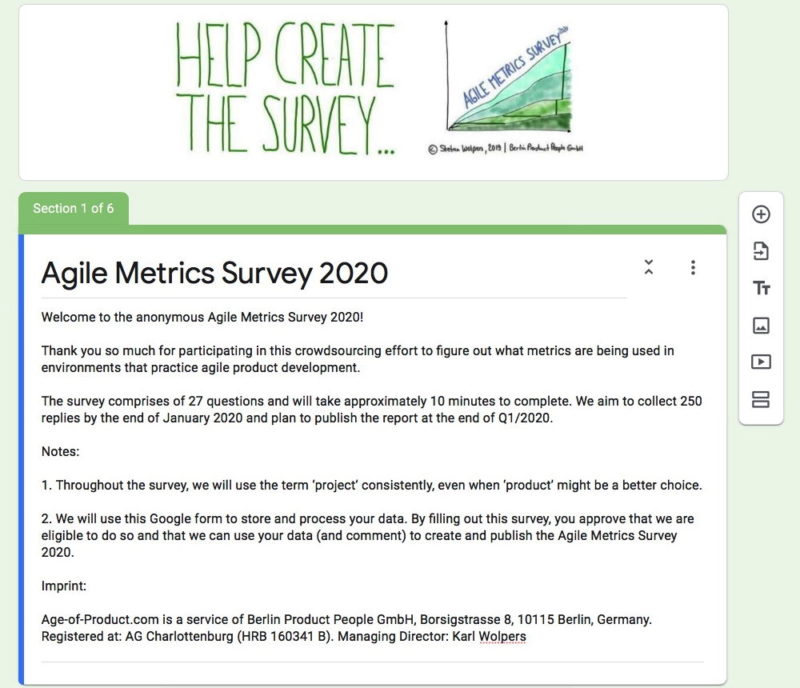
Agile Metrics Survey 2020

TL; DR: The Agile Metrics Survey 2020

Let’s stop guessing and start crowdsourcing data and information on this critical topic: Who is using what metrics under which context to what success? Participate in the agile metrics survey now.

Update 2020-12-14: We have joined forces with empiriks.de, a German consultancy specializing in statistical analysis, and we plan to take the study to the next level. The Agile Metrics Survey already complies with academic standards. However, what we need now is more participants to improve the sample size.

So far, we have more than 750 contributors; let’s strive for 1,000 contributions by the end of January 2021 and aim to publish the report by the end of March 2021!

👉 🔬 Start your contribution now!

Agile Metrics Survey 2020 — Age-of-Product.com
Continue reading Agile Metrics Survey 2020

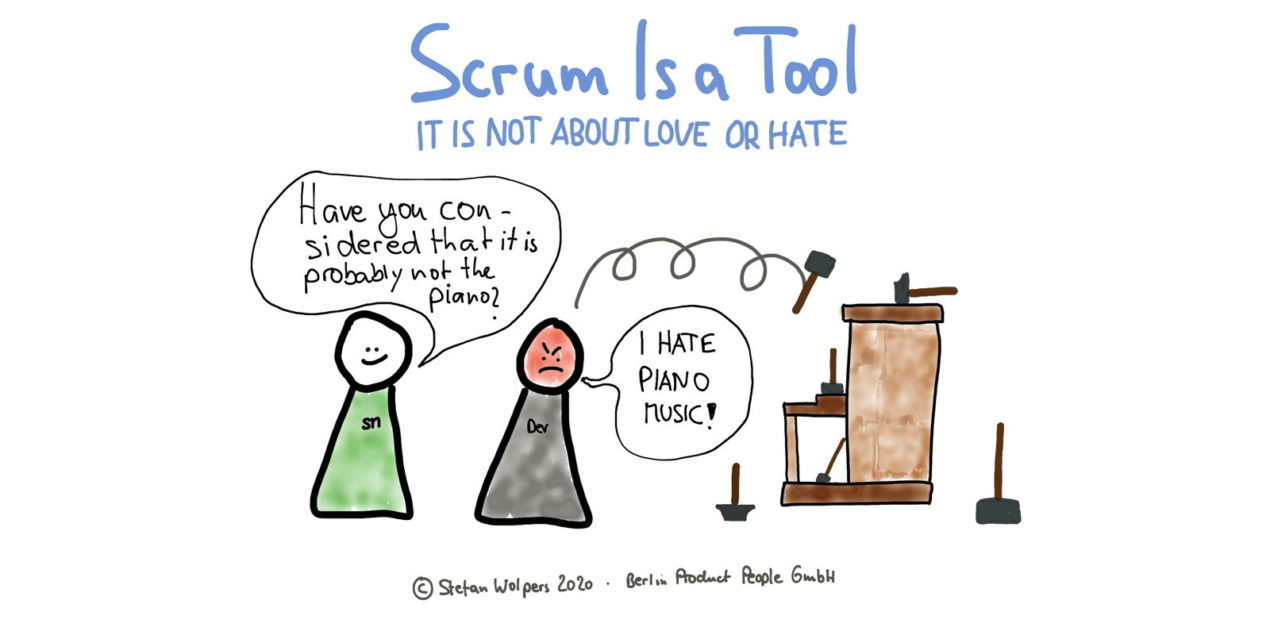
Scrum’s Nature: It Is a Tool; It Is Not About Love or Hate

TL; DR: Scrum’s Nature: It Is a Tool; It Is Not About Love or Hate

Regularly, we find articles from developers detailing why ‘Agile’ in general and Scrum’s nature, in particular, deserve our collective disdain.

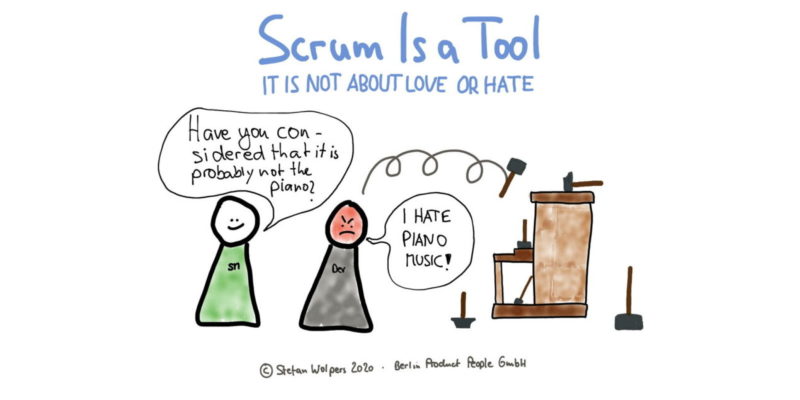
What has always struck me in this discussion is its emotionality. Scrum is a tool, useful to accomplish one primary task: delivering value to customers of emergent products in complex environments while mitigating an organization’s exposure to risk at the same time. So, if Scrum is not working in an organization, maybe it is because Scrum is applied to the wrong cause in the first place. Or, that its application has been mechanical, driven by folks who don’t know what they are doing. (Seriously, how hard can Scrum be if the manual comprises of 18 pages, right?)

The question then is: Why would I “hate” a tool unsuited for the intended purpose or applied incompetently? Would I hate a hammer for not being capable of accurately driving a screw into a wooden beam? Probably not, as the hammer wasn’t designed for that purpose, and neither sheer will-power nor stamping with your feet will change the fact.

Scrum’s Nature: It Is a Tool; It Is Not About Love or Hate — Age-of-Product.com
Continue reading Scrum’s Nature: It Is a Tool; It Is Not About Love or Hate

Food for Agile Thought #251: Software Factory Syndrome, Product Discovery, Contemporary Product Leadership, Future Press Release 2.0

TL; DR: Software Factory Syndrome, Product Discovery — Food for Agile Thought #251

Welcome to the 251st edition of the Food for Agile Thought newsletter, shared with 26,781 peers. This week, we analyze the software factory syndrome; we apply Jocko Willink’s leadership principles to writing software, and we point at the elephant in the #noestimates room.

We then follow a CEO’s take on the importance of empowerment of product teams; we check the approach of a cross-functional team’s real-world collaboration model, and we learn about the next version of the future press release concept for (product) risk mitigation.

Lastly, we thank Jeff Patton for providing another helpful free ebook on how to figure out what is worth building. Spoiler alert: 85-plus percent of all startups get this wrong.

Food for Agile Thought #251: Software Factory Syndrome, Product Discovery, Contemporary Product Leadership, Future Press Release 2.0 — Age-of-Product.com
Continue reading Food for Agile Thought #251: Software Factory Syndrome, Product Discovery, Contemporary Product Leadership, Future Press Release 2.0

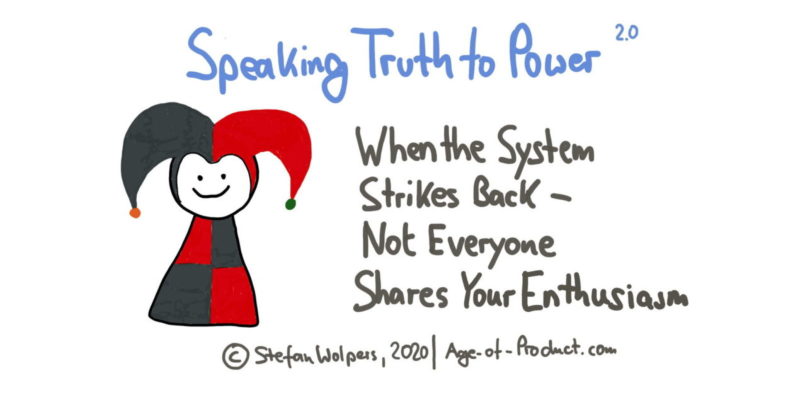
Speaking Truth to Power 2.0 — Taking A Stand as an Agile Practitioner

TL; DR: Speaking Truth to Power

Do you need an emergency fund as a change agent—whether you are acting as Scrum Master, Product Owner, or agile coach—because conflict is inevitable, but change is not? Speaking truth to power probably comes at a price.

In my experience, speaking truth to power, pointing at the emperor’s new clothes and the reality in the trenches, is necessary a trait for every change agent — including Scrum Masters and agile coaches — in organizations that lack strong leadership.

Learn more, how this form of professional honesty can backfire when the incumbents, privileged by the existing system, strike back.

Speaking Truth to Power — Taking A Stand as an Agile Practitioner When the System Strikes Back— Age-of-Product.com
Continue reading Speaking Truth to Power 2.0 — Taking A Stand as an Agile Practitioner