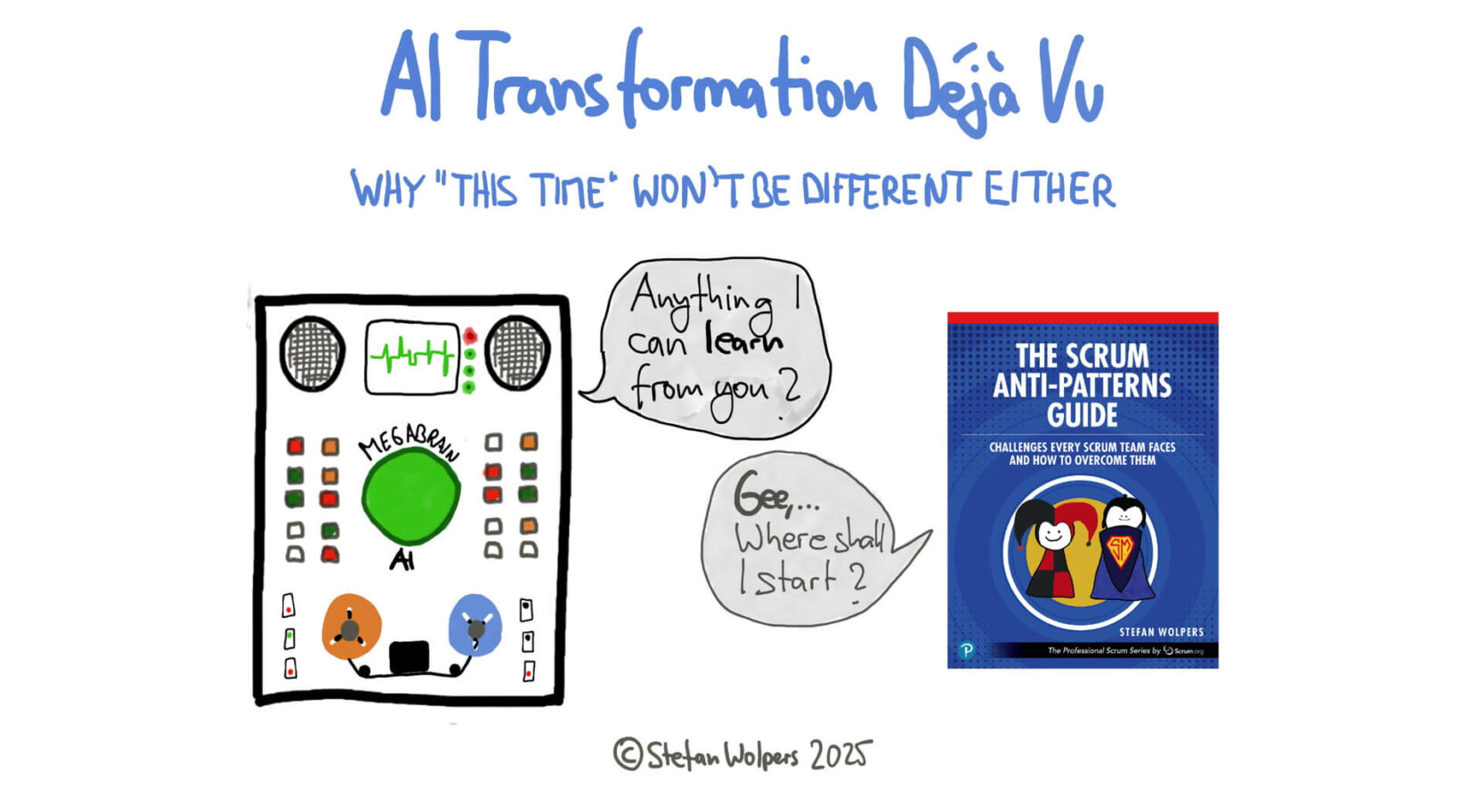
Organizations seem to fail their AI transformation using the same patterns that killed their Agile transformations: Performing demos instead of solving problems, buying tools before identifying needs, celebrating pilots that can’t scale, and measuring activity instead of outcomes.
These aren’t technology failures; they are organizational patterns of performing change instead of actually changing. Your advantage isn’t AI expertise; it’s pattern recognition from surviving Agile. Use it to spot theater, demand real problems before tools, insist on integration from day one, and measure actual value delivered.
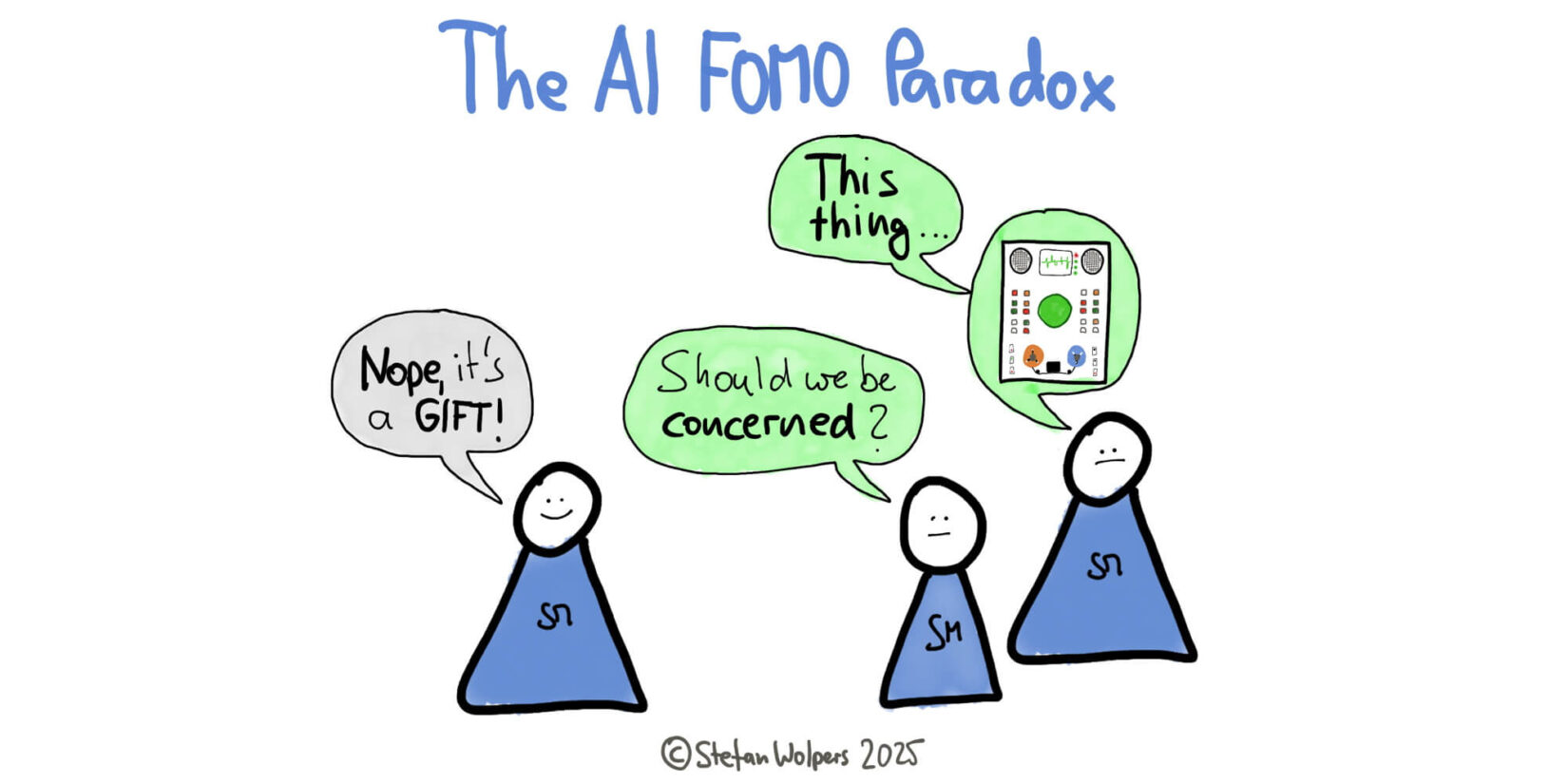
AI FOMO comes from seeing everyone’s polished AI achievements while you see all your own experiments, failures, and confusion.
The constant drumbeat of AI breakthroughs triggers legitimate anxiety for Scrum Masters, Product Owners, Business Analysts, and Product Managers: “Am I falling behind? Will my role be diminished?”
But here’s the truth: You are not late. Most teams are still in their early stages and uneven. There are no “AI experts” in agile yet—only pioneers and experimenters treating AI as a drafting partner that accelerates exploration while they keep judgment, ethics, and accountability.
Disclaimer: I used a Deep Research report by Gemini 2.5 Pro to research sources for this article.
TL; DR: Choose to Become an AI Leader with the AI 4 Agile Online Course
Your stakeholders already expect AI-enhanced value delivery. While you’re experimenting with prompts, competitors are 10x-ing their customer insights, pattern recognition, product decisions, and delivery speed. AI isn’t another skill to learn; it is THE survival skill for knowledge workers. The following 18 months separate agile leaders from followers—and the AI 4 Agile Online Course bridges that gap.
The Benefits of AI Micromanagement show up when you feed ChatGPT 5 progressively more context about your actual situation. I tested five prompts for a Retrospective design: from zero context to full team background with extended reasoning time. Case 1 produced generic “Scrum Oscars” nonsense. Case 5 delivered sophisticated root-cause analysis targeting chronic top-down thrash, dependency gridlock, and psychological safety erosion.
The difference? Strategic context curation. More context created better solutions, but only when that context was relevant and structured.
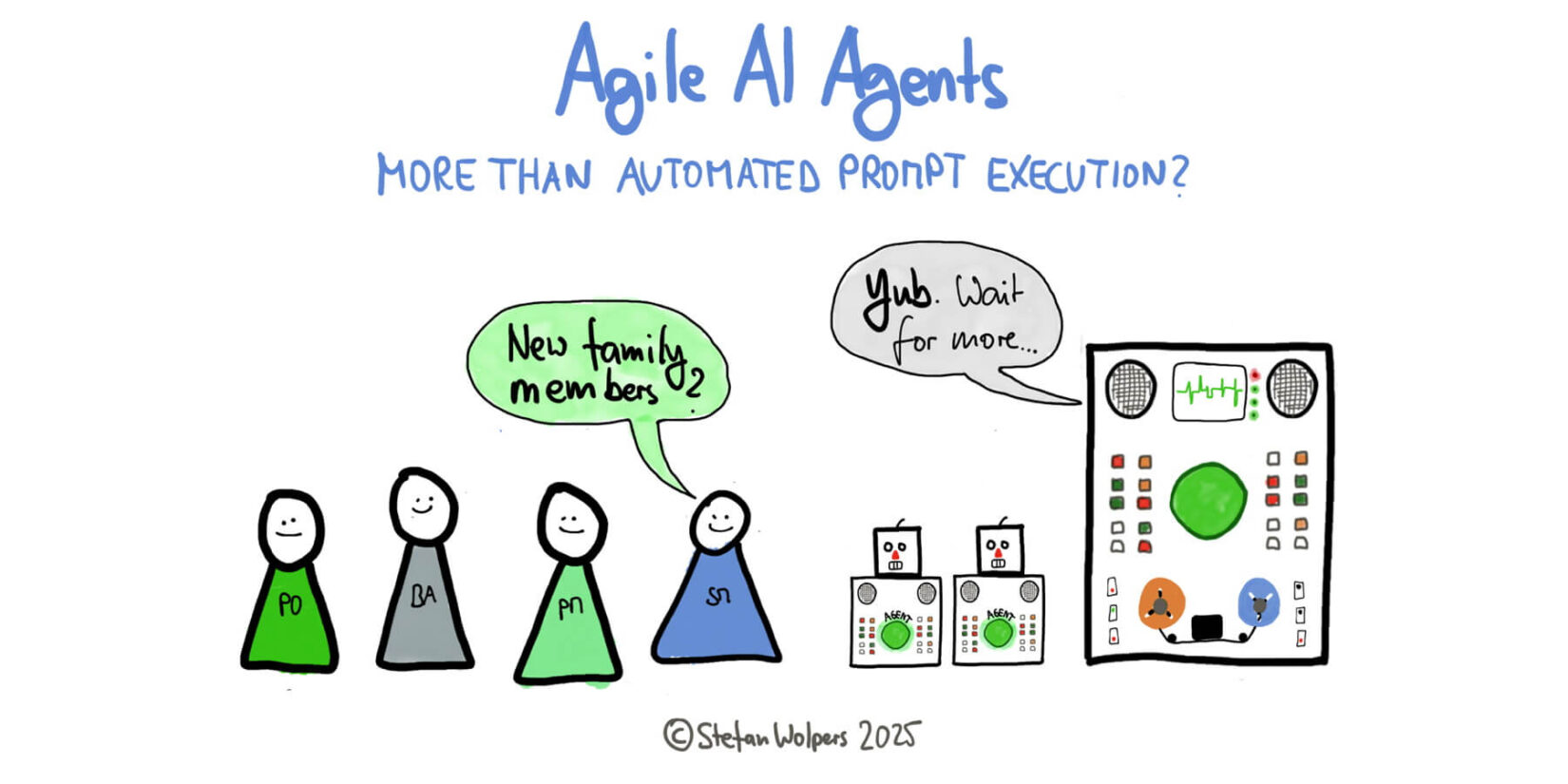
I tried ChatGPT’s new Agent Mode: Is it really a new Agile AI Agent that autonomously identifies noteworthy signals in the daily communication and data noise? Or is it a glorified automated prompt execution device?
Let’s find out. (Note: I only have a Plus account, which limits the experience.)
Many companies adopt Agile practices like Scrum but fail to achieve true transformation. This “Agile Paradox” occurs because they implement tactical processes without changing their underlying command-and-control structure, culture, and leadership style.
True agility requires profound systemic changes to organizational design, leadership, and technical practices, not just performing rituals. Without this fundamental shift from “doing” to “being” agile, transformations stall, and the promised benefits remain unrealized.