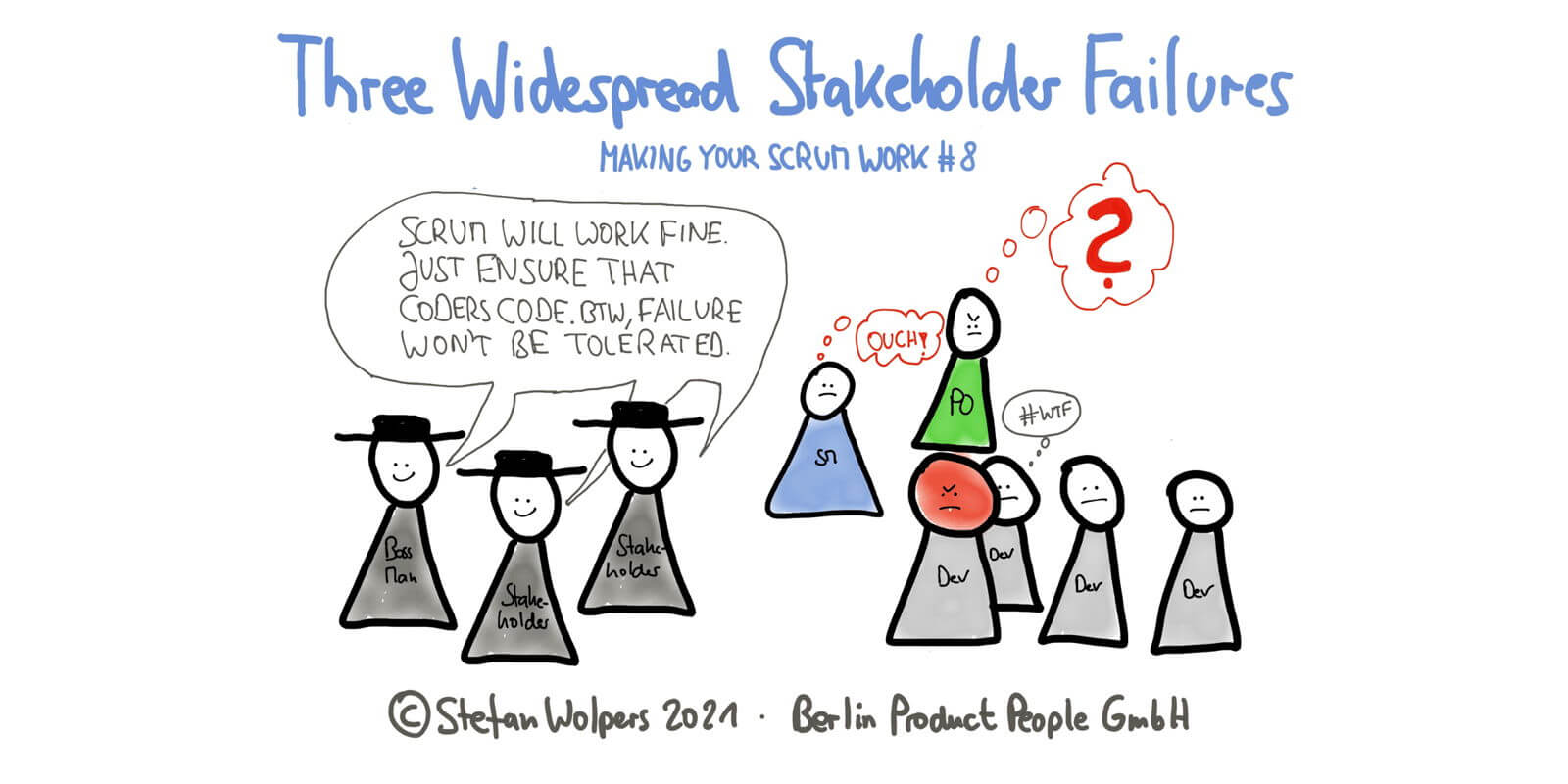
There are plenty of Scrum stakeholder failures. Given that Scrum is a framework with a precise and concise yet short “manual,” this effect should not surprise anyone. While the Scrum Guide makes numerous references to stakeholders in Scrum, stakeholders themselves are no official role (accountability), no matter their crucial contribution to a Scrum team’s overall success.
Explore with me three widespread examples of how stakeholders fail their Scrum teams in three short video clips, totaling 6 minutes and 5 seconds.
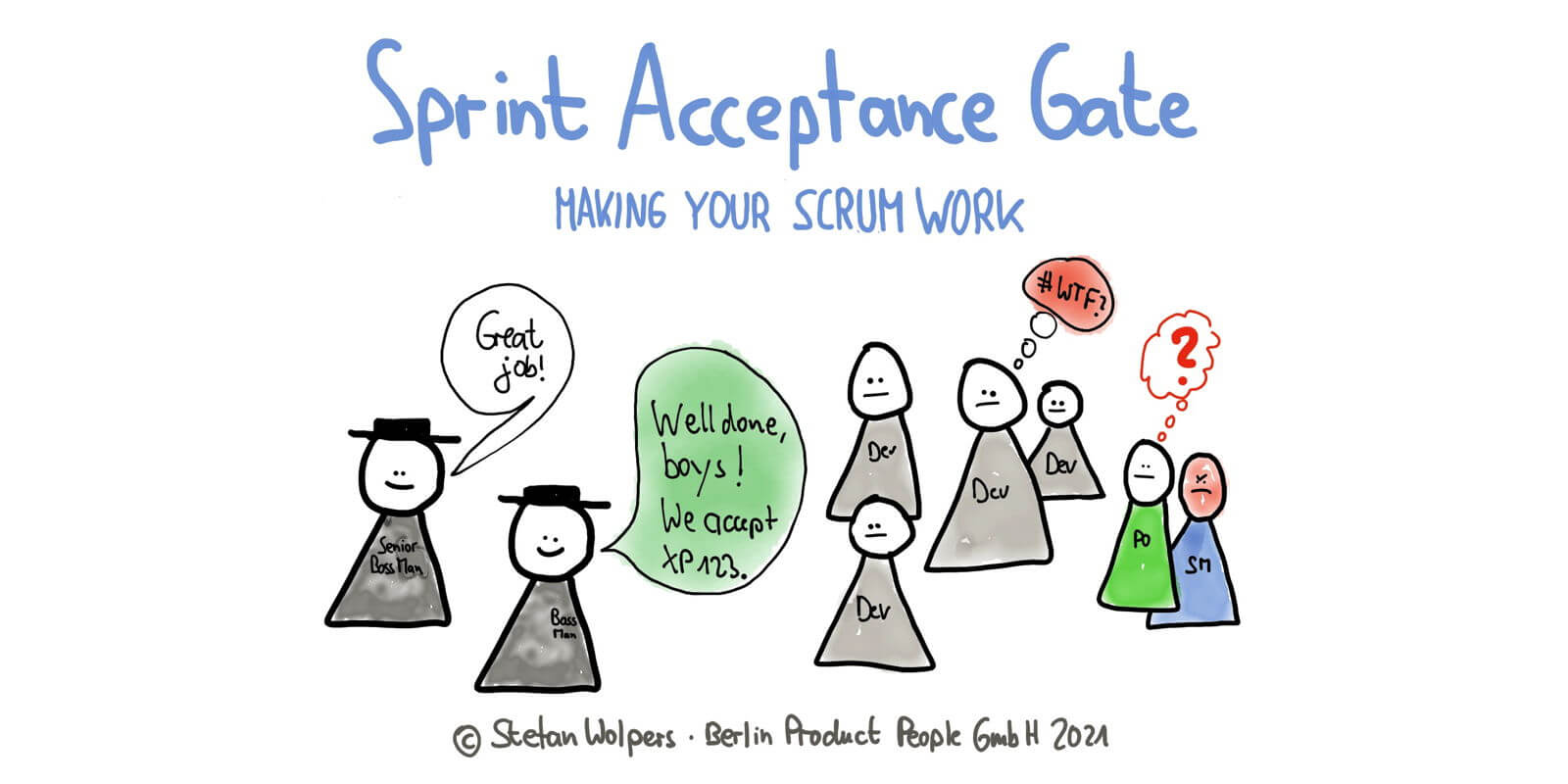
There are plenty of failure possibilities with Scrum. Given that Scrum is a framework with a reasonable yet short “manual,” this effect should not surprise anyone. Turning the Sprint Review into a Sprint acceptance gate where stakeholders sign off features is unfortunately prominent and defies the idea of self-management.
Join me and explore the reasons and the consequences of this Sprint Review anti-pattern in 80 seconds.
In their book Agile Retrospectives, Esther Derby and Diana Larsen popularized the idea that a Sprint Retrospect comprises five stages. The second stage refers to gathering data so that the Scrum Team can have data-informed Retrospectives.
As I have observed in practice, many Scrum Teams either limit the data gathering part of the Retrospective, thus lacking vital information. Or they invest too much time doing so, leaving little capacity to analyze the data and come to conclusions on how to best improve as a team.
Read on and learn how you can avoid falling victim to both scenarios by gathering data continuously and asynchronously.
There are plenty of failure possibilities with Scrum. Given that Scrum is a framework with a reasonable yet short “manual,” this effect should not surprise anyone. A Sprint Review without stakeholders may create an unhealthy bubble for the Scrum Team due to the disconnect, thus resulting in lower effectiveness.
Join me and explore the reasons and the consequences of stakeholders avoiding participating in the Sprint Review in less than 150 seconds.
There are plenty of failure possibilities with Scrum. Given that Scrum is a framework with a reasonable yet short “manual,” this effect should not surprise anyone. The hardening Sprint is one of those Scrum failures that are particularly challenging.
Explore with me the deep-rooted issues we can learn from a team that practices a hardening Sprint, from the level of team maturity to possible organizational concerns of becoming agile in less than 100 seconds.
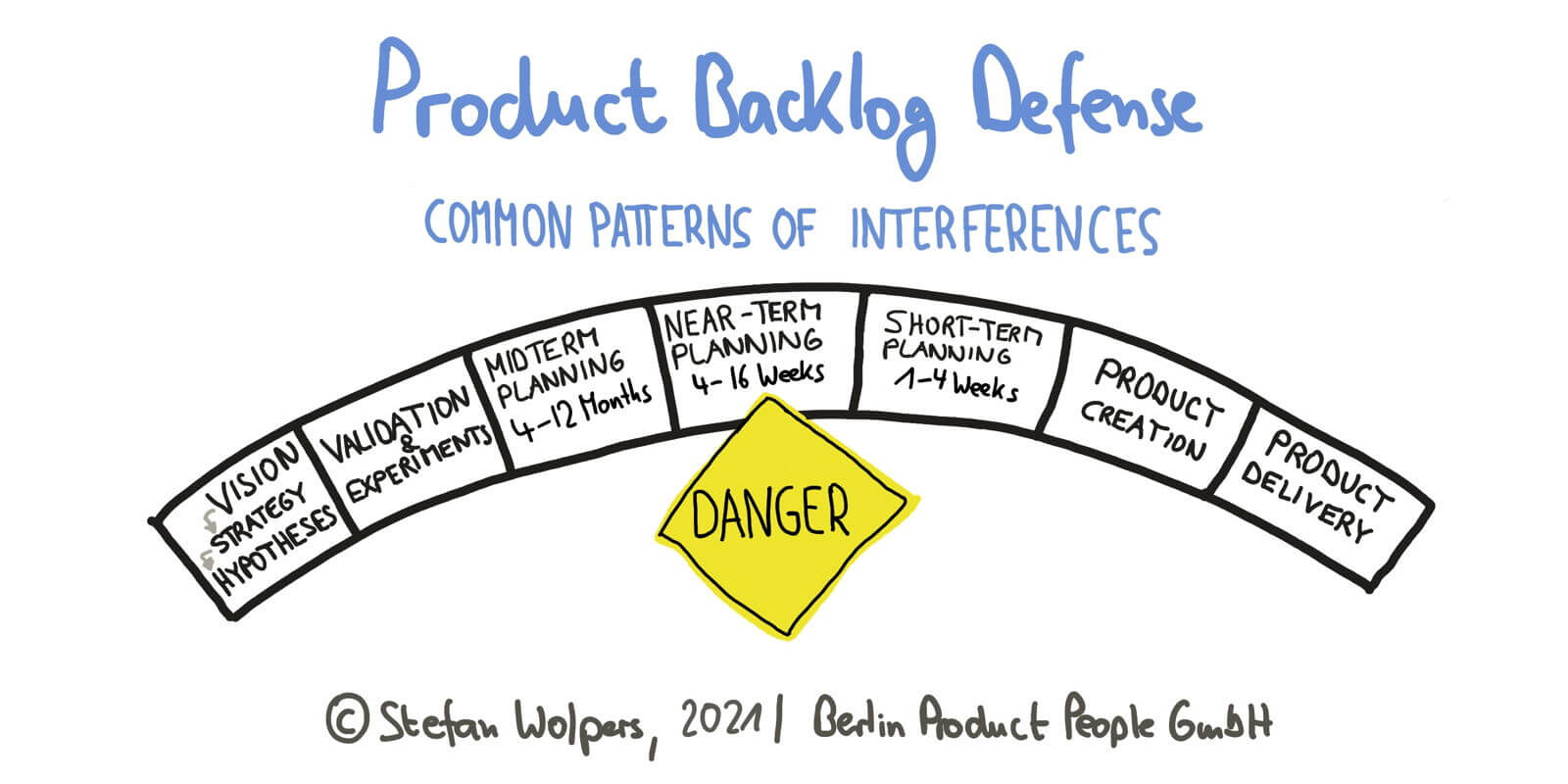
Make no mistake: Your Product Backlog is the last line of defense preventing your Scrum Team from becoming a feature factory; hence Product Backlog defense is vital: Figure out a process that creates value for your customers. Moreover, have the courage — and the discipline — to defend it at all costs.