Stop treating AI as a team member to “onboard.” Instead, give it just enough context for specific tasks, connect it to your existing artifacts, and create clear boundaries through team agreements. This lightweight, modular approach of contextual AI integration delivers immediate value without unrealistic expectations, letting AI enhance your team’s capabilities without pretending it’s human.
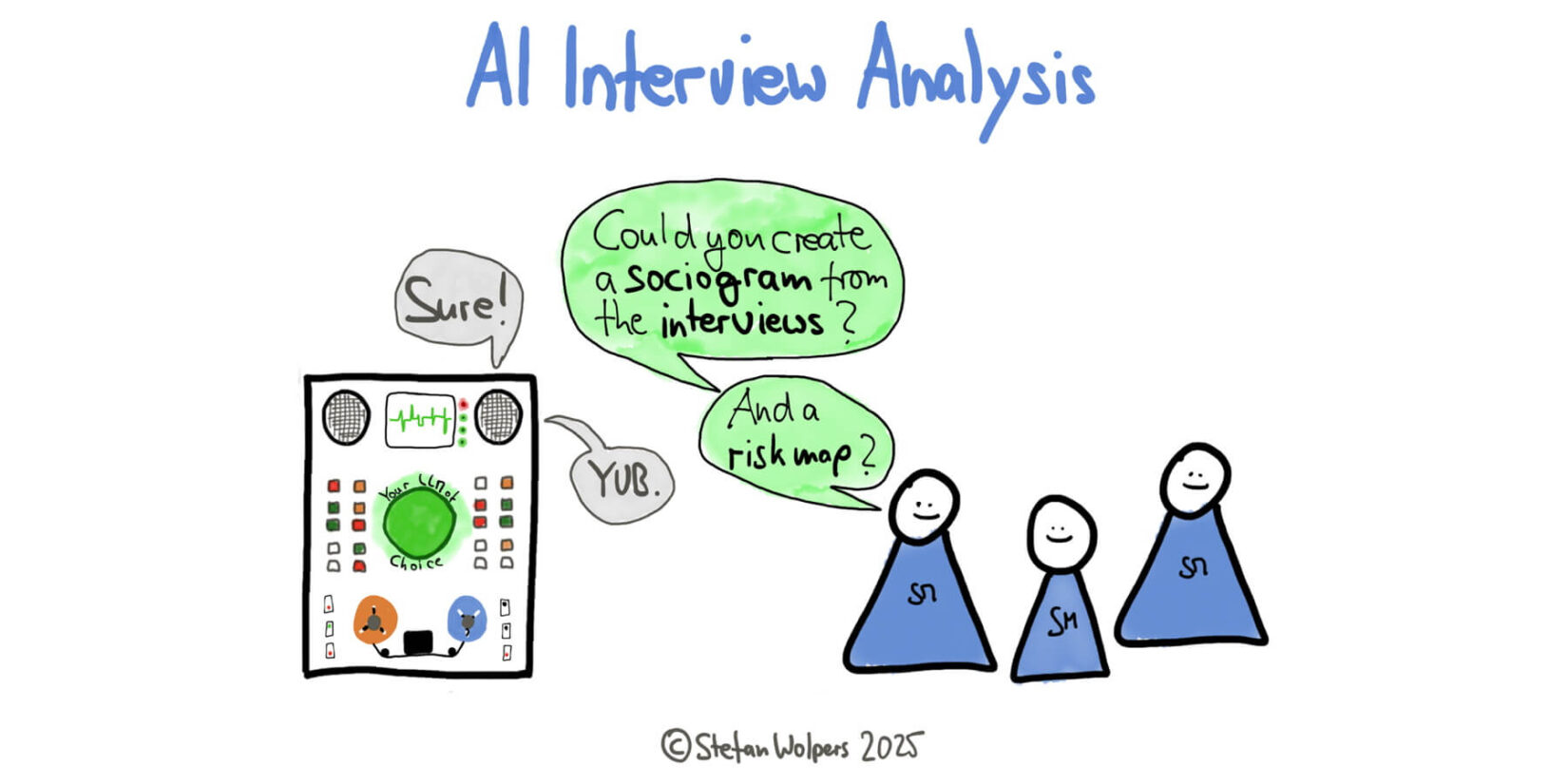
When you step into a new role as Scrum Master or agile coach for a team under pressure, you’re immediately confronted with a challenging reality: you need to understand the complex dynamics at play, but have limited time to process all the available information. This article explores how AI interview analysis can be a powerful sensemaking tool for agile practitioners who need to synthesize unstructured qualitative data quickly, particularly when joining a team mid-crisis.
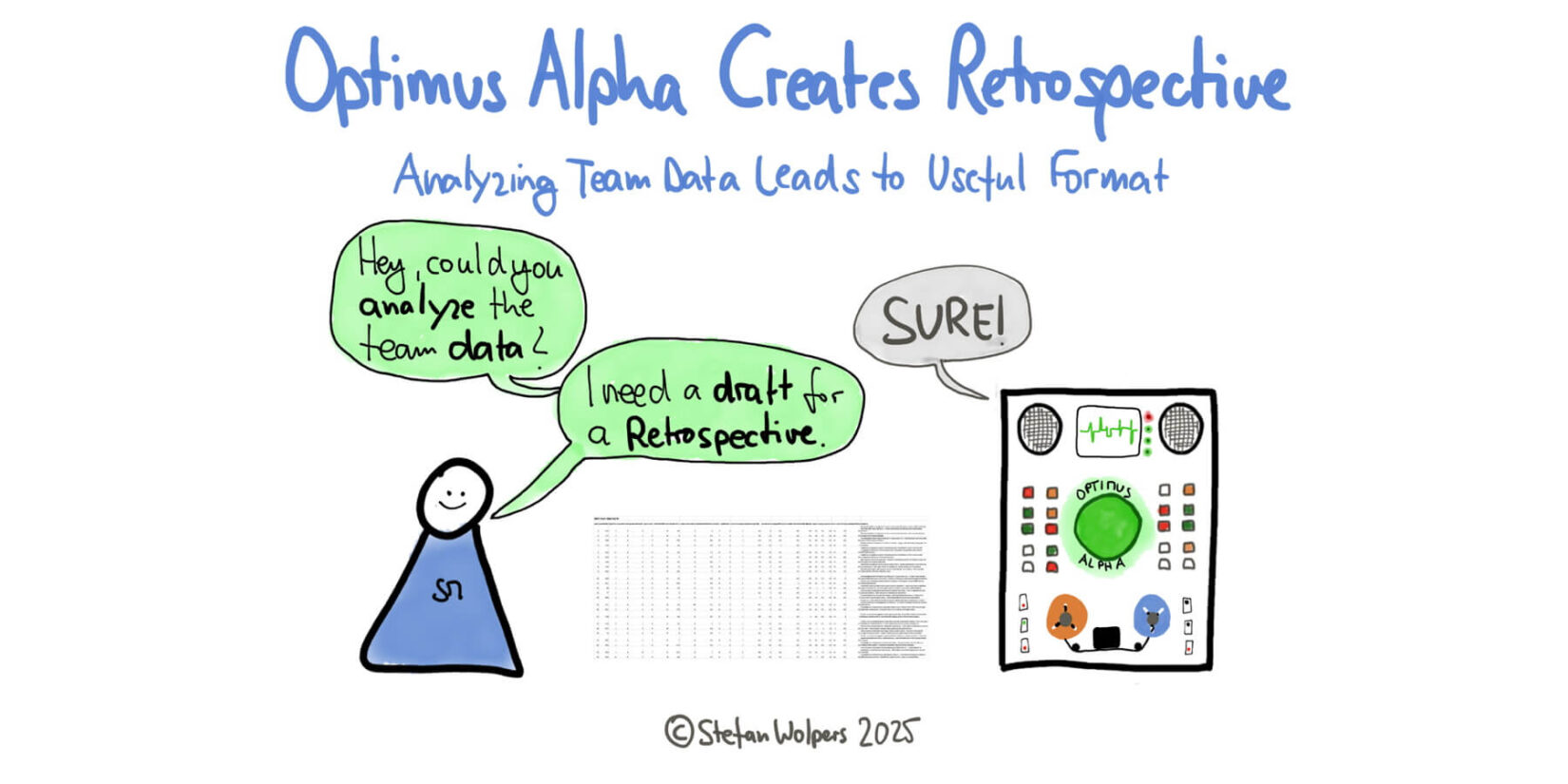
TL; DR: Optimus Alpha Creates Useful Retrospective Format
In this experiment, OpenAI’s new stealthy LLM Optimus Alpha demonstrated exceptional performance in team data analysis, quickly identifying key patterns in complex agile metrics and synthesizing insights about technical debt, value creation, and team dynamics. The model provided a tailored Retrospective format based on real team data.
Its ability to analyze performance metrics and translate them into solid, actionable Retrospective designs represents a significant advancement for agile practitioners.
TL; DR: Dr. Lynn Kelley, Peter Merel, and Jurgen Appelo speaking at Hands-on Agile 2025
The first videos of Hands-On Agile 2025 sessions are in, and you don’t want to miss them: Dr. Lynn Kelley reveals her “Change Questions” framework with its remarkable 90% success rate for sustainable organizational transformation, while Peter Merel challenges conventional agile thinking with “The Agile Way,” connecting ancient wisdom to modern AI-agile alignment through six essential themes. Also, Jurgen Appelo explores how AI is revolutionizing leadership in “Humans Robots Agents,” offering practical strategies for thriving amid technological disruption.
These industry veterans bring decades of enterprise transformation experience, providing actionable insights you can implement immediately. Watch the session recordings to transform how you approach agility.
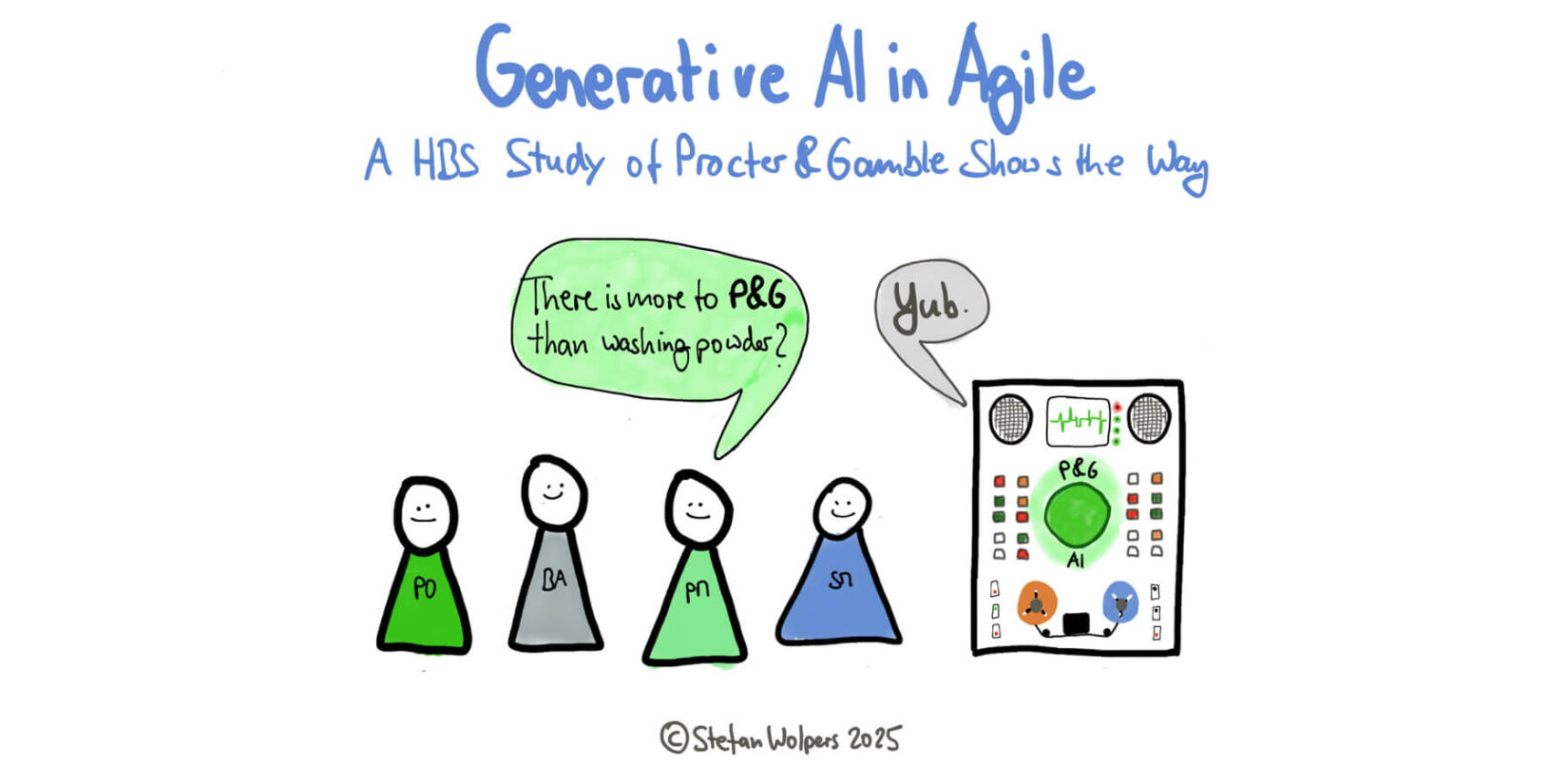
TL;DR: A Harvard Study of Procter & Gamble Shows the Way
Recent research shows AI isn’t just another tool—it’s a “cybernetic teammate” that enhances agile work. A Harvard Business School study of 776 professionals found individuals using AI matched the performance of human teams, broke down expertise silos, and experienced more positive emotions during work. For agile practitioners, the choice isn’t between humans or AI but between being AI-augmented or falling behind those who are. The cost of experimentation is low; the potential career advantage, on the other hand, is substantial. A reason to embrace generative AI in Agile?
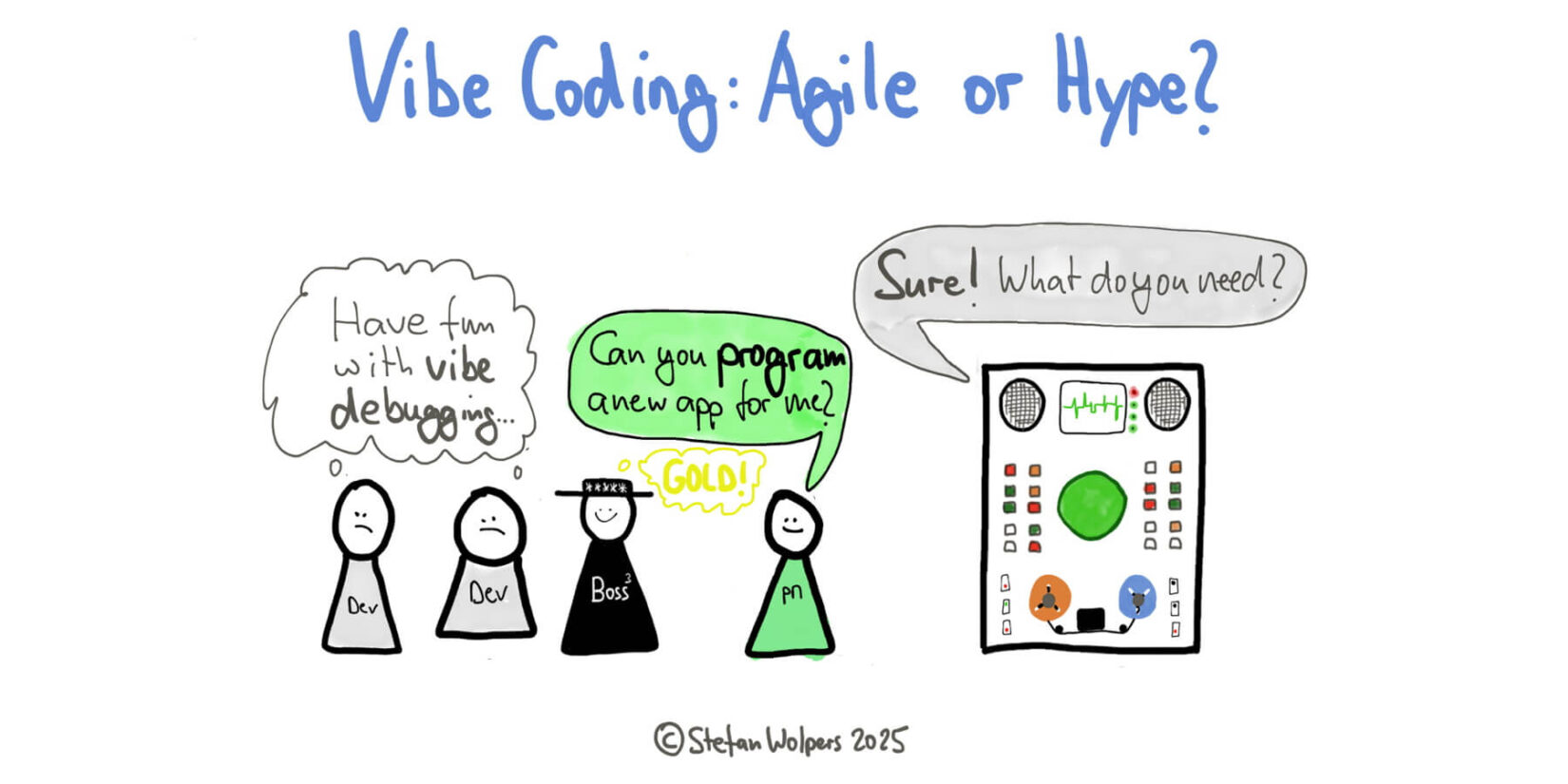
Vibe coding — using natural language to generate code through AI — represents a significant evolution in software development. It accelerates feedback cycles and democratizes programming but raises concerns about maintainability, security, and technical debt.
Learn why success likely requires a balanced approach: using vibe coding for rapid prototyping while maintaining rigorous standards for production code, with developers evolving from writers to architects and reviewers or auditors.