Learn why many Product Owners and Managers worry about the wrong thing: saying no instead of saying yes to everything. This article reveals three systematic rejection techniques that strengthen stakeholder relationships while protecting product strategy to avoid that organizational incentives sabotage product strategy.
Discover how those drive feature demands, why AI prototyping complicates strategic decisions, and how transparent Anti-Product Backlog systems transform resistance into collaboration.
TL; DR: Johanna Rothman, Roman Pichler, and Maarten Dalmijn speaking at Hands-on Agile 2025
The third batch of videos of Hands-On Agile 2025 is in, and you don’t want to miss them: Johanna Rothman warns against fake “Agile,” urging a focus on genuine agility by choosing fit-for-purpose lifecycles and improving feedback loops. At the same time, Roman Pichler outlines five common product strategy mistakes and how to avoid them for better product outcomes, and Maarten Dalmijn highlights systemic blockers to empowered teams and advocates for shifting from rules to cultivating environments that enable high performance.
“Good Enough Agile” is ending as AI automates mere ceremonial tasks and Product Operating Models demand outcome-focused teams. Agile professionals must evolve from process facilitators to strategic product thinkers or risk obsolescence as organizations adopt AI-native approaches that embody Agile values without ritual overhead.
The data couldn’t be more supportive: Despite 25 years of the Agile Manifesto, countless books, a certification industry, conferences, and armies of consultants, we’re collectively struggling to make Agile work. My recent survey, although not targeting Agile failure, still reveals systemic dysfunctions that persist across organizations attempting to implement Agile practices:
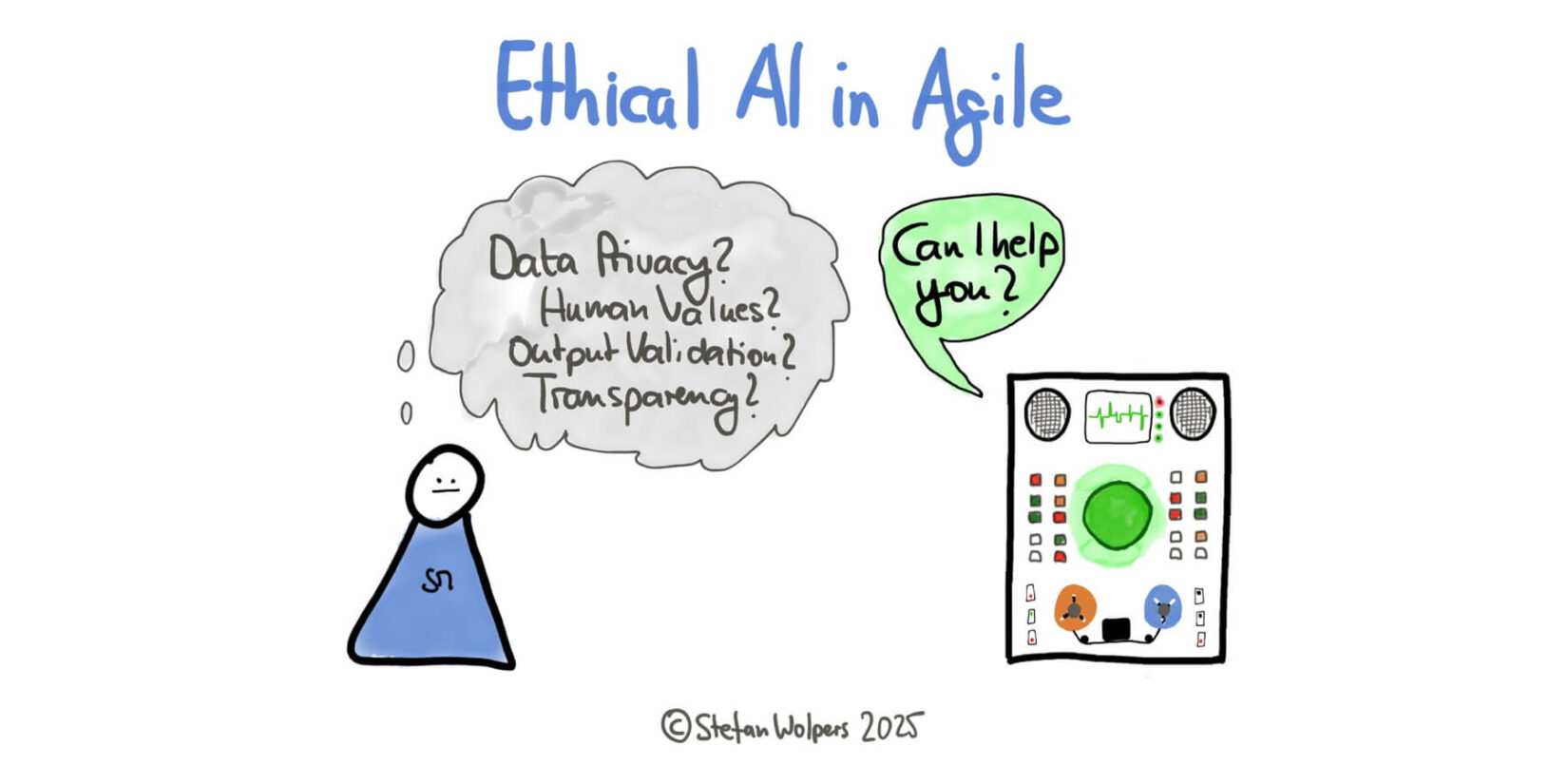
Agile teams face ethical challenges. However, there is a path to ethical AI in Agile by establishing four pragmatic guardrails: Data Privacy (information classification), Human Value Preservation (defining AI vs. human roles), Output Validation (verification protocols), and Transparent Attribution (contribution tracking).
This lightweight framework integrates with existing practices, protecting sensitive data and human expertise while enabling teams to confidently realize AI benefits without creating separate bureaucratic processes.
TL; DR: David Pereira, Cliff Berg, and Jonathan Odo speaking at Hands-on Agile 2025
The second batch of videos of Hands-On Agile 2025 is in, and you don’t want to miss them: David Pereira reveals why product discovery often fails—and how teams can avoid common pitfalls to rapidly validate ideas and deliver real value. Also, Cliff Berg shares surprising insights from Agile 2 Academy’s study of highly agile companies like SpaceX, highlighting leadership behaviors rather than traditional Agile practices as key agility drivers, while Jonathan Odo explores timeless engineering principles shaping the future of high-performing, adaptive organizations.
These industry veterans bring decades of enterprise transformation experience, providing actionable insights you can implement immediately. Watch the session recordings to transform how you approach agility.