by Stefan Wolpers|Agile and ScrumAgile TransitionLean and Product
TL; DR: Ethical AI or Risk?
Without ethical AI, Product Owners and Product Managers (PO/PMs) face a dilemma: balancing AI’s potential with its product discovery and delivery risks. Unchecked AI can introduce bias, compromise data, and erode empathy.
To navigate this, implement four guardrails: ensuring data privacy, preserving human value, validating AI outputs, and transparently attributing AI’s role. This approach transforms PO/PMs into ethical AI leaders, blending AI’s power with indispensable human judgment and empathy.
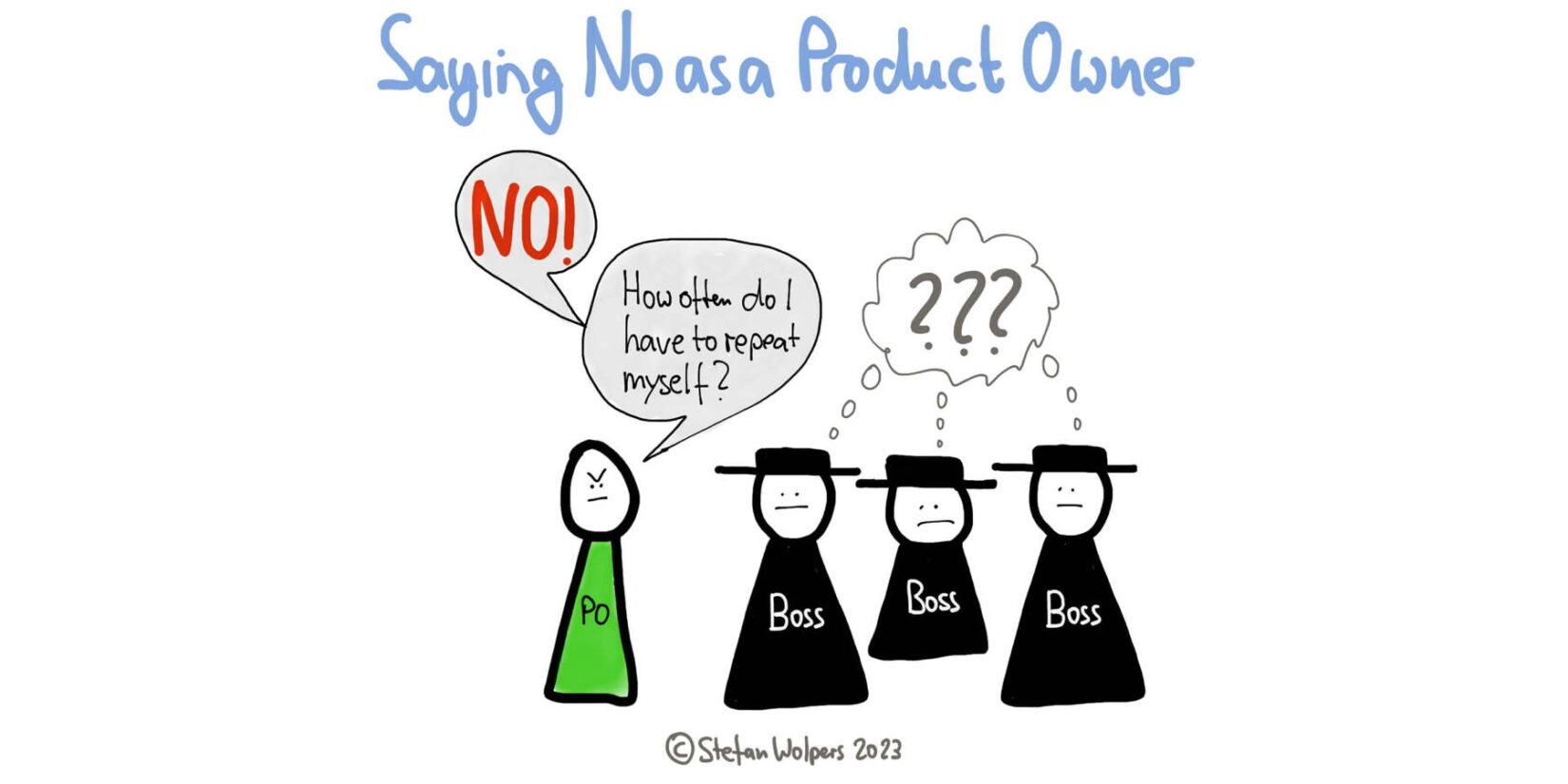
Learn why many Product Owners and Managers worry about the wrong thing: saying no instead of saying yes to everything. This article reveals three systematic rejection techniques that strengthen stakeholder relationships while protecting product strategy to avoid that organizational incentives sabotage product strategy.
Discover how those drive feature demands, why AI prototyping complicates strategic decisions, and how transparent Anti-Product Backlog systems transform resistance into collaboration.
Are you navigating the delicate art of saying No as a Product Owner or product manager? Actually, it’s more of a strategic ‘yes’ to higher priorities, turning down lower-level requests without shutting down communication.
This article will dive into various approaches, from reframing conversations and fostering stakeholder collaboration to being transparent to data-informed rationale and empathetic engagement. Discover how to maintain a harmonious balance between driving Product Goals and nurturing professional relationships with your stakeholders.
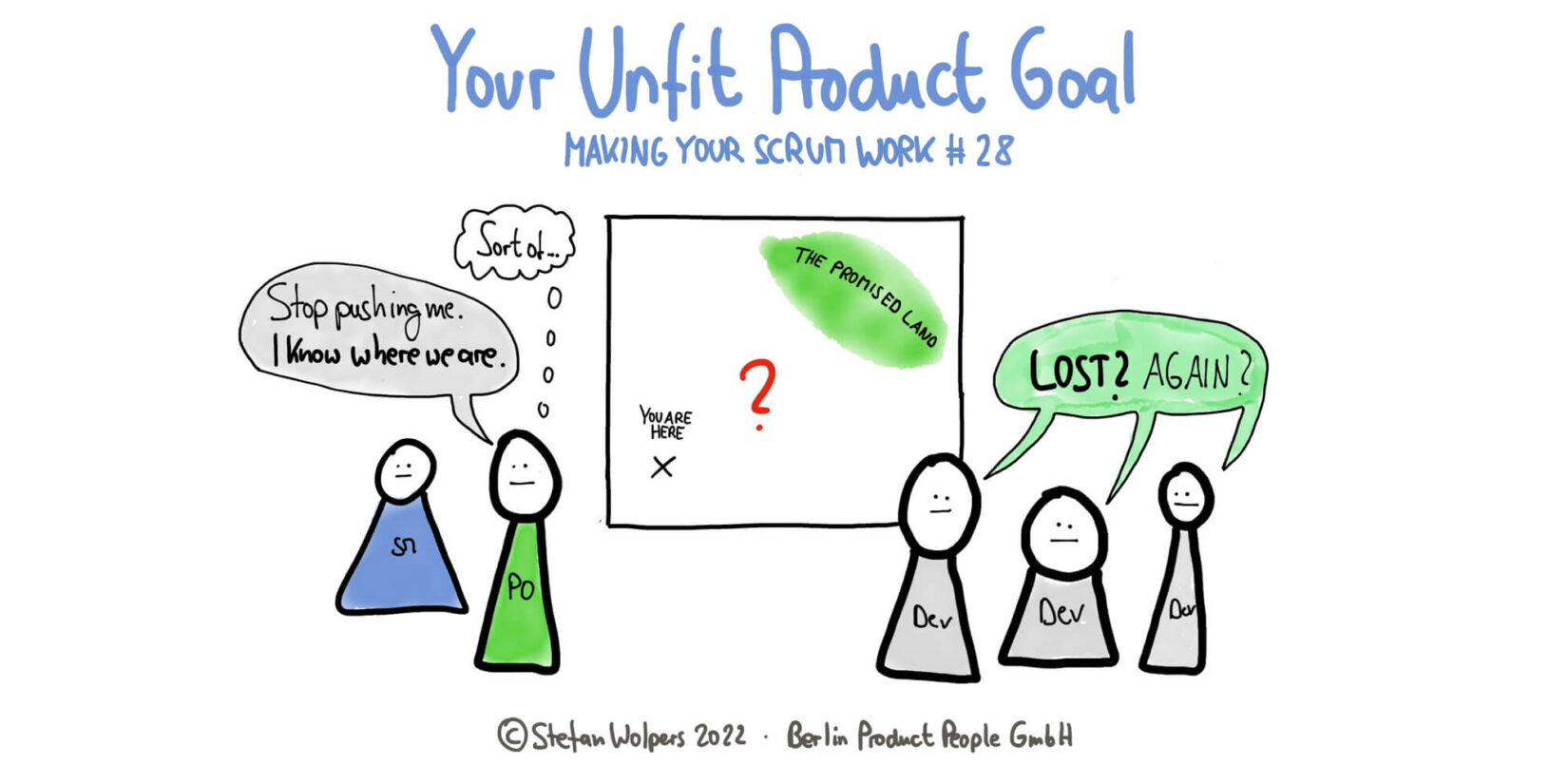
TL; DR: Your Unfit Product Goal and the Product Goal Canvas
We plan a lot in Scrum: There is a daily plan when the Developers think about progressing toward the Sprint Goal during the Daily Scrum. Of course, the Sprint Goal reflects an intermediate target the Scrum team considers valuable to solve their customers’ problems. Moreover, there is the Product Goal, a mid- or long-term objective of the Scrum team.
The problem is that when Scrum teams already struggle with embracing the concept of the Sprint Goal—first, you agree on the objective of the Sprint, then you pick the work you consider necessary to accomplish it—they most likely also struggle with proper Product Goals.
Let’s check three critical issues Scrum teams have with Product Goals and a practical tool that helps you avoid the mess.