
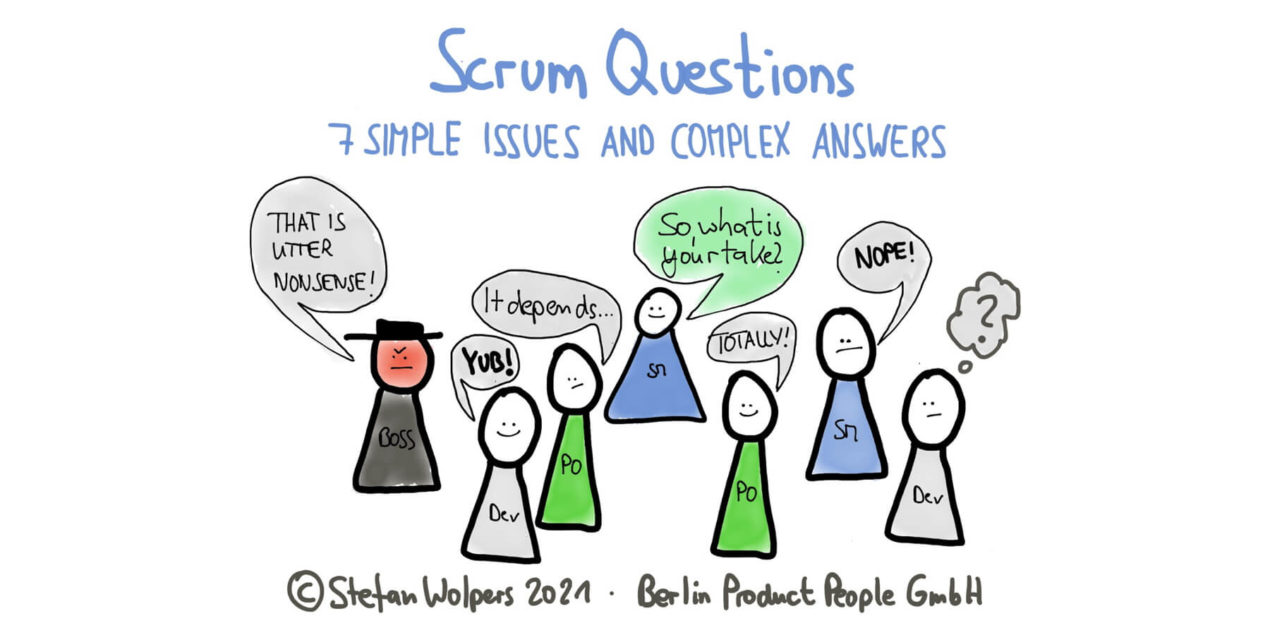
Scrum Questions: Seven Simple Issues and Complex Answers from LinkedIn Polls

TL; DR: Scrum Questions: Seven Simple Issues and Complex Answers

How hard can Scrum be; the manual has 13 pages? You may have heard something along this line from skeptics in the past, dismissing the complex nature of an intentionally incomplete framework. The point is that exciting discussions happen when you start digging a bit deeper. Supposedly simple Scrum questions often return a broad spectrum of answers, ideas, and opinions.

Therefore, for some months now, I have run polls on LinkedIn. The polls address topics like the implications of self-management, how the management or corporate hierarchy fits into the picture, and the relationship between Scrum and agile coaching.

Let me share some of the controversial findings and discussions with you. As always, there are no simple answers in complex environments.

Scrum Questions: Seven Simple Issues and Complex Answers from LinkedIn Polls — Age-of-Product.com
Continue reading Scrum Questions: Seven Simple Issues and Complex Answers from LinkedIn Polls

Food for Agile Thought #313: The Problem-Solving Trap, Suitably Detailed Roadmap Items, Beloved Definition of Done, Miro’s Product Alignment Framework

TL; DR: The Problem-Solving Trap, Beloved DoD — Food for Agile Thought #313

Welcome to the 313th edition of the Food for Agile Thought newsletter, shared with 33,207 peers. This week, we offer valuable advice on staying cognitively open, thus avoiding the problem of killing new ideas too early while being open to feedback at the same time. We also point at five good reasons to embrace the DoD, from having a quality standard to simplifying communication to providing clarity, and we delve into a well-known fallacy of decision making and how we confuse probability with propensity.

We then share a compact introduction to user stories, covering the “card, conversation, confirmation” approach to templates to the importance of keeping the Pareto principle in mind when creating new things. Moreover, we walk you through the appropriate levels of detailing product roadmap items, from “thing happening now” to “far-off things” to avoid creating noise, and we talk about bugs, refactoring, and their implication on product strategy and the flow within your product team.

Lastly, we talk about metrics and goals on the path to becoming an agile organization, and we introduce the tool Miro used to weather the pandemic-driven massive influx of new users by structuring product discovery and retrospectives in the process.

Food for Agile Thought #313: The Problem-Solving Trap, Suitably Detailed Roadmap Items, Beloved Definition of Done, Miro’s Product Alignment Framework — Age-of-Product.com
Continue reading Food for Agile Thought #313: The Problem-Solving Trap, Suitably Detailed Roadmap Items, Beloved Definition of Done, Miro’s Product Alignment Framework

Scrum: The Obsession with Commitment Matching Velocity

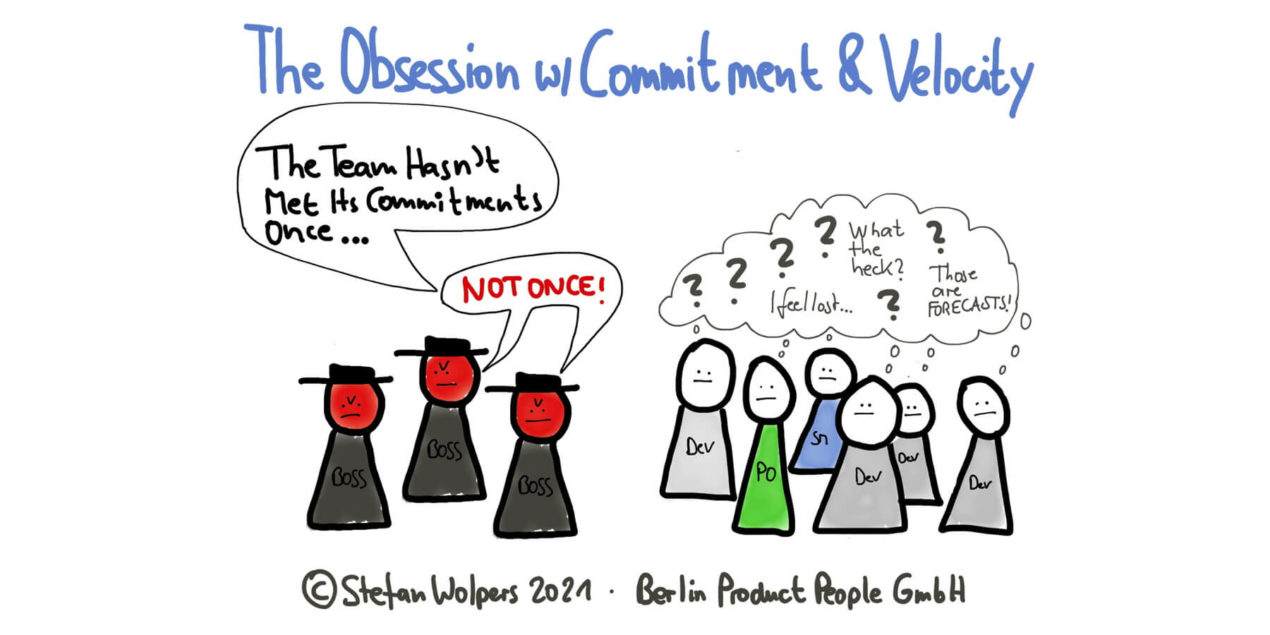
TL; DR: The Obsession with Commitment Matching Velocity

Despite decades-long efforts of the whole agile community—books, blogs, conferences, webinars, videos, meetups; you name it—we are still confronted in many supposedly agile organizations with output-metric driven reporting systems. At the heart of these reporting systems, stuck in the industrial age when the management believed it needed to protect the organization from slacking workers, there is typically a performance metric: velocity.

In the hands of an experienced team, velocity might be useful a team-internal metric. But, when combined with some managers’ wrong interpretation of commitment, it becomes a tool of oppression. So when did it all go so wrong?

Scrum: The Obsession with Commitment Matching Velocity — Age-of-Product.com
Continue reading Scrum: The Obsession with Commitment Matching Velocity

Food for Agile Thought #312: The Micromanager, Ralph Stacey (1942-2021), Jeff’s HiPPOism, Cost per Story Point?

TL; DR: The Micromanager, Jeff’s HiPPOism — Food for Agile Thought #312

Welcome to the 312th edition of the Food for Agile Thought newsletter, shared with 33,158 peers. This week, we deep dive into the main culprit of many failed agile transformations: The micromanager. We also learn about the most underappreciated Scrum event, and we remember the late Ralph Stacey.

We then talk HiPPOism, referring to the “Jeff-wants-it”-Fire Phone of Amazon; we look at two frameworks to improve product interaction and the overall user experience, and we address a tricky and risky topic: Transferring a legacy product onto a new tech stack.

Lastly, we ask: Can we use story points for cost calculation? Also, we note that research efforts need to be represented in Product Backlogs to encourage continuous learning.

Food for Agile Thought #312: The Micromanager, Ralph Stacey (1942-2021), Jeff’s HiPPOism, Cost per Story Point? — Age-of-Product.com
Continue reading Food for Agile Thought #312: The Micromanager, Ralph Stacey (1942-2021), Jeff’s HiPPOism, Cost per Story Point?

Download ‘82 Scrum Product Owner Interview Questions to Avoid Hiring Agile Imposters’

Welcome to the Download Page of the “82 Scrum Product Owner Interview Questions” Ebook

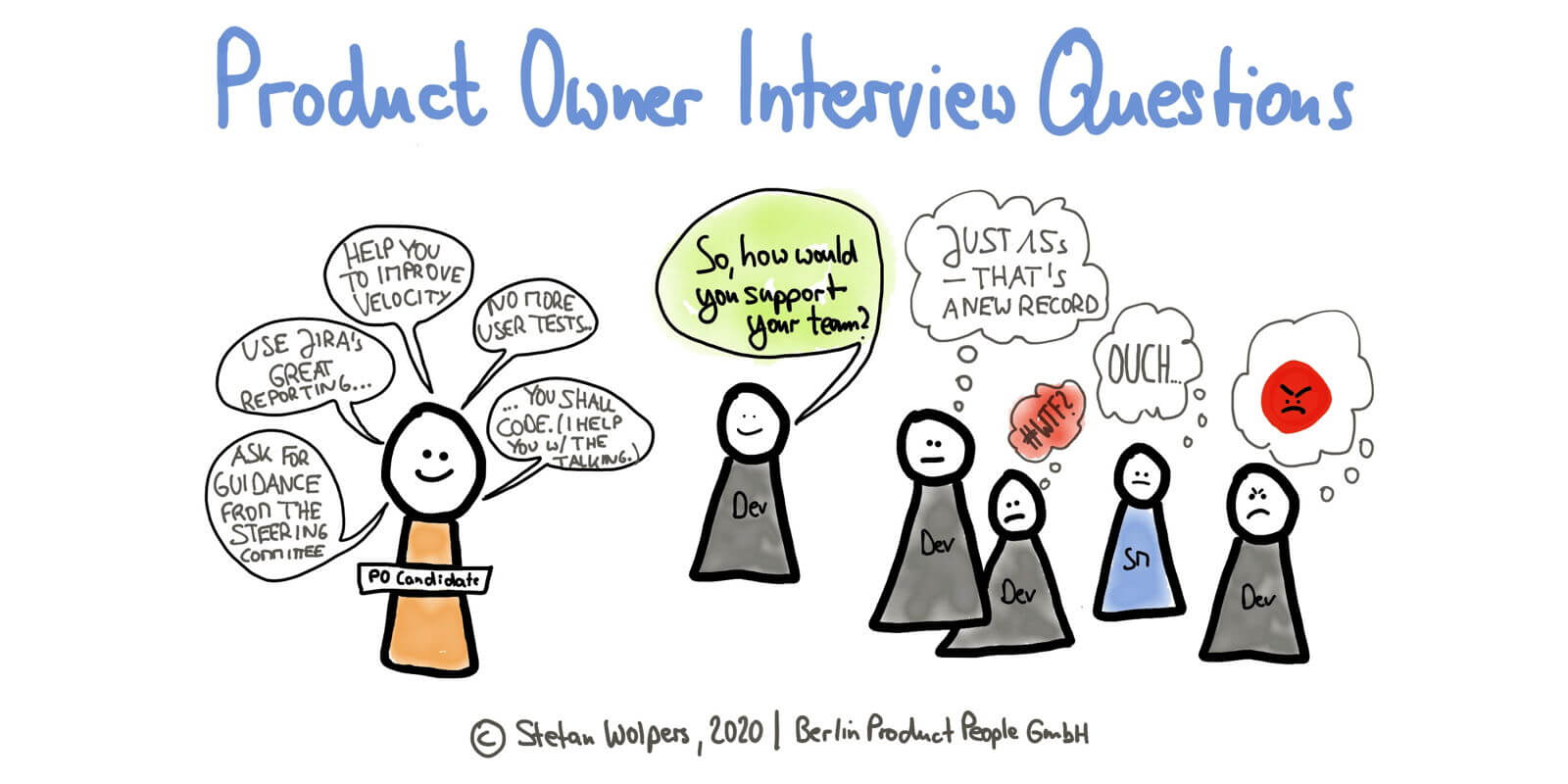
If you are looking to fill a position for a Product Owner in your organization, you may find the following 82 interview questions useful to identify the right candidate. They are derived from my sixteen years of practical experience with XP and Scrum, serving both as Product Owner and Scrum Master and interviewing dozens of Product Owner candidates on behalf of my clients.

„82
Continue reading Download ‘82 Scrum Product Owner Interview Questions to Avoid Hiring Agile Imposters’

Food for Agile Thought #311: No More Deadlines, Shipping the Org Chart, Goodbye Managers, OKRs Are Networks

TL; DR: No More Deadlines, Goodbye Managers — Food for Agile Thought #311

Welcome to the 311th edition of the Food for Agile Thought newsletter, shared with 33,103 peers. This week, we reflect on the abandonment of deadlines for team health and the effectiveness of engineering projects. Also, we delve into the obsolescence of the modern manager; we define cross-functional vs. t-shaped to avoid confusion within teams and larger agile ecosystems, and we have a look at how large companies manage engineering projects.

We then explore how teams can make better product decisions, for example, by employing the Jobs-to-be-done framework; we share war stories from Microsoft regarding the perils of reflecting internal communication structures in a product’s design, and we list eight concerns about NPS, from displacing other efforts to a bad word of mouth.

Lastly, we share the results of a large study on remote work based on data from 61,182 US Microsoft employees over the first six months of 2020, and we point at a critical issue in applying OKRs: They don’t work as intended when merely handed down from top to bottom.

Food for Agile Thought #311: No More Deadlines, Shipping the Org Chart, Goodbye Managers, OKRs Are Networks — Age-of-Product.com
Continue reading Food for Agile Thought #311: No More Deadlines, Shipping the Org Chart, Goodbye Managers, OKRs Are Networks