
Survey 2022: Would you recommend SAFe ®?

TL; DR: Survey: Would you recommend SAFe ®?

SAFe® has always been a controversial topic within the agile community. Therefore, back in 2017, I ran a survey on the Net Promoter Score® of the Scaled Agile Framework SAFe®. The result back then was -52. Four and a half years later, I believe it is time to rerun the poll: SAFe® has been through several iterations, and many more agile practitioners have experienced working with it. Moreover, the question still is: Would you recommend SAFe ®?

If you can spare five minutes of your time, please join the community effort and participate in the 2022 SAFe® survey.

Survey 2022: Would you recommend SAFe®? Age-of-Product.com
Continue reading Survey 2022: Would you recommend SAFe ®?

Food for Agile Thought #322: Tech Trends 2022, Product Success Factors, Faster and More Predictable Delivery, Cynefin Primer

TL; DR: Tech Trends 2022, Product Success Factors — Food for Agile Thought #322

Welcome to the 322nd edition of the Food for Agile Thought newsletter, shared with 33,755 peers. This week, we explore macro and strategic tech trends in 2022, from Web3 to Crypto to the Metaverse. Also, we point at a conceptual tool to help leaders understand that they need to change course; we suggest hands-on, practical solutions to an age-old software development problem, and we point at the downside of the growing popularity regarding “Agile,” Sociocracy, or Holacracy.

We then analyze four factors that significantly contribute to sustained product success and suggest applying those best. Next, we join Netflix’s co-founder when he elaborates on a recipe for aspiring disrupters: ‘Just focus on the market that nobody is paying attention to.’ Moreover, we point at a challenging topic for agile teams working remotely: ‘Does your manager trust that you are really working?’

Lastly, we appreciate that Venkatesh Rao shares the main slides—including notes—from his observe–orient–decide–act loop workshop, and we walk through applying a fantastic tool developed by Sakichi Toyoda in the 1930s.

Food for Agile Thought #322: Tech Trends 2022, Product Success Factors, Faster and More Predictable Delivery, Cynefin Primer — Age-of-Product.com
Continue reading Food for Agile Thought #322: Tech Trends 2022, Product Success Factors, Faster and More Predictable Delivery, Cynefin Primer

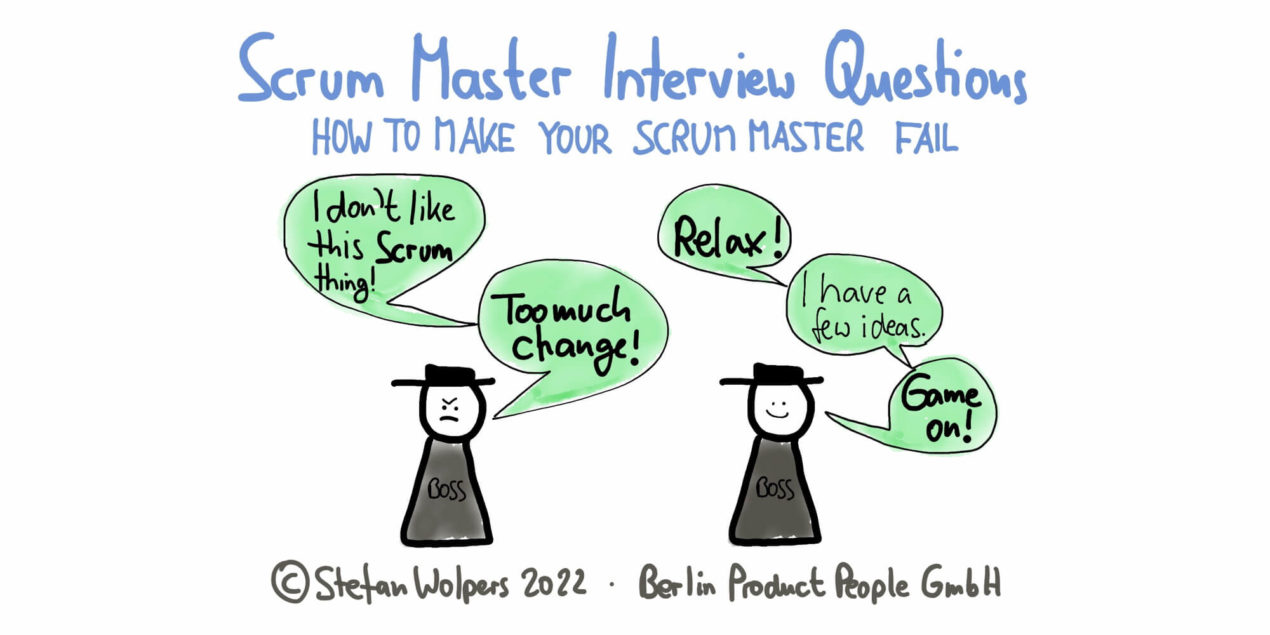
How to Sabotage A Scrum Master — 44 Anti-Patterns from the Trenches

TL; DR: How to Sabotage A Scrum Master — 44 Anti-Patterns from the Trenches to Avoid

One of my favorite exercises from my Professional Scrum Master classes is how to best sabotage a Scrum Master as a member of the middle management. The exercise rules are simple: You’re not allowed to use any form of illegal activity. So, outsourcing the task to a bunch of outlaws is out of the question. Instead, you are only allowed to use practices that are culturally acceptable within your organization.

Read on and learn more on how to best sabotage a Scrum Master from the exercise results of more than ten PSM I and PSM II classes. (I slightly edited the suggestions for better readability.)

How to Sabotage A Scrum Master — 44 Practices from the Trenches — Age-of-Product.com
Continue reading How to Sabotage A Scrum Master — 44 Anti-Patterns from the Trenches

Food for Agile Thought #321: Product Sprawl, Premature Convergence, Agile Coaches—A Family Tree, The Empathy Map

TL; DR: Product Sprawl, Premature Convergence — Food for Agile Thought #321

Welcome to the 321st edition of the Food for Agile Thought newsletter, shared with 33,718 peers. This week, we look under the hood of many presumably well-planned products only to discover product sprawl. Also, we point to the fact that the term ‘Agile Coach’ covers a whole family of roles, and we share results of a study that sheds new light on team autonomy: Teams should choose either teammates or ideas but not both.

We then explain what happens when a team decides on a direction or tactic too early, and we compare the two different concepts of product-led and engineering-led organizations to create value. Moreover, we listen to Melissa Perri talking to David Bland, covering how to identify experiment-worthy assumptions, deal with slow feedback, and generally walk the (experiments) walk. Finally, we provide a practical introduction to the preferred discovery and alignment tool to help people get on the same page.

Lastly, we share lessons learned from Redgate Software’s deliberate reteaming process and the results from a survey of ‘100 industry participants on their perception of the benefits and challenges of adopting the SAFe framework.’

Food for Agile Thought #321: Product Sprawl, Premature Convergence, Agile Coaches—A Family Tree, The Empathy Map—Age-of-Product.com
Continue reading Food for Agile Thought #321: Product Sprawl, Premature Convergence, Agile Coaches—A Family Tree, The Empathy Map

📺 Daniel Stillman: Designing Powerful Questions to help you Coach, Create, Connect and Lead — Hands-on Agile 35

TL; DR: Designing Powerful Questions with Daniel Stillman

Powerful Conversations are the environment that drives change. Learn from Daniel Stillman how designing powerful questions helps you coach, create, connect, and lead from the 35th Hands-on Agile meetup of October 5, 2021.

📺 Watch the video with Daniel Stillman now: Hands-on Agile #35: Designing Powerful Questions to help you Coach, Create, Connect and Lead.

Daniel Stillman: Designing Powerful Questions to help you Coach, Create, Connect and Lead — Hands-on Agile 35 — Age-of-Product.com
Continue reading 📺 Daniel Stillman: Designing Powerful Questions to help you Coach, Create, Connect and Lead — Hands-on Agile 35

Food for Agile Thought #320: Change — The Core Belief Model, Agile Principles, The Innovation Culture Formula, Five ‘WHYs’ Done Correctly

TL; DR: The Core Belief Model, Agile Principles — Food for Agile Thought #320

Welcome to the 320th edition of the Food for Agile Thought newsletter, shared with 33,679 peers. This week, we point at the importance of an organization’s mindset as the starting point for any meaningful transformation, introducing the Core Belief Model. Also, we learn from McKinsey’s interview of six bp leaders on their learnings and reflections regarding a successful transformation, and we delve into the basics of ‘agile,’ from ‘starting with Why’ to the people factor to the perils of shielding teams from clients.

We then delve into the magic math behind an organizational culture where innovation thrives and into the differences between a PoC, a prototype, and an MVP. Also, we sketch four critical negotiations for product managers, from the overly optimistic salesperson to the executive with an ‘excellent’ idea, and we share a new canvas for the jobs-to-be-done framework to help you avoid unnecessary pivoting and churn.

Lastly, we appreciate Richard Kasperowski interviewing Mary and Tom Poppendieck on what you can do to keep your team together in this challenging time, and we share eight games to hack your culture to unlock high performance. Moreover, we learn that Péter Horváth believes that you should not simply ask ‘why’ five times in a row — for multiple psychological reasons.

Food for Agile Thought #320: Change — The Core Belief Model, Agile Principles, The Innovation Culture Formula, Five ‘WHYs’ Done Correctly — Age-of-Product.com
Continue reading Food for Agile Thought #320: Change — The Core Belief Model, Agile Principles, The Innovation Culture Formula, Five ‘WHYs’ Done Correctly