Product Backlog Refinement: 14 First Principles

TL; DR: Product Backlog Refinement First Principles

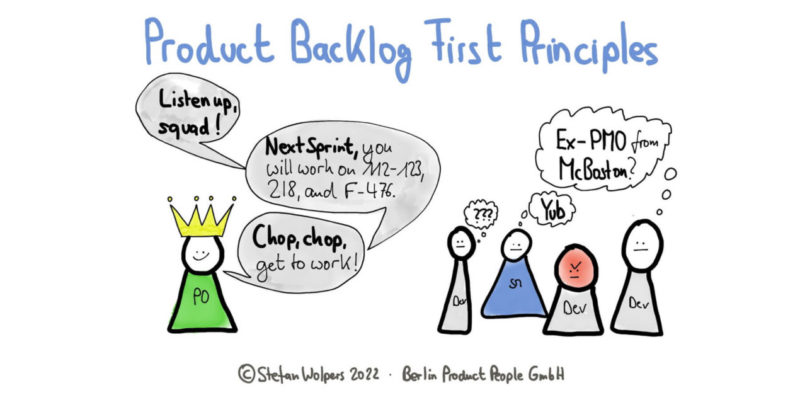
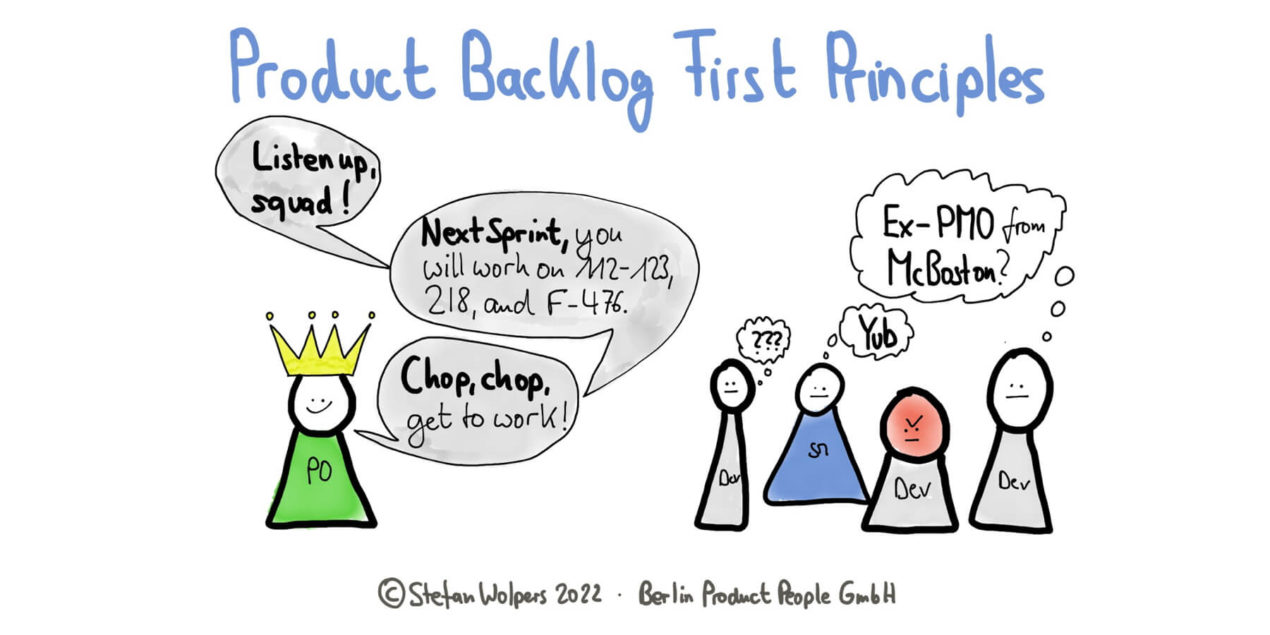
The Product Backlog refinement is a continuous process to create actionable Product Backlogs, enabling a Scrum Team to run Sprint Plannings at a moment’s notice. Consequently, refinement is about creating alignment among all team members about the Why, the What, the How, and probably even the Who regarding the upcoming work for the Scrum team’s Product Goal. As a result, Product Backlog refinement is a critical success factor as it drastically increases the team’s capability to deliver valuable Increments regularly.

The following 14 first principles describe in broad strokes the foundation of a successful approach to refinement.

Product Backlog Refinement First Principles — Age-of-Product.com
Continue reading Product Backlog Refinement: 14 First Principles

Food for Agile Thought #357: Agility—a Timeless Way of Thinking, Team Dynamics, Difficult Product People, A New Dependency Game

TL; DR: Agility: Timeless, Team Dynamics — Food for Agile Thought #357

Welcome to the 357th edition of the Food for Agile Thought newsletter, shared with 35,789 peers. This week, we celebrate the Agile 2022 keynote of Joshua Kerievsky, where he reflects on why “Agility isn’t a formula, a framework, nor a set of roles and rituals to follow” but a timeless way of thinking. Also, Linda Rising, Diana Larsen, and James Shore delve into the dynamics that make and break Agile teams, from the importance of trust to the Tuckman model. Moreover, we suggest six ways of encouraging feedback from team members, from creating psychological safety to leading by example, and we close with a rant about mission statements.

Then, we listen to Mary Cagan, sharing his learnings after more than 20 years at the forefront of product management, from Steve Jobs to building product teams to which trends to ignore. Additionally, we analyze the four most significant threats to building great products and how to deal with them, from difficult developers to executive bullies, and we tackle product roadmaps from a pragmatic angle.

Finally, we share a new game to “find a golden path to delivering maximum business value by benefiting from collaboration vs. getting stuck in dependencies” and a “primer on what you need to know to leverage VSM to chart your lean journey.” Lastly, inspired by Kurt Vonnegut’s lecture on “the simple shapes of stories,” Ash Maurya shows that JTBD’s customer stories also have archetypical shapes.

Food for Agile Thought #357: Agility—a Timeless Way of Thinking, Team Dynamics, Difficult Product People, A New Dependency Game — Age-of-Product.com
Continue reading Food for Agile Thought #357: Agility—a Timeless Way of Thinking, Team Dynamics, Difficult Product People, A New Dependency Game

A New Scrum.org Class: Professional Scrum Facilitation Skills (PSFS)

TL; DR: The Professional Scrum Facilitation Skills Training (PSFS)

It does not happen often, but Scrum.org announced a class: Professional Scrum Facilitation Skills (PSFS)!

The Professional Scrum Facilitation Skills (PSFS) training is a one-day Scrum.org class for advanced Scrum practitioners and agile coaches, including the industry-acknowledged PSFS certification. I will offer PSFS training classes both in English and German.

👉 Check out the upcoming PSFS class in English on September 29, 2022!

Professional Scrum Facilitation Skills (PSFS) — Age-of-Product.com
Continue reading A New Scrum.org Class: Professional Scrum Facilitation Skills (PSFS)

Definition of Done Theses: 10 Simple Principles of a Critical Scrum Success Factor

TL; DR: Definition of Done Theses

Given the importance of a viable Definition of Done for a Scrum team’s success, it has always puzzled me how complacent or ignorant many Scrum teams are regarding their Definition of Done. So, let me share with you the ten first principles of this critical Scrum success factor to improve your team’s effectiveness, team spirit, and reputation.

Definition of Done Theses: 10 Simple Principles of a Critical Scrum Success Factor — Age-of-Product.com
Continue reading Definition of Done Theses: 10 Simple Principles of a Critical Scrum Success Factor

Food for Agile Thought #356: Decision-Making 2.0, Empathy in Product, Tesla’s Agile Success, North Star Framework Template

TL; DR: Decision-Making 2.0, Diamond of Participation — Food for Agile Thought #356

Welcome to the 356th edition of the Food for Agile Thought newsletter, shared with 35,752 peers. This week, we will learn from psychologist Gary Klein how to improve decision-making, particularly as a team, from the benefits of pre-mortems and anonymous voting to the perils of consensus. Also, we detail Tesla’s approach to agility; we explain Sam Kaner et al.’s Diamond of Participation graphic for facilitators, and we encourage you to participate in the survey for the 16th State of Agile report.

Then, we delve into empathy as the superpower of successful product people, enabling the understanding of seemingly tricky stakeholders. Moreover, we suggest to stop “using ‘product market fit’ and instead focus on delivering value to your first ten customers,” and we applaud John Cutler for sharing the template & activity library for the North Star Framework. Following up on the interview with Gary Klein, we also suggest starting your product discovery journey with a pre-mortem: Imagine it is six months later and your product went south; what caused its failure?

Finally, we analyze commonalities and differences in product teams of Facebook, Apple, Amazon, Netflix, and Google, only to return to a classic session from 2012: Marty Cagan shares lessons learned on building products that customers love.

Food for Agile Thought #356: Decision-Making 2.0, Empathy in Product, Tesla’s Agile Success, North Star Framework Template — Age-of-Product.com
Continue reading Food for Agile Thought #356: Decision-Making 2.0, Empathy in Product, Tesla’s Agile Success, North Star Framework Template

Jeff Gothelf: Outcome-Based Product Planning — Hands-on Agile 43

TL; DR: HoA #43: Outcome-Based Product Planning w/ Jeff Gothelf

In this energizing 43rd Hands-on Agile session on outcome-based product planning, Jeff Gothelf clarified one thing: “Roadmapping is a flawed concept in the age of Agile. Maps, by their definition, are linear, and we don’t build linear products and services anymore. We build continuous systems.” Learn more about what he considers product roadmap flaws and what you can do about them.

Jeff Gothelf: Outcome-Based Product Planning — Hands-on Agile 43 — Age-of-Product.com

📺 Watch the video now: Jeff Gothelf: Outcome-Based Product Planning — Hands-on Agile 43.

Continue reading Jeff Gothelf: Outcome-Based Product Planning — Hands-on Agile 43