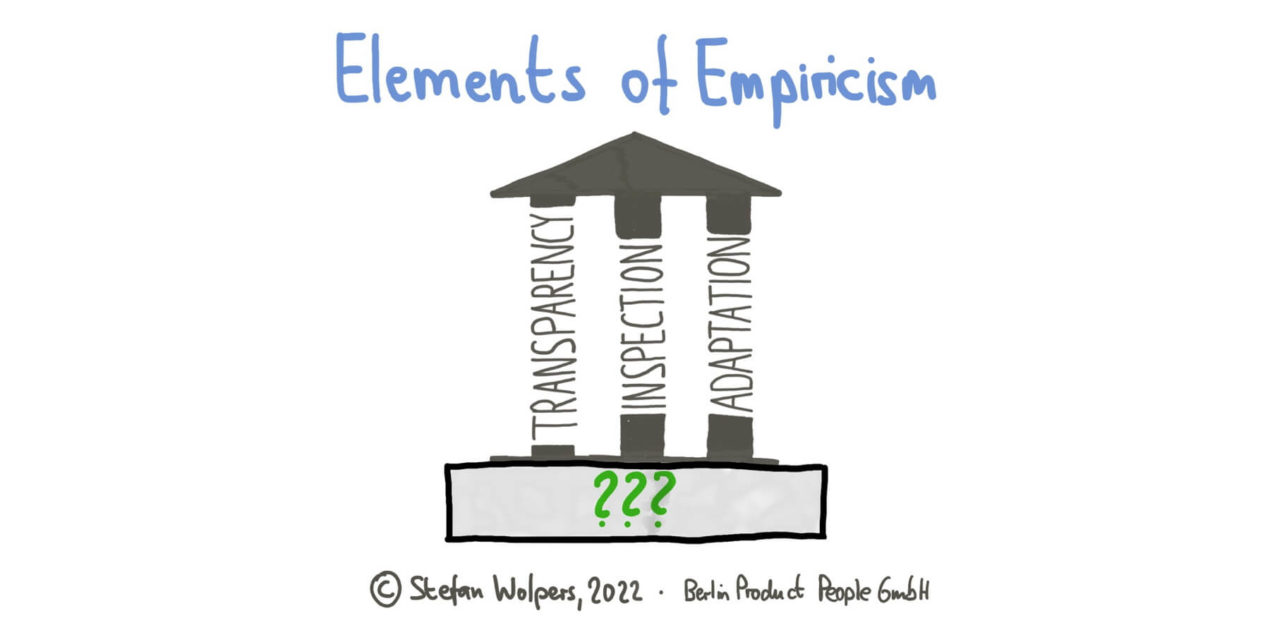
The Three — Wait: Four — Elements of Empiricism

TL; DR: Elements of Empiricism

In its theory section, the Scrum Guide refers to the three elements of empiricism: transparency, inspection, and adaptation. However, a fourth element, foundational to enable empiricism, is hidden in a sentence on Scrum Values. Read on and learn more about the complete picture of Scrum’s empiricism.

The Three — Wait: Four — Elements of Empiricism — Age-of-Product.com
Continue reading The Three — Wait: Four — Elements of Empiricism

Food for Agile Thought #360: How Minds Change, Think Big & Work Small, Grassroots Movements, Elements of Agile Assessment

TL; DR: How Minds Change, Think Big & Work Small — Food for Agile Thought #360

Welcome to the 360th edition of the Food for Agile Thought newsletter, shared with 35,907 peers. This week, we have a fantastic interview with David McRaney on how minds change, rationalization, and belief. (If you are coaching other people, you should listen.) Also, we learn how teams can “experiment and learn, develop new markets, [and] outmaneuver the competition,” and we reflect on who may likely get ahead when encountering an impediment. Switching perspectives, we delve into the “best way to kill a grassroots movement at your company” and how to help it flourish instead.

Then, we point to the necessary “changes to how the product teams need to interact with customers” when an organization abandons a sales-driven approach, and Roman Pichler details his product model, from product vision to Product Backlog, including four artifacts and two templates. Moreover, we reflect on the perils of Think Small and Work Big, Think Big, Work Big, and Think Small, Work Small, and link mental models to building products, from Parkinson’s Law of Triviality to Conway’s Law to the Pareto Principle.

Finally, Mike Cohn shares a free assessment tool for your team’s mastery of 20 essential elements of a successful transformation. Also, we advocate using anti-personas to “help anticipate how products can be misused in ways that can harm users and the business.” Lastly, Phil Mistry tells the incredible story of an invention ahead of its time in a classic case of an innovator’s dilemma: How Steve Sasson invented Kodak’s digital camera!

Food for Agile Thought #360: How Minds Change, Think Big & Work Small, Grassroots Movements, Elements of Agile Assessment — Age-of-Product.com
Continue reading Food for Agile Thought #360: How Minds Change, Think Big & Work Small, Grassroots Movements, Elements of Agile Assessment

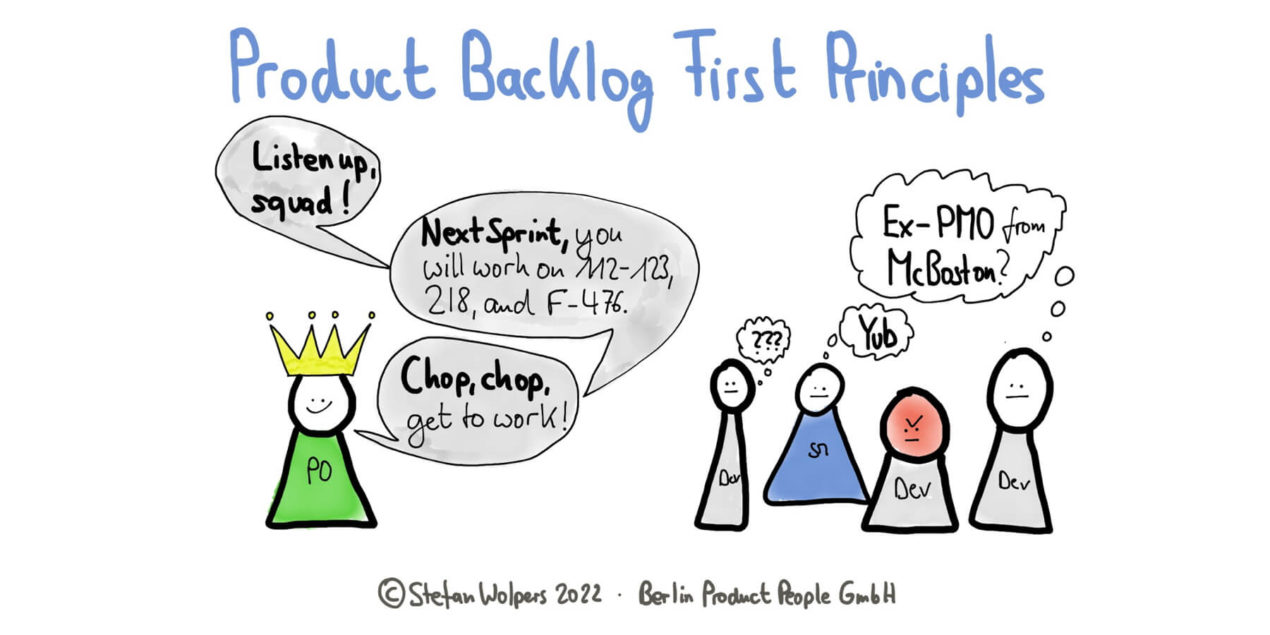
The Product Backlog: 14 First Principles to Help Your Scrum Team Succeed

TL; DR: Product Backlog Principles

Contrary to popular belief, the Product Owner does not have dictatorial powers regarding the composition and order of the Product Backlog. Instead, Scrum as a framework is based on a delicate system of checks and balances, collaboration, and joint decision-making to mitigate risk; for example, the Product Owner falling in love with their solution over the problem of the customers. Learn more about critical Product Backlog principles, from the size and growth of the Product Backlog to whether a Product Backlog is necessary in the first place. (Some lean practitioners dispute its existence is justified.)

Product Backlog Principles — Age-of-Product.com
Continue reading The Product Backlog: 14 First Principles to Help Your Scrum Team Succeed

Food for Agile Thought #359: UX & Engineering, Product for Truly Agile Teams, 4 Major Issues w/ Lean Startup, Discovery’s Toughest Questions

TL; DR: UX & Engineering, AI in Product — Food for Agile Thought #359

Welcome to the 359th edition of the Food for Agile Thought newsletter, shared with 35,852 peers. This week, we delve into UX & engineering, detailing how product discovery benefits from including engineers early in the process, from timely feasibility discussions to designing minimum viable experiments (MVE). Also, we reflect on the many aspects of velocity, “if you are planning for a stable team with high morale that can consistently deliver,” and explore a vital character trait of any trainer, coach, entrepreneur, or artist — tenacity — with Jerry Colonna and Jules Pieri.

Then, Allan Holub explores the importance of product management for agile teams, from C-level buy-in to empowering people w/o leaving them to JIRA’s perils, while dissing Scrum. Moreover, Ryan J. Salva shares the success story of Copilot, GitHub’s OpenAI’s ML engine, while Martin Spinnangr asks: Continue, pivot, kill, or charge ahead?

Finally, Sachin Rekhi points to four Lean Startup issues, from agnostic experimentation to over-focusing on MVPs to incrementalism, and we dig into the benefits of journaling for decision-making. Also, we explore the effects of limiting beliefs on change, from anchoring to selection bias. PS: Can I interest you in Dr. Laurence J. Peter explaining some of the observations leading to his theory?

Food for Agile Thought #359: UX & Engineering, Product for Truly Agile Teams, 4 Major Issues w/ Lean Startup, Discovery’s Toughest Questions — Age-of-Product.com
Continue reading Food for Agile Thought #359: UX & Engineering, Product for Truly Agile Teams, 4 Major Issues w/ Lean Startup, Discovery’s Toughest Questions

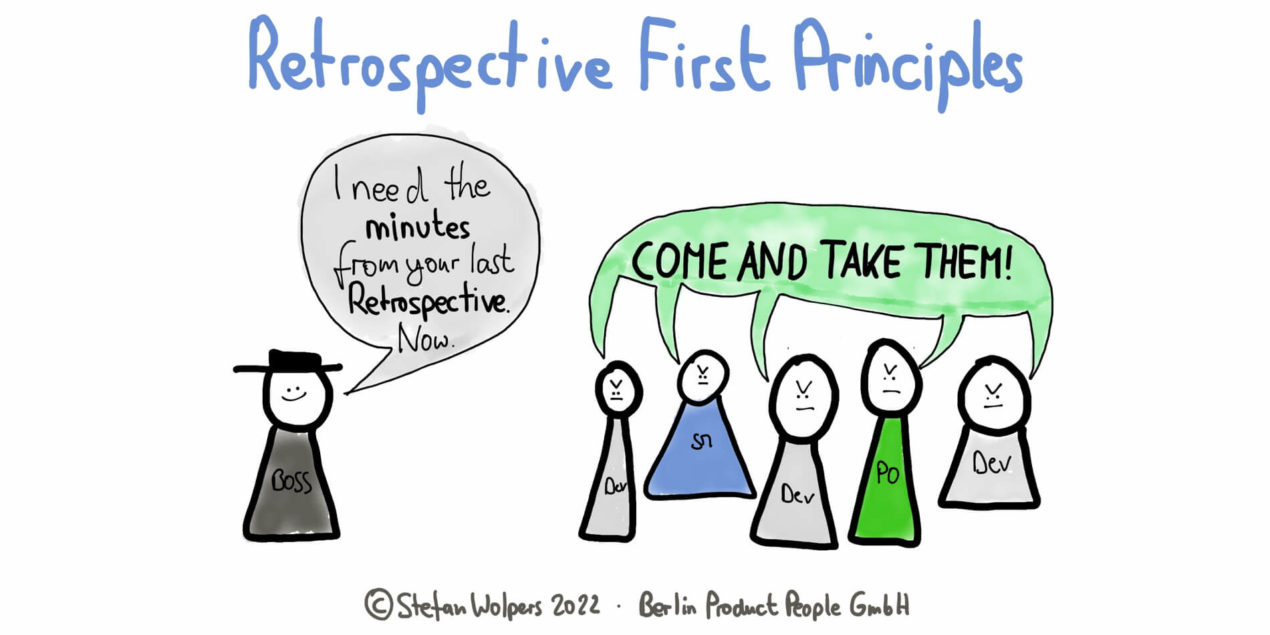
Retrospective First Principles

TL; DR: Retrospective First Principles

What is your take on the Retrospective: A routine exercise at the end of a Sprint, supported by standard operating procedures? Or a critical part of a Scrum team’s journey of continuous improvement? As you may assume, I advocate for the latter. In my experience, Scrum teams start utilizing Retrospectives to their full potential when they embrace a short set of Retrospective first principles, outlining the essence of the Why, the What, and the How.

Retrospective First Principles — Age-of-Product.com

For classic nerds: “Molon labe (Ancient Greek: μολὼν λαβέ, romanized: molṑn labé), meaning ‘come and take [them][…]’

Continue reading Retrospective First Principles

Food for Agile Thought #358: Scaling Innovation, #NoBacklogs, Studies on Cross-Functional Teams, Product Health Check

TL; DR: Agility: Scaling Innovation, #NoBacklogs — Food for Agile Thought #358

Welcome to the 358th edition of the Food for Agile Thought newsletter, shared with 35,833 peers. This week, Steven Sinofsky analyzes the challenges of scaling innovation, delving into concepts, tools, culture, and change. Also, Allan “Nuke the backlog” Kelly delves into the current discussion regarding the Product Backlog’s usefulness. Furthermore, we analyze research papers on cross-functionality from Google Scholar and point to the moment when deteriorating software quality insects with a higher demand for new features.

Then, Wes Kao and Lenny Rachitsky cover how to engage your audience and improve your communication for product success. Moreover, we dissect aspects of product leadership, from strategic thinkers to the get-it-done thinkers, and we explain the negative consequences of employing SAFe® for product management, for example, its obsession with process.

Finally, we share Brad Dunn’s new approach to product management: replace the product manager role with a value manager and a discovery engineer. Additionally, we provide a concept of gathering health indicators to support better product decisions, plus a canvas to help you “avoid creating the right solution to the wrong problem.”

Food for Agile Thought #358: Scaling Innovation, #NoBacklogs, Studies on Cross-Functional Teams, Product Health Check — Age-of-Product.com
Continue reading Food for Agile Thought #358: Scaling Innovation, #NoBacklogs, Studies on Cross-Functional Teams, Product Health Check