Food for Agile Thought #372: State of Agile Report 2022, Annual Planning in Uncertain Times, ChatGPT on Agile and Scrum, The Art and Science of Pricing

TL; DR: State of Agile 2022, ChatGPT on Agile and Scrum — Food for Agile Thought #372

Welcome to the 372nd edition of the Food for Agile Thought newsletter, shared with 36,387 peers. This week, we share the State of Agile 2022 Report and probe ChatGPT on Agile and Scrum. Moreover, we dissect a common corporate anti-pattern while transforming into an agile organization: They continue incentivizing individuals. Also, we discuss the concept of technical debt—a ‘metaphor for communicating the long-term implications of architectural decisions and trade-offs to stakeholders’—and its limitations.

Then, we offer advice on how to lead stakeholders and developers, guide individuals, and create value together without having the authority to tell them what to do. Next, Lenny Rachitsky interviews Madhavan Ramanujam, author of ‘Monetizing Innovation,’ about all the elements that go into your pricing strategy. Of course, getting pricing right requires experiments. Fortunately, we also share a hypothesis for supporting an organizational culture of experimentation by applying a pattern language to cover that part.

Finally, First Round Capital compiled six ‘unique approaches to end-of-year planning,’ covering fresh tactics, different perspectives, and tested frameworks. Moreover, the Concepts & Tools section would not be complete this week without this comprehensive guide to decision-making, from the benefits of including others to games, exercises, tools, and how to avoid premature convergence. Lastly, Andy Cleff analyzes the context and options of saying ‘no’ gracefully, and Ben Thompson also explores ChatGPT by asking, ‘Did Thomas Hobbes believe in the separation of powers?’

Food for Agile Thought #372: State of Agile 2022 Report, Annual Planning in Uncertain Times, ChatGPT on Agile and Scrum, The Art and Science of Pricing — Age-of-Product.com
Continue reading Food for Agile Thought #372: State of Agile Report 2022, Annual Planning in Uncertain Times, ChatGPT on Agile and Scrum, The Art and Science of Pricing

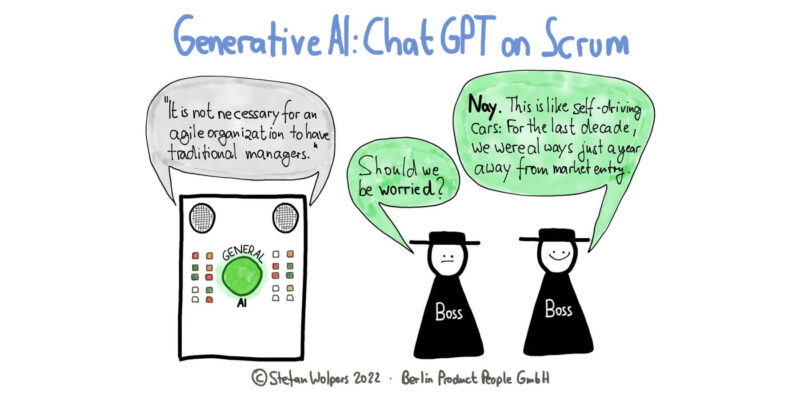
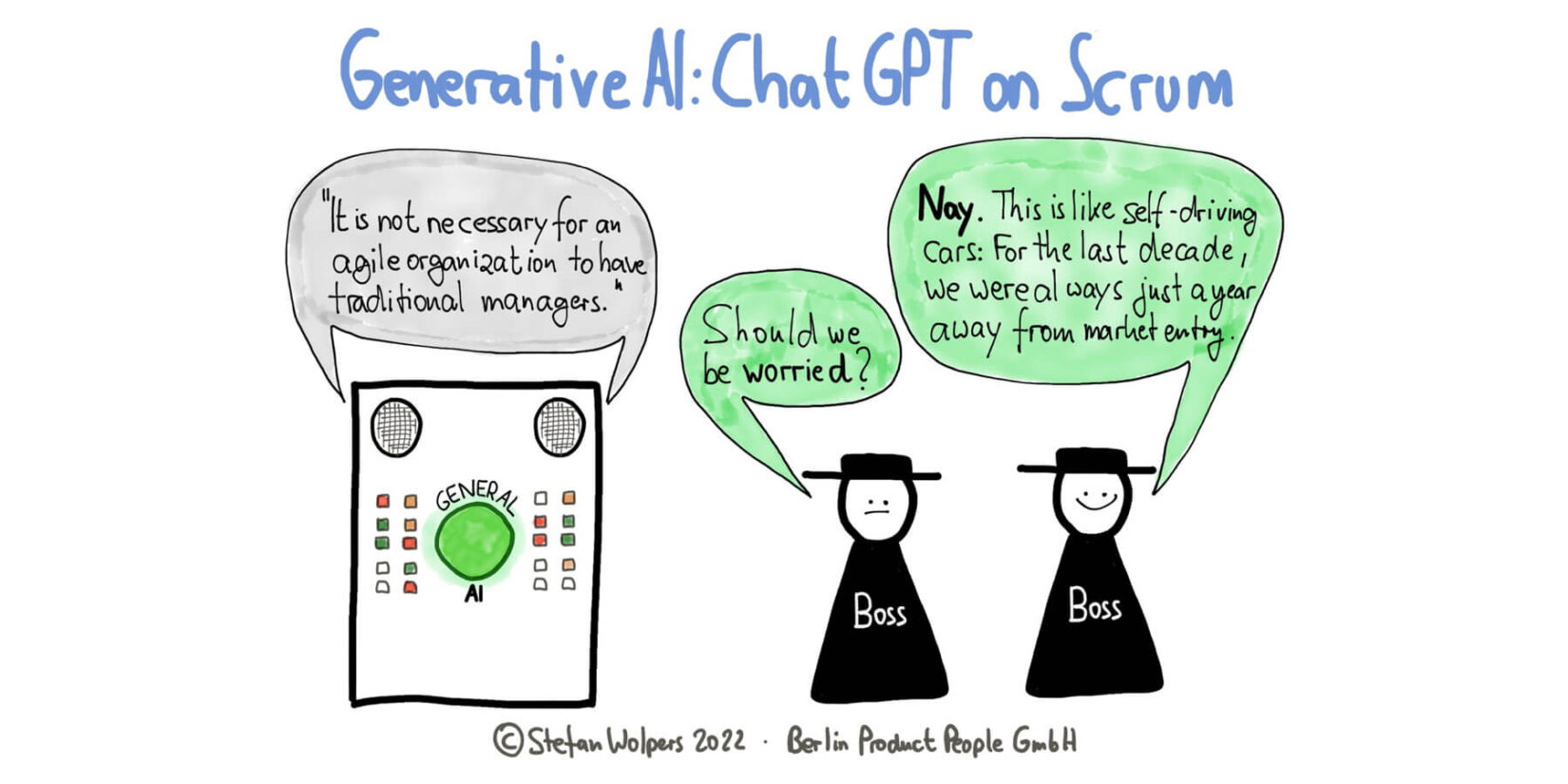
Agility and Scrum According to OpenAI’s ChatGPT — Be Surprised!

TL; DR: Business Agility, Scrum and Generative AI’s Take on Getting There

There has been a lot of talking about generative AI recently, mainly fueled by excellent work results in the text and graphics area. A few days ago, OpenAI made a new model available that “interacts in a conversational way. The dialogue format makes it possible for ChatGPT to answer follow-up questions, admit its mistakes, challenge incorrect premises, and reject inappropriate requests.” (Source.)

I thought it might be fun to ask ChatGPT a few questions about business agility in general and Scrum in particular.

Generative AI: OpenAI’s ChatGPT on Business Agility and Scrum — Age-of-Product.com
Continue reading Agility and Scrum According to OpenAI’s ChatGPT — Be Surprised!

Food for Agile Thought #371: User Story Guide, Not all Planning Is Helpful, ROI of Product Management, Free Facilitation Resources

TL; DR: User Story Guide, Free Facilitation Resources — Food for Agile Thought #371

Welcome to the 371st edition of the Food for Agile Thought newsletter, shared with 36,352 peers. This week, we share an extensive user story guide to create successful products, covering a lot of ground from 3Cs to INVEST to 3Ws. Also, we delve into the benefits of applying principles and patterns from the team topologies concept to remote and hybrid work environments. Moreover, John Cutler busts the myth that all planning is in some way helpful when he points to nine situations where planning might not be beneficial, from planning before the last responsible moment to planning to maximize output.

Also, we appreciate a Forrester Consulting study on the benefits of taking product management seriously, including “key recommendations on making product bets with greater impact.” (Download the study for free.) Then, we analyze different scenarios you may encounter when elevating a team from feature factory workers to problem solvers and dive into the advantages of a product design philosophy popularized by Amazon: Working backward. And Petra Wille shares how to best support your team as a product coach.

Finally, we share lessons learned on how ThoughtWorks helped Etsy create a new product culture, scaling discovery and delivery. The Institute of Cultural Affairs curated an extensive repository of free learning resources for facilitators, from group facilitation methods to virtual facilitation. Lastly, Russ Roberts interviews Annie Duke on the benefits of letting go and how to avoid confusing grit with character.

Food for Agile Thought #371: User Story Guide, Not all Planning Is Helpful, ROI of Product Management, Free Facilitation Resources — Age-of-Product.com
Continue reading Food for Agile Thought #371: User Story Guide, Not all Planning Is Helpful, ROI of Product Management, Free Facilitation Resources

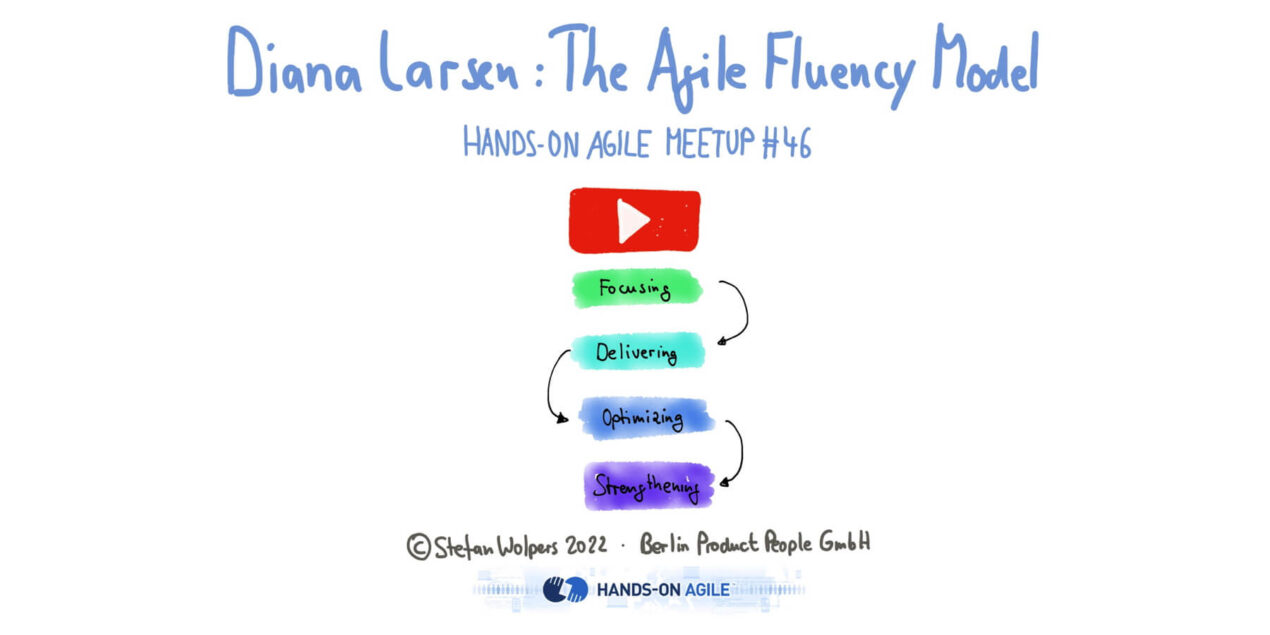
Engage the Agile Fluency® Model with Diana Larsen — Hands-on Agile #46

TL; DR: Hands-on Agile #46: Engage the Agile Fluency® Model with Diana Larsen

On October 12, 2022, agile innovator Diana Larsen delved into the Agile Fluency® Model. After a short introduction to the model, we shifted to an ask-me-anything-style discussion of the groundbreaking view of agile and teams.

Engage the Agile Fluency® Model with Diana Larsen — Hands-on Agile #46 — Age-of-Product.com

📺 Watch the video now: Engage the Agile Fluency® Model with Diana Larsen — Hands-on Agile #46.

Continue reading Engage the Agile Fluency® Model with Diana Larsen — Hands-on Agile #46

Food for Agile Thought #370: Calm Innovation, Delivery Dates, Participatory Decisions, Bad Bosses

TL; DR: Calm Innovation, Delivery Dates — Food for Agile Thought #370

Welcome to the 370th edition of the Food for Agile Thought newsletter, shared with 36,317 peers. This week, Shane Parrish interviews Tobi Lütke of Shopify about calm innovation, fighting bureaucracy, and scaling Shopify. Also, we reflect on facilitation and decision-making, including the opportunity costs of premature convergence, and learn more about the “Technology, Organization, and Product (TOP)” approach to agility. Moreover, we dissect the background of bad bosses.

Also, we learn from Ian McAllister about essential PM skills, broadening your horizon, and the importance of diversifying your skills as you move up the ladder. Speaking of which, we also share ten real-life examples of mistakes with long-term career-limiting effects for product managers, and we analyze three, unfortunately, prominent ways to trigger waste and frustration in product management.

Finally, we play our favorite broken record again: hands-off the deliberately abstract concept of story points. Moreover, we detail why teams underestimate work—learn more about hubris, dominant voices, and lacking the big picture—and advocate reducing cycle time to improve throughput and predictability. Lastly, Ken Norton shares his approach to what to do “when it’s time for some tough talk.”

Food for Agile Thought #370: Calm Innovation, Delivery Dates, Participatory Decisions, Good People to Bad Bosses — Age-of-Product.com
Continue reading Food for Agile Thought #370: Calm Innovation, Delivery Dates, Participatory Decisions, Bad Bosses

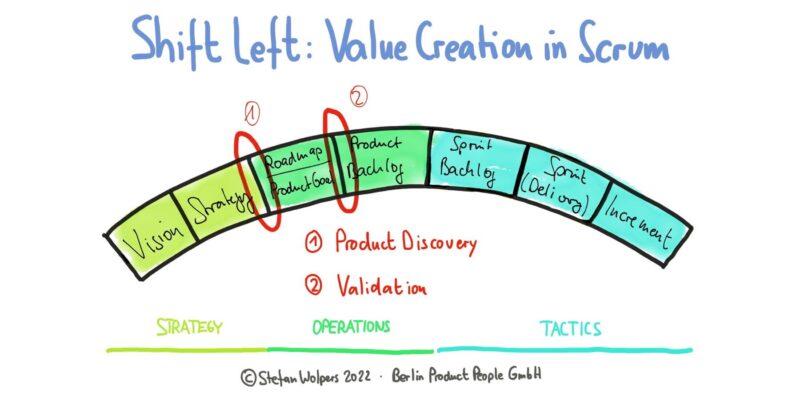
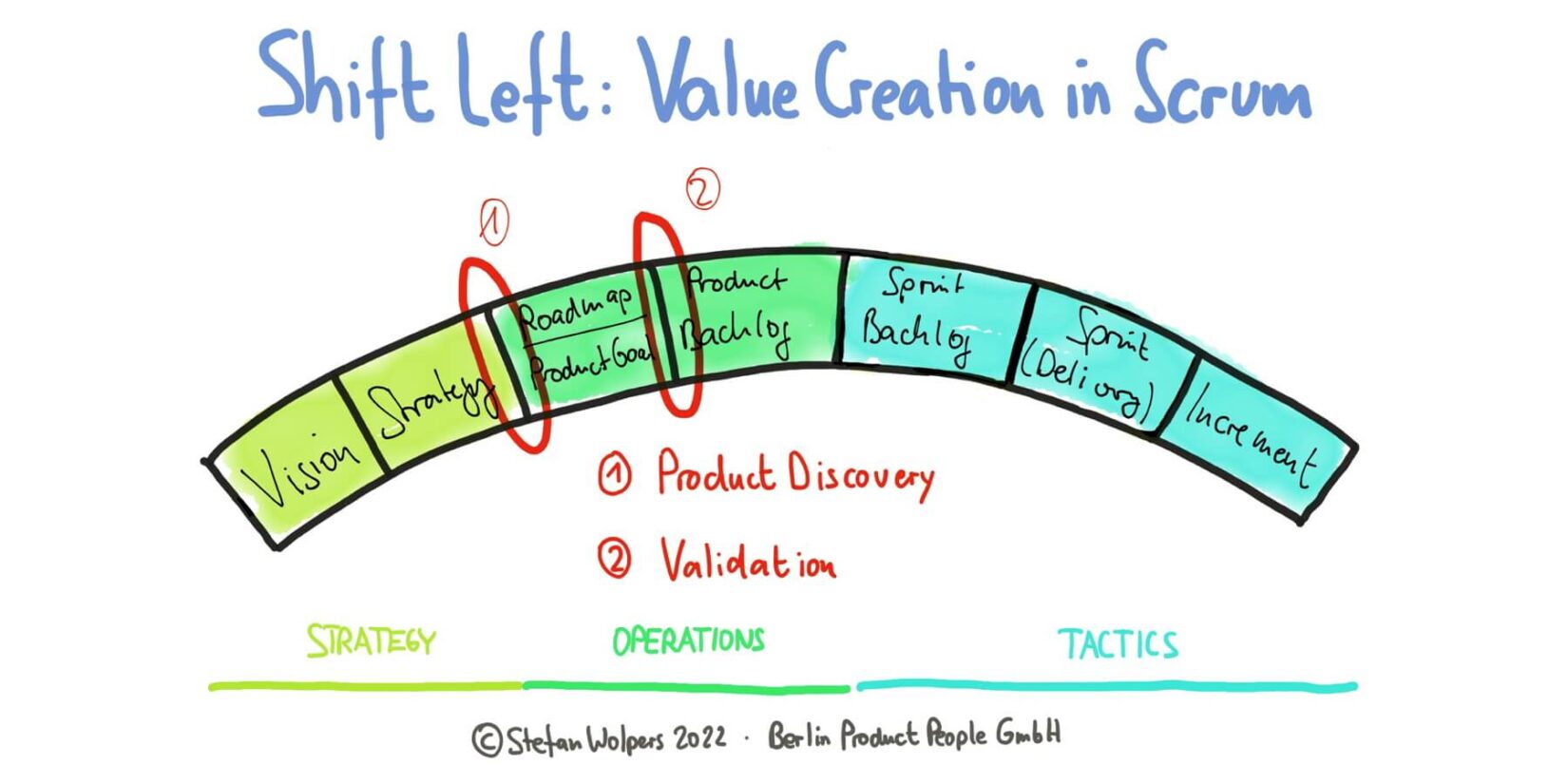
Shift Left: Value Creation in Scrum

TL; DR: Value Creation in Scrum

As a tactical framework, Scrum is good at delivering Increments into customers’ hands. As we work in iterations, we probably do that several times per month, mitigating risk by closing feedback loops. Nevertheless, there is a potentially hazardous void in the framework that successful Scrum teams start plugging early: how to figure out what is worth building—product discovery—in the first place. As a result, value creation in Scrum is not as straightforward as you might have thought.

Value Creation in Scrum — Shift Left — Age-of-Product.com
Continue reading Shift Left: Value Creation in Scrum