Food for Agile Thought #389: Scrum’s Failure, Staying Scrappy for Innovation, Forecasting 2.0, ProductOps Handbook

TL; DR: Scrum’s Failure — Food for Agile Thought #389

Welcome to the 389th edition of the Food for Agile Thought newsletter, shared with 46,163 peers. This week, we delve into Scrum’s failure: Jason Godesky reminds us that few have ever worked in a true Scrum team, but many have in a Scrum cargo cult environment. Moreover, we delve into “bias and noise” and how they influence forecasting, and we learn how you can use Fluid Scrum Teams to manage multiple data products over various Sprints. Also, in shameless self-promotion, I want to point to the No Nonsense Agile Podcast that Murray Robinson, Shane Gibson, and I recorded recently. (Speaking of anti-patterns: There is also a new article on Jira and its perils if misused, see below.)

Then, we analyze the fundamental misalignment between the ‘business’ — focusing on one customer at a time — and ‘product/engineering,’ focusing on the overall impact for the installed base. Additionally, we point to the importance of embracing a learning mindset as the driver of innovation while process, vetos, institutional memory, and the vilification of failure work against it, and we share a practical and actionable list of recommendations to create a ProductOps handbook.

Finally, we suggest five experiments to help foster a safe working environment, from equal speaking time during meetings to celebrating failure, plus a new tool to ease the often challenging task of communicating project issues: the Definition of Broken. More tools are from John Cutler, who points to the free template library of the complete North Star metrics framework. Lastly, Nicole Abi-Esber and Juliana Schroeder claim that people underestimate how much others want to receive feedback.
Food for Agile Thought #389: Scrum’s Failure, Staying Scrappy for Innovation, Forecasting 2.0, ProductOps Handbook — Age-of-Product.com
Continue reading Food for Agile Thought #389: Scrum’s Failure, Staying Scrappy for Innovation, Forecasting 2.0, ProductOps Handbook

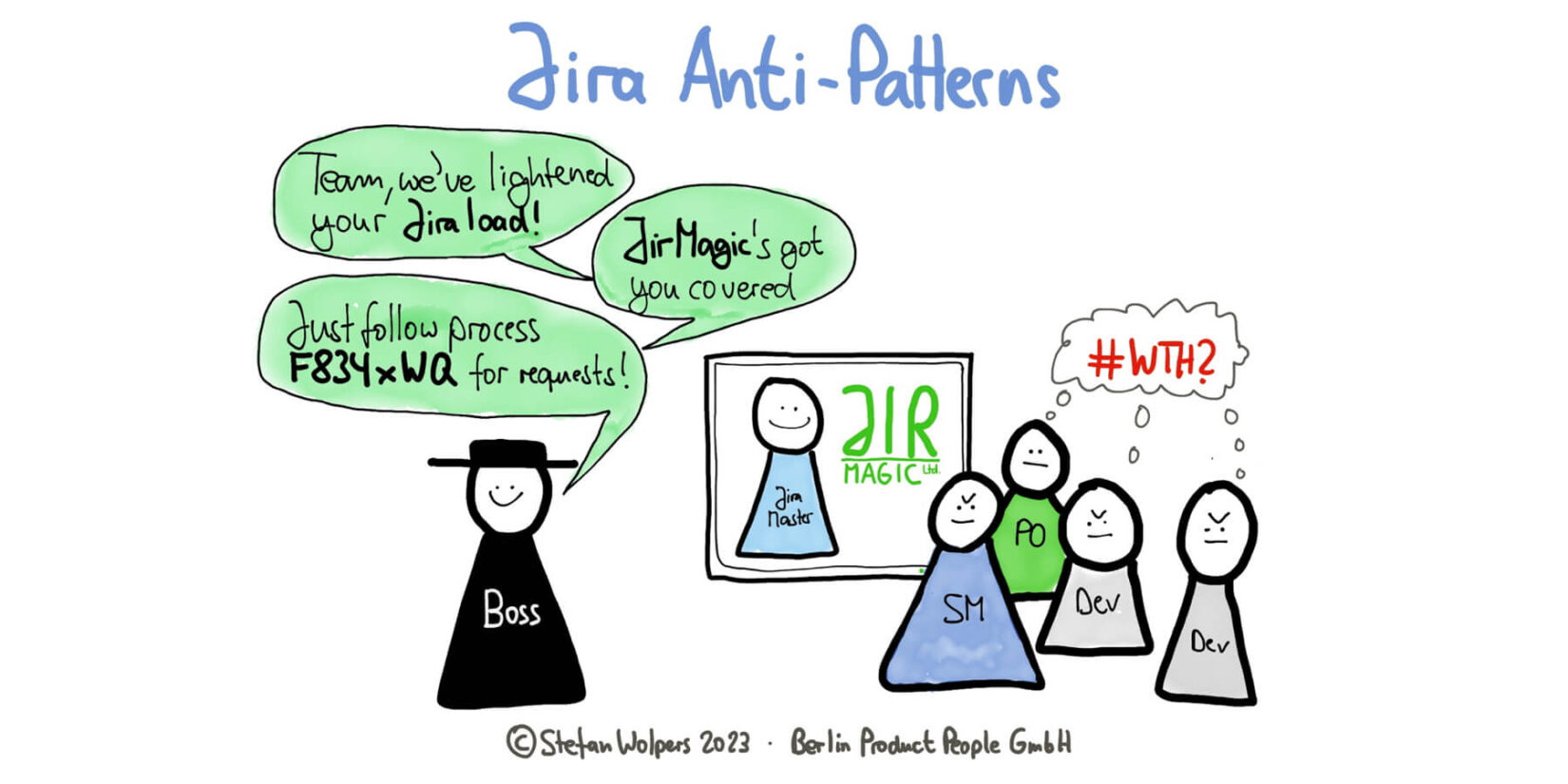
Jira Anti-Patterns

TL; DR: Jira Anti-Patterns

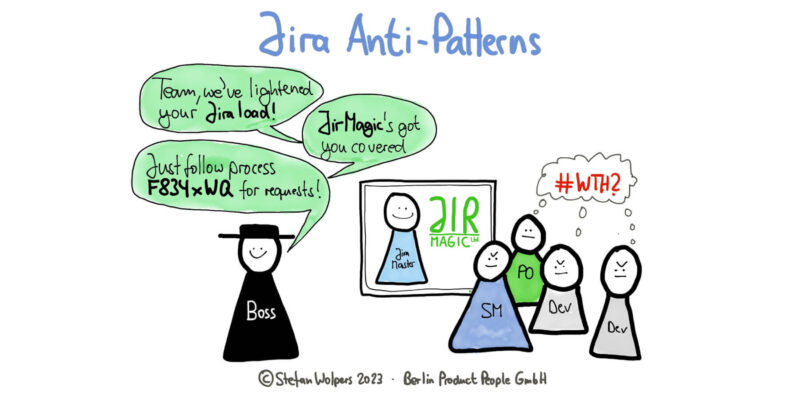
If you ask people to come up with popular attributes for “Agile” or “agility,” Scrum and Jira will likely be among the top ten featured. Moreover, in any discussion about the topic, someone will mention that using Scrum running on top of Jira does not make an organization agile. However, more importantly, this notion is often only a tiny step from identifying Jira as a potential impediment to outright vilifying it. So in March 2023, I embarked on a non-representative research exercise to learn how organizations misuse Jira from a team perspective as I wanted to understand Jira anti-patterns.

Read on and learn more about how a project management tool that is reasonably usable when you use it out of the box without any modifications turns into a bureaucratic nightmare, what the reasons for this might be, and what we can do about it.

Jira Anti-Patterns —Age-of-Product.com
Continue reading Jira Anti-Patterns

Food for Agile Thought #388: Perils of Deterministic Thinking, ChatGPT for Product Work, Interruption & Context Switching, Pre-Mortems

TL; DR: The Perils of Deterministic Thinking — Food for Agile Thought #388

Welcome to the 388th edition of the Food for Agile Thought newsletter, shared with 46,012 peers. This week, we delve into the perils of deterministic thinking and reflect on what growth may mean for a Scrum team, covering the spectrum from product discovery to DevOps. Also, we suggest strategies to minimize the influence of engineering work’s two most costly factors and point to wrong ideas typically plaguing agile transformation, from installing practices to changing culture to the mystical one-time change effort.

Then, we share real-life examples, including prompts on how product managers already use ChatGPT daily and follow John Cutler, who looks beyond the usual product-market fit approach, claiming that the biggest challenge is Product-Reality Fit instead. Also, we map the problem of creating product goals onto the Cynefin Framework and detail what experimentation entails in the complex or chaotic domain. Speaking of creating goals: you want to mitigate the risk of running in the wrong direction. Ant Murphy suggests an excellent tool for that: the pre-mortem risk analysis.

Finally, Sevawise Games created a free Monte Carlo Estimation tool that supports Parabol’s fine primer on estimation, from Planning Poker to Wall Estimation to #NoEstimates. Moreover, we explore whether we can use ChatGPT-4 to create workshops for agile practitioners; for example, Scrum Masters. Lastly, Dave Gray details the development steps of the well-known Innovation Ecosystem Map.

Food for Agile Thought #388: Perils of Deterministic Thinking, ChatGPT for Product Work, Interruption & Context Switching, Pre-Mortems — Age-of-Product.com
Continue reading Food for Agile Thought #388: Perils of Deterministic Thinking, ChatGPT for Product Work, Interruption & Context Switching, Pre-Mortems

Food for Agile Thought #387: Culture & Methods Trends 2023, The Introverted Product Manager, Spotify’s Way of Working, Users Lie to Us

TL; DR: Culture & Methods Trends 2023 — Food for Agile Thought #387

Welcome to the 387th edition of the Food for Agile Thought newsletter, shared with 45,893 peers. This week, Shane Hastie introduces the Culture & Methods Trends 2023 report, from culture handbooks to LLM-supported development to scaling frameworks entering the Late Majority. Moreover, we learn from an interview with Brendan Marsh about Spotify and its way of working, the obvious question being: Is there a ‘Spotify Model?’ Also, we list three critical issues leading to less effective Retrospectives, from inconsistency to a lack of contributions to failure to follow up on action items, and point out that SAFe may not be ideal, but applying it may lead to a higher level of business agility, depending on the environment and context.

Then, Maret Kruve remembers her challenges when starting as a product manager, being an introvert, and how she coped with them. Also, we learn suggestions for encouraging engineers to involve themselves more effectively in the ideation process. In a shocking revelation, Michalina Bidzinska explains why “listening to users is less important than observing their actions,” as they all lie to us.

Finally, we reflect on issues and challenges when using NPS beyond its intended purpose as a consumer research tool and ask ChatGPT to help us with OKR design. Speaking of metrics, Tendayi Viki dissects the idea of return on investment for innovation, distinguishing two realms: the “innovation team lives in Explore, whereas the executive board lives in Exploit.” Lastly, we explore how Chinese companies “prioritize autonomy at scale, internal digital platforms, and a clear project focus.”

Food for Agile Thought #387: Culture & Methods Trends 2023, The Introverted Product Manager, Spotify’s Way of Working, Users Lie to Us — Age-of-Product.com
Continue reading Food for Agile Thought #387: Culture & Methods Trends 2023, The Introverted Product Manager, Spotify’s Way of Working, Users Lie to Us

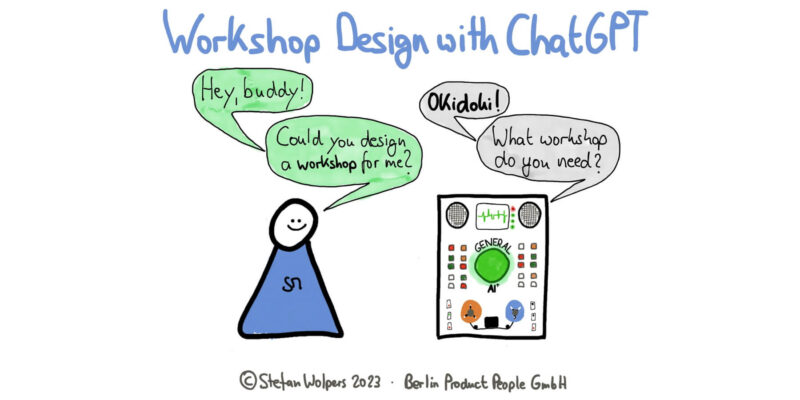
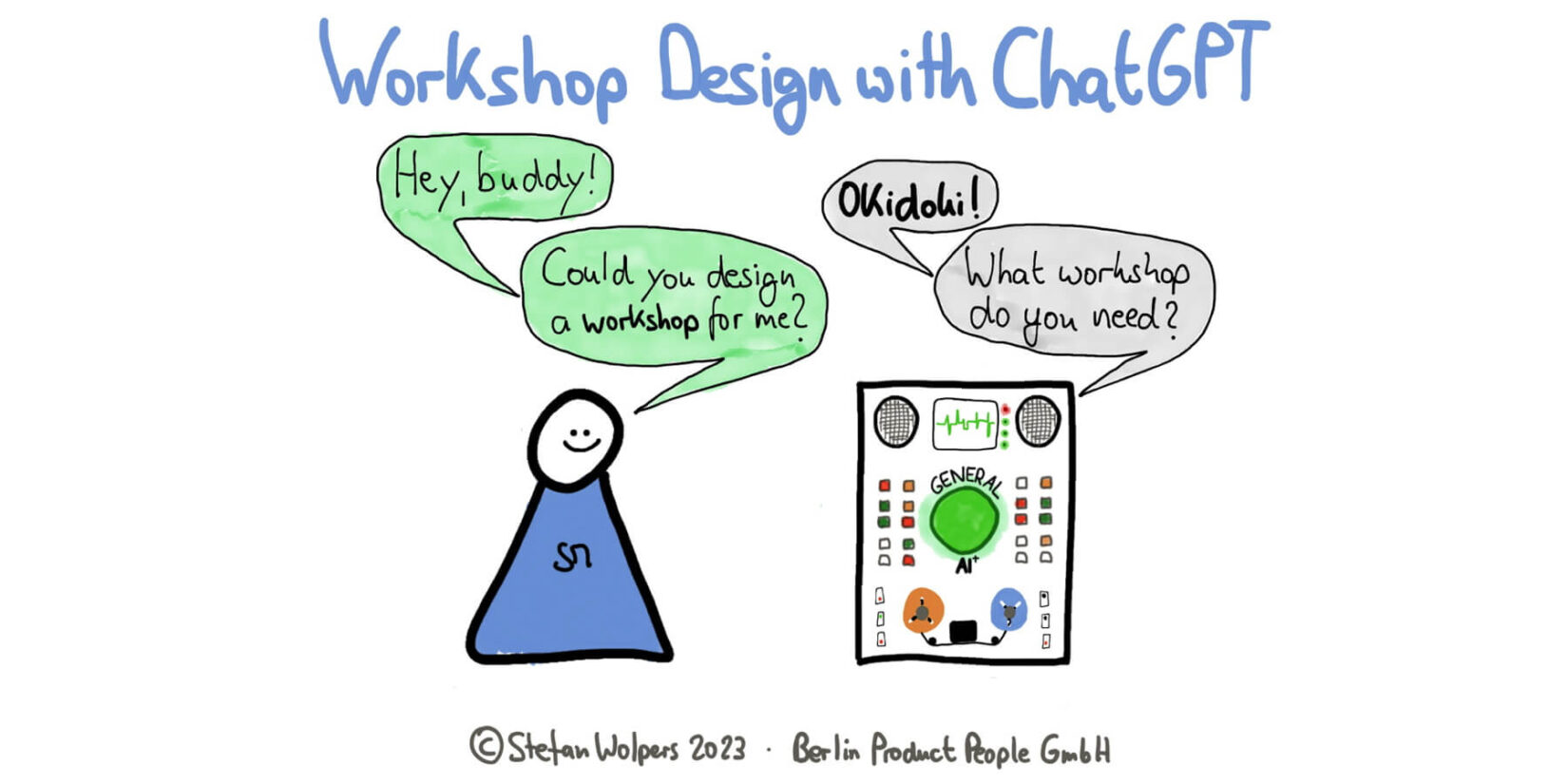
Workshop Design with ChatGPT

TL; DR: Workshop Design with ChatGPT

The following article explores whether we can use ChatGPT-4 to create workshops for agile practitioners; for example, Scrum Masters. While Liberating Structures have simplified the task, workshop design with ChatGPT may provide an alternative.

As you will learn, and despite being prone to lapse into project management speak, ChatGPT is remarkably capable of doing so, provided we feed it suitable prompts. Whether this requirement gives ChatGPT an edge over manually creating workshops remains to be seen.

Workshop Design with ChatGPT — Age-of-Product.com
Continue reading Workshop Design with ChatGPT

Food for Agile Thought #386: Scrum Police, Marty Cagan on Transformations, Agile Bureaucracy, Trust In Product Management?

TL; DR: Scrum Police, Marty Cagan on Transformations — Food for Agile Thought #386

Welcome to the 386th edition of the Food for Agile Thought newsletter, shared with 45,734 peers. This week, we applaud Mike Cohn and his fantastic squad from the Scrum Police for battling the countless misadventures of wonky Scrum implementations. Also, Jurriaan Kamer explores six options to “revitalize your agile transformation” while we reflect on the “relationship between organization and self-organization,” as systems self-organize within constraints. Moreover, Shane Snow claims, “despite our natural propensity to trust, a lack of trust is the #1 underlying cause of dysfunction in teams,” and Jason Cohen dives into humanity’s repeated pattern of inability to predict the future and what techniques we have to navigate our volatile world.

Then, Marty Cagan shares his thoughts on common transformation pitfalls, from outsourcing the transformation to McBoston to the widespread desire for a process, and Tim Herbig suggests addressing the analysis-paralysis problem product teams face during product discovery. Additionally, Dave Gray shares several free innovation-related illustrations, from the corporate innovation ecosystem to measuring innovation to plugging into the startup ecosystem.

Finally, we appreciate that Corinna Baldauf turned all 144 Retromat exercises into a giant Miro template and enjoy Nick Brown’s excellent primer on the many problems, issues, and flaws of a favorite concept of many organizations: flow efficiency. Russ Roberts interviews Kevin Kelly about his book ‘Excellent Advice for Living,’ and why Kevin Kelly is not worried about AI, and we close with David Rotman’s belief that LLMs would inevitably cause a revolution by transforming many jobs. Whether that will be beneficial to society is up to us to decide.

Food for Agile Thought #386: Scrum Police, Marty Cagan on Transformations, Agile Bureaucracy, Trust In Product Management? — Age-of-Product.com
Continue reading Food for Agile Thought #386: Scrum Police, Marty Cagan on Transformations, Agile Bureaucracy, Trust In Product Management?