
Food for Agile Thought #415: Product Nightmares, Assumption Testing Guide, Freemium Fiasco, Agile Inflection Point?

TL; DR: Product Nightmares — Food for Agile Thought #415

Welcome to the 415th edition of the Food for Agile Thought newsletter, shared with 49,394 peers. This week, we delve into various aspects of Agile and Scrum, starting with Dean Peters’ eerie depiction of product nightmares as Halloween monsters, urging an outcome-driven strategy. Mike Griffith contemplates the mainstream adoption of Agile amid declining conference attendance, hinting at a possible inflection point. Jason Evanish warns against toxic positivity’s corrosive effects on workplace morale and productivity. Also, Viktor Cessan shares how a tailored feedback format enriched communication in a re-missioned team. And, seriously, this Week’s Lemon suggests a hybrid approach of Agile and Waterfall.

Then, Teresa Torres highlights the value of regular assumption testing for quick product idea evaluations, and Marty Cagan commends Spotify’s innovation amidst market challenges. Moreover, Itamar Gilad addresses idea prioritization, advocating for a strategic framework with a clear mission and measurable growth model, while Leah Tharin explores the transition to a freemium model, emphasizing aligning sales and marketing incentives, revamping onboarding experiences, and assessing a product’s freemium suitability to prevent revenue loss.

Lastly, Nicola Ballotta delves into Engineering Metrics, showcasing them as instrumental tools in quantifying and enhancing various software development aspects and aligning engineering operations with broader business goals. Additionally, we unveil a novel Stability Metric (ψ) based on queueing theory to bolster predictability in agile systems. The authors suggest the application of ψ as a tool for teams to improve project timeline foresight and enhance predictability. Finally, we point to the recording of Bob Galen’s session on ‘An Agile Coaches Guide to Storytelling” at the 53. Hands-on Agile.
Food for Agile Thought #415: Product Nightmares, Assumption Testing Guide, Freemium Fiasco, An Agile Inflection Point? — Age-of-Product.com
Continue reading Food for Agile Thought #415: Product Nightmares, Assumption Testing Guide, Freemium Fiasco, Agile Inflection Point?

An Agile Coaches Guide to Storytelling — Bob Galen at the 53. Hands-on Agile

TL; DR: Hands-on Agile #53: An Agile Coaches Guide to Storytelling with Bob Galen

On September 5, 2023, we had the opportunity to listen to Bob Galen on “An Agile Coaches Guide to Storytelling.” In this session, Bob shared his experience coaching an agile coach struggling to connect with a development manager. He underscored the transformative impact of incorporating personal narratives, lessons learned, teaching stories, and purpose or vision stories into coaching conversations. Moreover, Bob demonstrated the compelling power of storytelling in agile coaching by using stories to share knowledge and wisdom while fostering dialogue.

An Agile Coaches Guide to Storytelling — Bob Galen at the 53. Hands-on Agile

📺 Watch the video now: An Agile Coaches Guide to Storytelling — Bob Galen at the 53. Hands-on Agile.

Continue reading An Agile Coaches Guide to Storytelling — Bob Galen at the 53. Hands-on Agile

Food for Agile Thought #414: Agile Scaling Effectiveness, Product Waste, Customer Obsession, Good Mistakes

TL; DR: Agile Scaling Effectiveness — Food for Agile Thought #414

Welcome to the 414th edition of the Food for Agile Thought newsletter, shared with 49,319 peers. This week, Christiaan Verwijs and Daniel Russo analyze Agile scaling effectiveness, highlighting minor differences and suggesting alignment with organizational culture, while Thorsten Ball discusses modern software bloat due to user expectations. Adam Mastroianni and Russ Roberts contrast factual and emotional retention when learning, and Tim Harford emphasizes the importance of a safe environment for acknowledging errors for continuous learning and improvement. Also, we ask: ‘Should we change Scrum?’

Then, Maret Kruve suggests segmenting customer feedback for a better understanding of product needs, and John Cutler discusses the invisible yet significant impact of waste in product development through 15 metaphors. Moreover, Jeff Gothelf provides tips for building a customer-centric organization, plus Rob Zuber encourages businesses to experiment with AI, sharing CircleCI’s journey from brainstorming to AI integration.

Lastly, Paulo Caroli discusses the ‘Build the MVP Canvas’ activity for structured product idea validation. Roman Pichler introduces the downloadable checklist for the GO Product Roadmap, and Egor Savochkin talks about the pace of software development, linking it to technical debt. Finally, Stephen Dubner emphasizes viewing tragedies as cumulative missteps to shift the perspective for mitigation.

Food for Agile Thought #414: Agile Scaling Effectiveness, Product Waste, Customer Obsession, Making Good Mistakes — Age-of-Product.com
Continue reading Food for Agile Thought #414: Agile Scaling Effectiveness, Product Waste, Customer Obsession, Good Mistakes

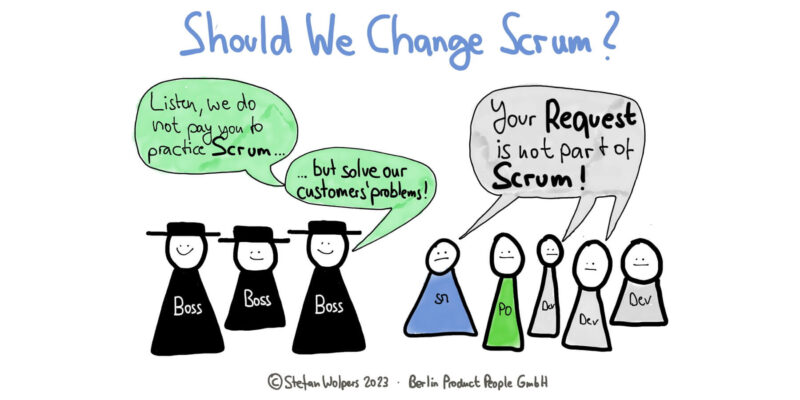
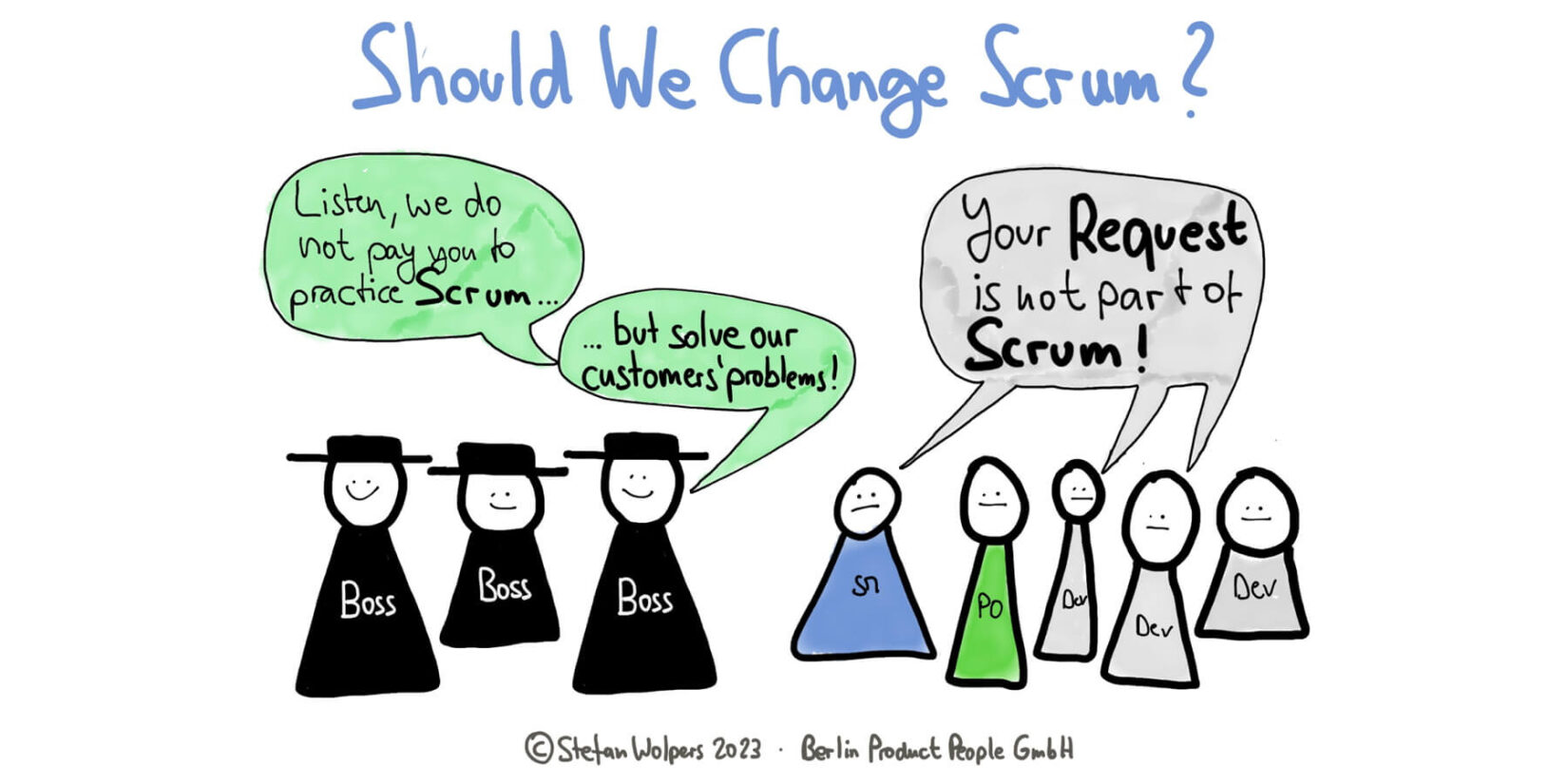
Should We Change Scrum?

TL; DR: Can We Or Should We Change Scrum?

Can we or should we change Scrum, or is it a sacrilege to tweak the ‘immutable’ framework to accommodate our teams’ and organizations’ needs?

Not so fast; don’t just dismiss augmenting Scrum as leaving the path, contributing to the numerous Scrumbut mutations, giving Scrum a bad name. However, in our rapidly evolving business landscape, sticking rigidly to traditional Scrum by the book could be a straightjacket stifling innovation, user focus, and adaptability.

From ensuring cultural compatibility to facing technical debt challenges and emerging technologies, discover ten compelling reasons why augmenting Scrum isn’t just okay—it’s necessary for modern teams.

Read on to discover when and how to adapt Scrum responsibly without diluting its essence.

Should We Change Scrum? Age-of-Product.com
Continue reading Should We Change Scrum?

Food for Agile Thought #413: Firing Agile Coaches? Are All Feature Factories Bad? Why Didn’t They Say No? Dumb Decisions?

TL; DR: Firing Agile Coaches? — Food for Agile Thought #413

Welcome to the 413th edition of the Food for Agile Thought newsletter, shared with 49,263 peers. This week, Anthony Mersino reflects on firing agile coaches due to financial constraints and urges a focus on continuous improvement to prove value. David Rodenas discusses the misguided adoption of “Agile” due to a lack of understanding, and Marty Cagan emphasizes holistic organizational involvement in digital transformations. Joost Minnaar advocates for subtraction over addition in workplace transformation, promoting identifying and eliminating unnecessary tasks for more effective change.

Then, Sam Gimbel addresses the general disdain towards ‘feature factories,’ advocating for a more nuanced approach and customer-centric development. John Cutler delves into the tendency of teams to overcommit, attributing it to a culture of affirmative bias and advocating for realistic engagement in work commitments. Moreover, Kilian Butler narrates Papercup’s experience in machine learning product development, offering practical insights to help others navigate this challenging yet rewarding domain.

Lastly, Jimmy Janlén explores blending Scrum and Kanban for optimized workflows, providing a roadmap for an informed choice or fusion of these agile frameworks. Oscar Ibars discusses the art of saying ‘no’ in Product Management to maintain realistic project scopes. Paweł Huryn delves into Product-Led Growth strategies, emphasizing customer-centric approaches for product growth. Also, David Perell shares 50 insightful ideas focusing on critical thinking, human behavior understanding, and system optimization, introducing principles like Inversion, Doublespeak, and the Theory of Constraints.

Food for Agile Thought #413: Firing Agile Coaches? Are All Feature Factories Bad? Why Didn’t They Say No? Dumb Decisions? — Age-of-Product.com
Continue reading Food for Agile Thought #413: Firing Agile Coaches? Are All Feature Factories Bad? Why Didn’t They Say No? Dumb Decisions?

Minimum Viable Library (3) — Agile Leadership Edition

TL; DR: The Minimum Viable Library for Agile Leaders

A new edition of the Minimum Viable Library on Agile Leadership is available! Explore a series of carefully curated collections of essential books, newsletters, podcasts, and tools to elevate your agile expertise.

Read on and learn how the recommendations for agile leaders cover a wide range of topics, from the importance of self-managing teams and trust-based environments to the crucial roles of accountability and resilience. While “servant leadership” as a term may be fading, its principles of empowerment and collaboration endure. Stories of transformation in traditional settings underscore the value of decentralized leadership and quick communication.

Minimum Viable Library (3) — Agile Leadership Edition — Age-of-Product.com
Continue reading Minimum Viable Library (3) — Agile Leadership Edition