Food for Agile Thought #417: Working Backward at Amazon, “Marty Cagan’ization?” Agile Contracts, AI to Analyze User Feedback

TL; DR: Working Backward at Amazon, “Marty Cagan’ization?” — Food for Agile Thought #417

Welcome to the 417th edition of the Food for Agile Thought newsletter, shared with 49,538 peers. This week, we delve into Working Backward at Amazon with Lenny Rachitsky and Bill Carr and explore Viktor Cessan’s proposition of borrowing ecology’s “Interspecific Interactions” framework to enhance workplace interactions. Peter Stevens sheds light on ten agile contract models, evaluating their alignment with operational agility. Further, Alexey Krivitsky and Roland Flemm provide insights on transitioning from Component Teams to more flexible organizational designs, drawing from James Shore’s talk. Lastly, we uncover the detrimental Scrum anti-patterns across planning, communication, and quality adherence that often lead to underperformance in Scrum teams.

Then, Bandan Jot Singh’s critical take on the global ‘Marty Cagan’ization’ in the product domain urges a balanced evaluation of its impact on product professionals. Scott Belsky explores AI’s potential to disrupt business models, hinting at a meritocratic shift in creative fields yet posing questions on brand perception. Lenny Rachitsky delves into a discussion with Eric Ries on the Lean Startup methodology, while Michael H. Goitein highlights the perilous ‘Product Gap’ in organizational transformations, drawing a vivid analogy to point at the dangers of assigning critical Product roles to the inexperienced.

Lastly, Paulo Caroli illuminates the ‘Design Ahead’ technique to synchronize design and development phases. Moreover, Kyle Byrd explores the subtle effects of OKRs on strategic choices, delving into the dichotomy of causal and effectual reasoning. Also, Aatir Abdul Rauf introduces an efficient method for PMs to harness AI tools to sift through customer feedback, refine product strategies, and gauge competitive standing. Conversely, Steven Sinofsky critiques the President’s Executive Order on AI as an impulsive move, potentially thwarting innovation while bypassing democratic scrutiny and lacking accountability and transparency.
Food for Agile Thought #417: Working Backward at Amazon, “Marty Cagan’ization?” Agile Contracts, AI to Analyze User Feedback — Age-of-Product.com
Continue reading Food for Agile Thought #417: Working Backward at Amazon, “Marty Cagan’ization?” Agile Contracts, AI to Analyze User Feedback

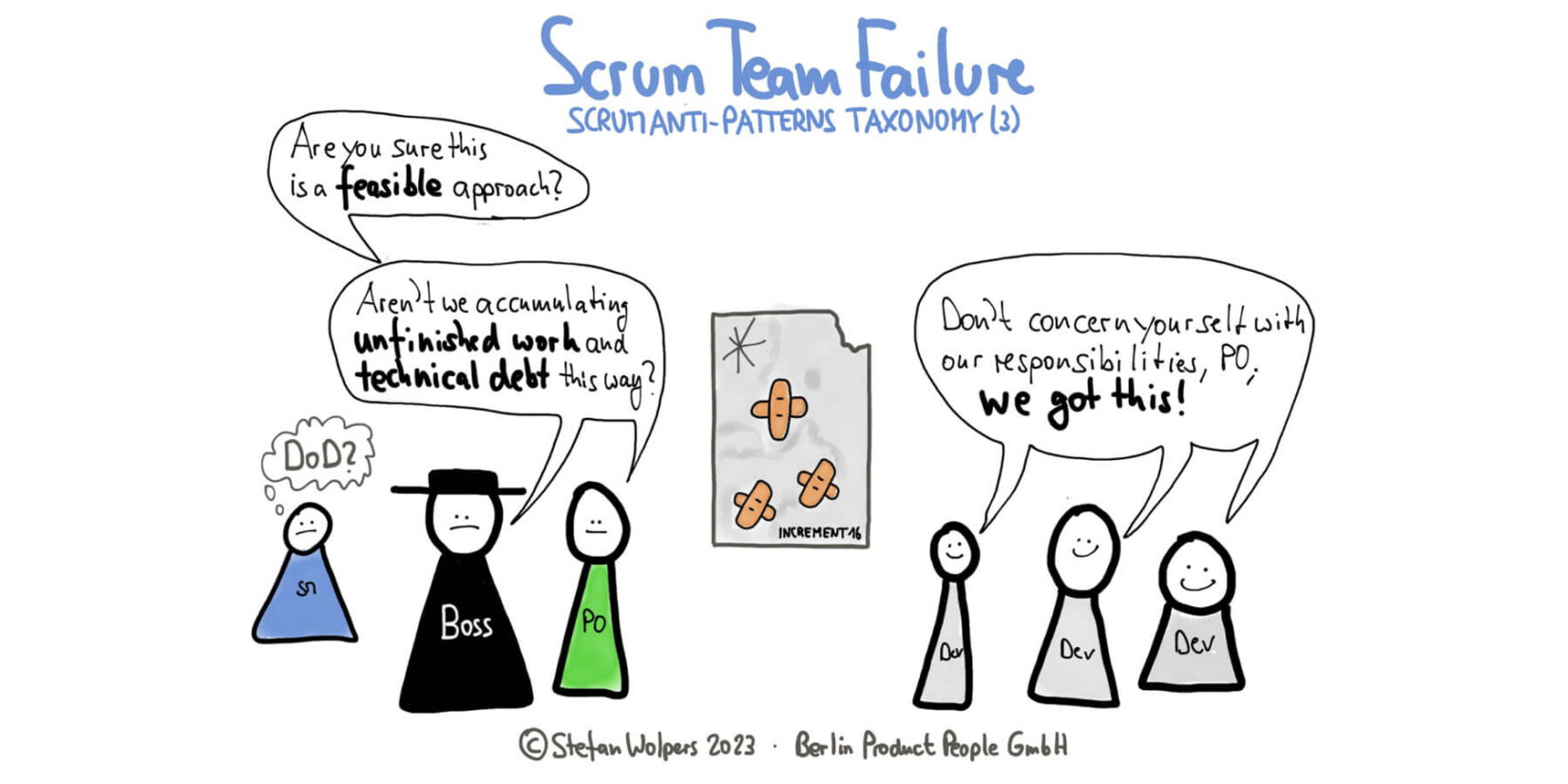
Scrum Team Failure — Scrum Anti-Patterns Taxonomy (3)

TL; DR: Scrum Team Failure

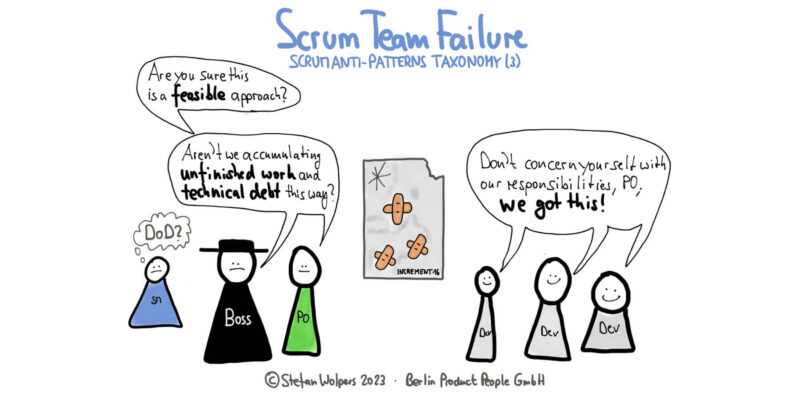
This post on Scrum team failure addresses three categories from the Scrum anti-patterns taxonomy that are closely aligned: Planning and process breakdown, conflict avoidance and miscommunication, and inattention to quality and commitment, often resulting in a Scrum team performing significantly below its potential.

Learn how these Scrum anti-patterns categories manifest themselves and how they affect value creation for customers and the organization’s long-term sustainability.

This is the third of three articles analyzing the 183 anti-patterns from the upcoming Scrum Anti-Patterns Guide book. The other two articles, see below, address adhering to legacy systems, processes, practices, and communication and collaboration issues.

Scrum Team Failure — Scrum Anti-Patterns Taxonomy (3)
Continue reading Scrum Team Failure — Scrum Anti-Patterns Taxonomy (3)

Food for Agile Thought #416: Feature Team Fallacy, Measuring Product Discovery, Forget the Spotify “Model,” Working Backwards

TL; DR: Feature Team Fallacy — Food for Agile Thought #416

Welcome to the 416th edition of the Food for Agile Thought newsletter, shared with 49,471 peers. This week, we dive into compelling critiques and analyses: Bryan Finster assesses the LeSS approach to team structures, pointing at the Feature Team Fallacy, while Mark Levison sheds light on misconceptions about the “Spotify Model.” Johanna Rothman highlights the pitfalls of dehumanizing metaphors in software development. Additionally, a collaborative piece delves deep into the implications and nuances of the Agile Mindset in decision-making and its role in organizational behavior. Moreover, we address how to Say No without burning bridges.

Then, Jeff Gothelf discusses the actual indicators of product discovery’s effectiveness, cautioning against vanity metrics. Charles Lambdin parallels Gandalf’s adventures and Agile’s inherent adaptability, questioning traditional roadmaps. Dan Collins underscores the pivotal role of churn prevention in SaaS, emphasizing customer-centric strategies. Lastly, Laura Morgan provides a personal account, highlighting three transformative moments in her professional journey.

Finally, Paulo Caroli introduces a Press Release template inspired by Amazon’s customer-centric approach. Also, Jim Morris tackles the challenges of sharing group dynamics techniques to combat dominant voices and foster inclusivity. Marcus Castenfors laments the absence of robust product visions in companies and champions the Design Sprint process for alignment. Lastly, Tim Harford at #mtpcon London 2023 enlightens on common tech innovation missteps, emphasizing the transformative power of simple solutions and AI’s impending influence on employment.

Food for Agile Thought #416: Feature Team Fallacy, Measuring Product Discovery, Forget the Spotify “Model,” Working Backwards — Age-of-Product.com
Continue reading Food for Agile Thought #416: Feature Team Fallacy, Measuring Product Discovery, Forget the Spotify “Model,” Working Backwards

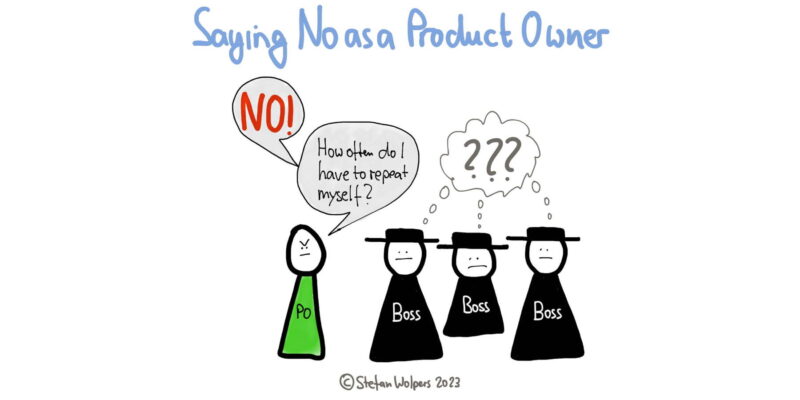
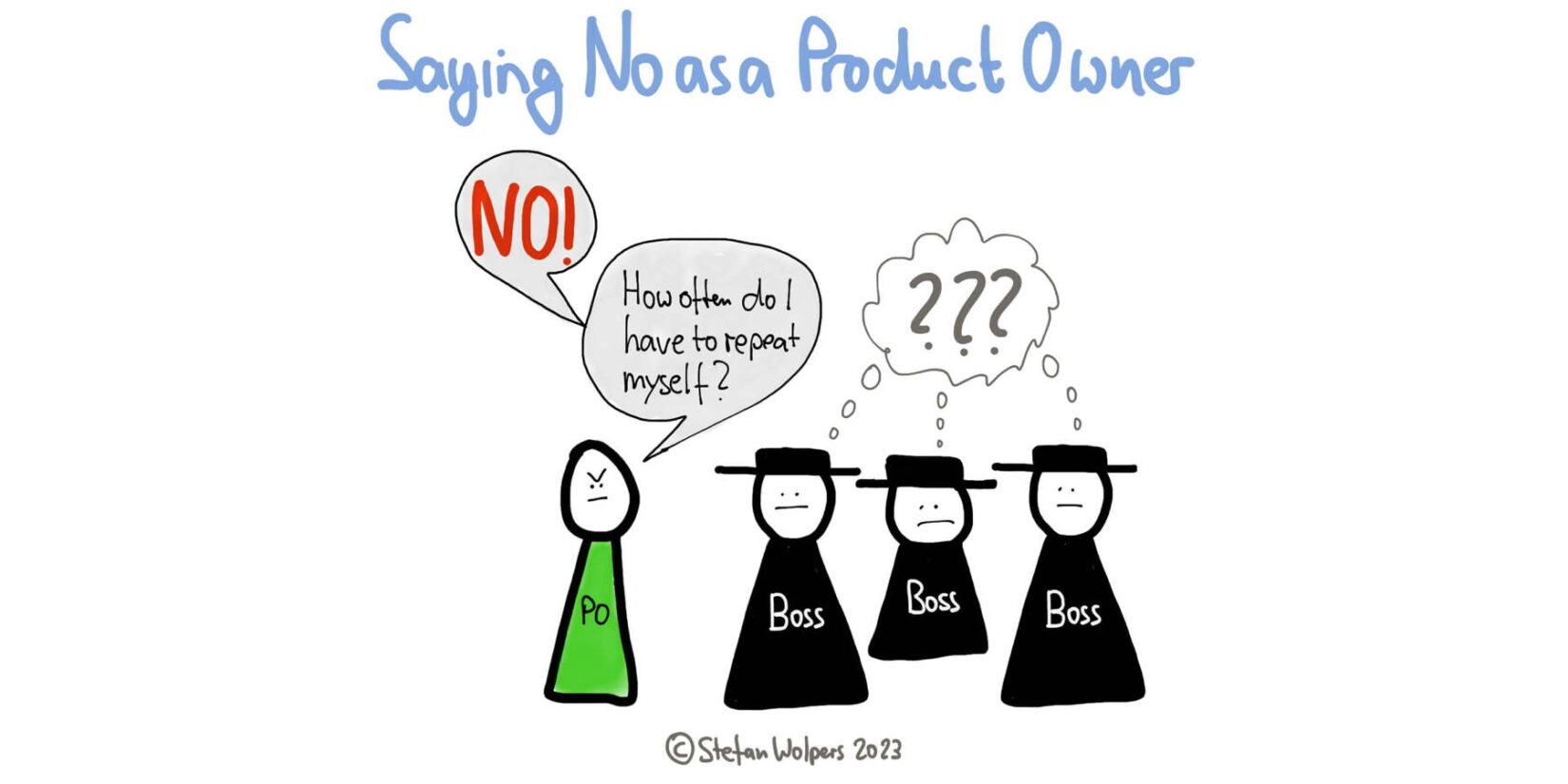
Saying No as a Product Owner or Product Manager

TL, DR: Saying No Without Burning Bridges

Are you navigating the delicate art of saying No as a Product Owner or product manager? Actually, it’s more of a strategic ‘yes’ to higher priorities, turning down lower-level requests without shutting down communication.

This article will dive into various approaches, from reframing conversations and fostering stakeholder collaboration to being transparent to data-informed rationale and empathetic engagement. Discover how to maintain a harmonious balance between driving Product Goals and nurturing professional relationships with your stakeholders.

Saying No as a Product Owner or Product Manager — Age-of-Product.com
Continue reading Saying No as a Product Owner or Product Manager

Food for Agile Thought #415: Product Nightmares, Assumption Testing Guide, Freemium Fiasco, Agile Inflection Point?

TL; DR: Product Nightmares — Food for Agile Thought #415

Welcome to the 415th edition of the Food for Agile Thought newsletter, shared with 49,394 peers. This week, we delve into various aspects of Agile and Scrum, starting with Dean Peters’ eerie depiction of product nightmares as Halloween monsters, urging an outcome-driven strategy. Mike Griffith contemplates the mainstream adoption of Agile amid declining conference attendance, hinting at a possible inflection point. Jason Evanish warns against toxic positivity’s corrosive effects on workplace morale and productivity. Also, Viktor Cessan shares how a tailored feedback format enriched communication in a re-missioned team. And, seriously, this Week’s Lemon suggests a hybrid approach of Agile and Waterfall.

Then, Teresa Torres highlights the value of regular assumption testing for quick product idea evaluations, and Marty Cagan commends Spotify’s innovation amidst market challenges. Moreover, Itamar Gilad addresses idea prioritization, advocating for a strategic framework with a clear mission and measurable growth model, while Leah Tharin explores the transition to a freemium model, emphasizing aligning sales and marketing incentives, revamping onboarding experiences, and assessing a product’s freemium suitability to prevent revenue loss.

Lastly, Nicola Ballotta delves into Engineering Metrics, showcasing them as instrumental tools in quantifying and enhancing various software development aspects and aligning engineering operations with broader business goals. Additionally, we unveil a novel Stability Metric (ψ) based on queueing theory to bolster predictability in agile systems. The authors suggest the application of ψ as a tool for teams to improve project timeline foresight and enhance predictability. Finally, we point to the recording of Bob Galen’s session on ‘An Agile Coaches Guide to Storytelling” at the 53. Hands-on Agile.

Food for Agile Thought #415: Product Nightmares, Assumption Testing Guide, Freemium Fiasco, An Agile Inflection Point? — Age-of-Product.com
Continue reading Food for Agile Thought #415: Product Nightmares, Assumption Testing Guide, Freemium Fiasco, Agile Inflection Point?

An Agile Coaches Guide to Storytelling — Bob Galen at the 53. Hands-on Agile

TL; DR: Hands-on Agile #53: An Agile Coaches Guide to Storytelling with Bob Galen

On September 5, 2023, we had the opportunity to listen to Bob Galen on “An Agile Coaches Guide to Storytelling.” In this session, Bob shared his experience coaching an agile coach struggling to connect with a development manager. He underscored the transformative impact of incorporating personal narratives, lessons learned, teaching stories, and purpose or vision stories into coaching conversations. Moreover, Bob demonstrated the compelling power of storytelling in agile coaching by using stories to share knowledge and wisdom while fostering dialogue.

An Agile Coaches Guide to Storytelling — Bob Galen at the 53. Hands-on Agile

📺 Watch the video now: An Agile Coaches Guide to Storytelling — Bob Galen at the 53. Hands-on Agile.

Continue reading An Agile Coaches Guide to Storytelling — Bob Galen at the 53. Hands-on Agile