Food for Agile Thought #438: Agile in the AI Age, Product Operating Model, Effective Roadmaps, Failing Transformations

TL; DR: Agile in the AI Age — Food for Agile Thought #438

Welcome to the 438th edition of the Food for Agile Thought newsletter, shared with 42,401 peers. This week, Henrik Kniberg challenges traditional Agile team sizes, advocating for smaller, AI-enhanced teams in his article on Agile in the AI age. Our Lemon champions a retro, bureaucratic approach to “Agile reporting,” and Murray Robinson and Shane Gibson discuss enhancing organizational agility with Evan Leybourn. Also, Michael Küsters argues for Agile as a dynamic, evolvable practice rather than a rigid dogma, while Petra Wille emphasizes structured strategies for effective organizational transformation. Moreover, Marty Cagan shares his perspective on Scrum and the Product Model.

Then, Agustin Soler shares insights from his tenure as Mural’s Chief Product Officer, detailing strategic initiatives that spurred growth. Ant Murphy discusses the nuanced differences between roadmaps and plans, advocating adaptability and audience-specific customization. Phil Hornby and John Cutler explore product management complexities, and Janna Bastow highlights the importance of closing the feedback loop in product management, suggesting AI could transform feedback mechanisms.

Lastly, First Round Capital introduces a new B2B framework to accelerate product-market fit and 37signals shares decision-making principles that underpin thoughtful business choices. Additionally, the Coaching Card Download Hub provides many practice cards for organizational learning and productivity enhancement. Finally, Todd Lankford emphasizes rational decision-making in product development, advocating for clarity over emotion to boost team performance and product evolution.
Food for Agile Thought #438: Agile in the AI Age, Product Operating Model, Effective Roadmaps, Failing Transformations — Age-of-Product.com
Continue reading Food for Agile Thought #438: Agile in the AI Age, Product Operating Model, Effective Roadmaps, Failing Transformations

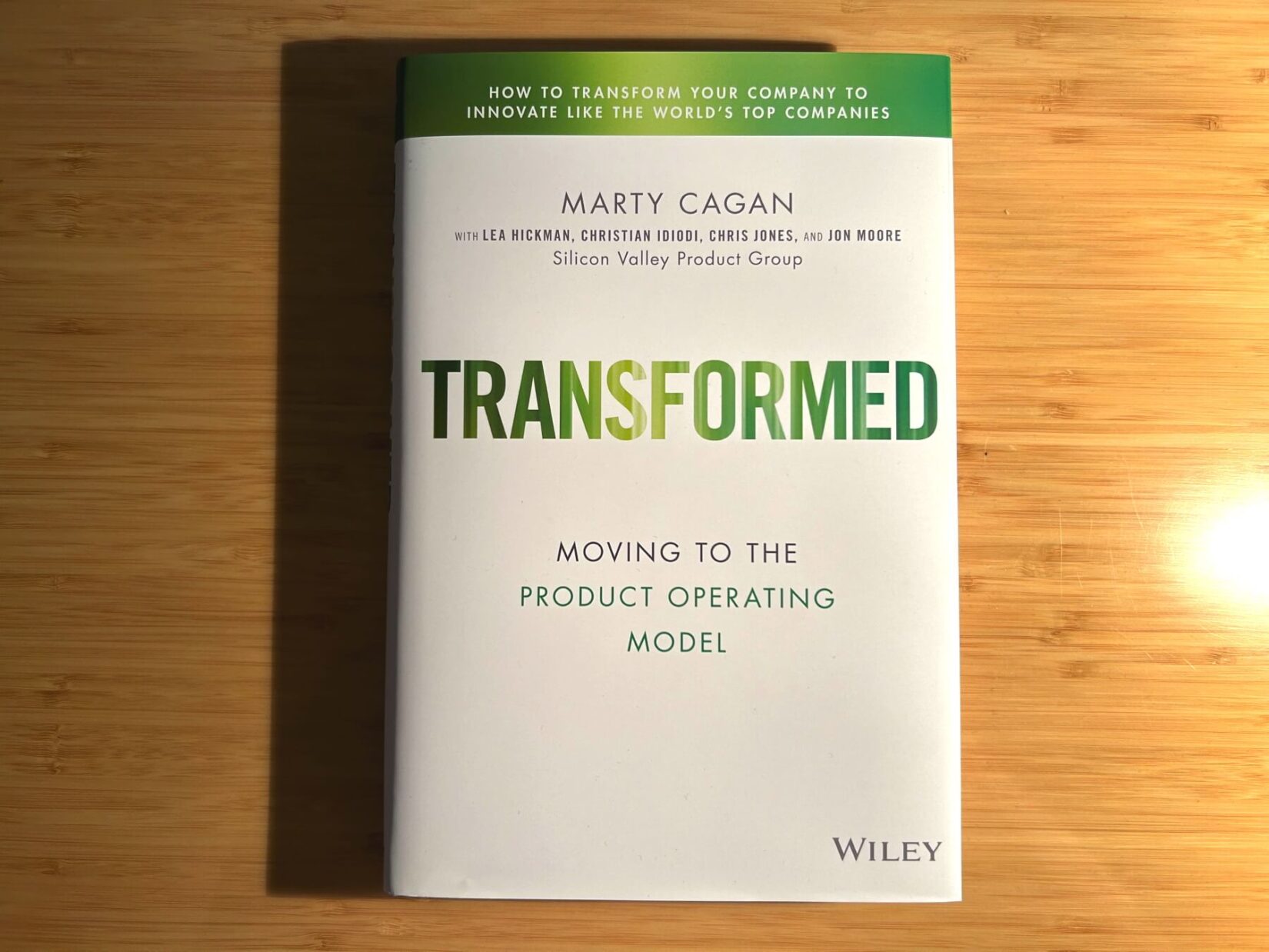
Marty Cagan on the Product Operating Model and Scrum’s Future

TL; DR: The Product Operating Model — An Interview with Marty Cagan

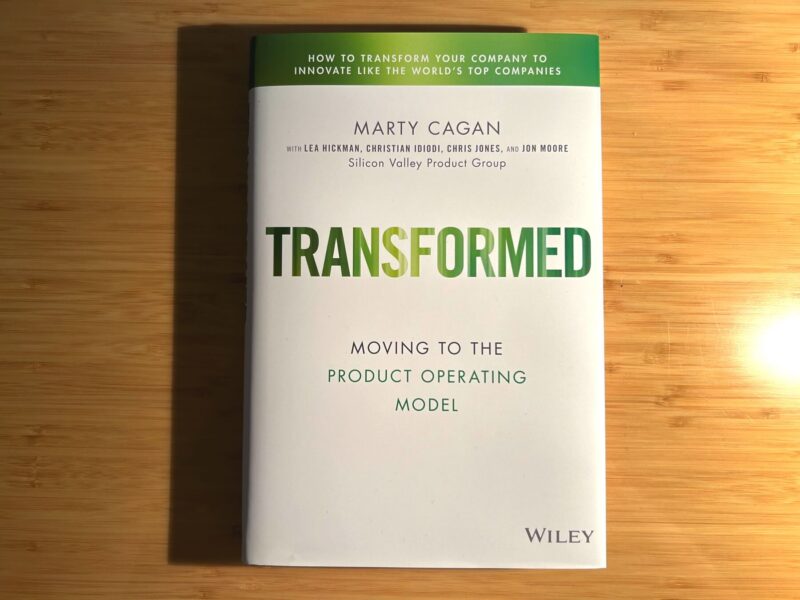
Let’s explore Marty Cagan’s insights on revolutionizing product management, embracing empowered teams, and fostering innovation by employing the Product Operation Model described in his latest book “Transformed.” We will uncover how to effectively navigate the transformational path to a product-centric approach and how Marty sees Scrum in this context. (Move directly to the Scrum-related part of the interview.)

Marty Cagan highlights the Product Operating Model from his latest Book “Transformed” and analyzes Scrum’s usefulness — Age-of-Product.com
Continue reading Marty Cagan on the Product Operating Model and Scrum’s Future

Food for Agile Thought #437: Dunbar’s Number & Team Building, Discovery Challenges, Heisenberg in Software, Job Stories vs. User Stories

TL; DR: Dunbar’s Number — Food for Agile Thought #437

Welcome to the 437th edition of the Food for Agile Thought newsletter, shared with 42,378 peers. This week, Patrick O’Shaughnessy interviews Robin Dunbar on Dunbar’s Number, revealing insights into human connections and their relevance in organizational structures. Jim Doran links Heisenberg’s Uncertainty Principle with Agile, highlighting the balance between focus and speed, alongside the importance of collaboration between Product Managers and Technical Leads. Eric Barker offers strategies to enhance team performance, including keeping teams small and fostering mutual respect. Jutta Eckstein, Susan McIntosh, Craig Smith, Ben Linders, Rafiq Gemmail, and Shane Hastie discuss the latest tech industry trends, focusing on remote innovation, AI, inclusivity, and sustainability. Also, Derk-Jan de Grood tackles five dependencies that slow down agile teams and provides solutions to improve efficiency and delivery.

Then, Debbie Levitt criticizes feature-first mindsets, urging a shift to user-centered product development. Teresa Torres highlights the effectiveness of story-based interviews in grasping actual user needs, and Marcus Castenfors discusses overcoming “Discovery Illness” by refining product discovery processes. Moreover, Ant Murphy shares strategies for streamlining product backlogs to focus on impactful outcomes. Lastly, Ash Maurya advocates for a problem-discovery approach, emphasizing the value of genuine user insights in shaping solutions.

Lastly, Jim Morris critiques the integration of OKRs with conventional processes, advocating for an analytics-first mindset. Avi Siegel distinguishes between job stories and user stories, underlining their collective importance. Another piece dissects common mistakes in user journey mapping, advocating for SMART goals and ongoing updates. Finally, we delve into the evolution of prototyping, from basic sketches to advanced simulations, highlighting their role in refining design and development stages.

Food for Agile Thought #437: Dunbar’s Number & Team Building, Discovery Challenges, Heisenberg in Software, Job Stories vs. User Stories — Age-of-Product.com
Continue reading Food for Agile Thought #437: Dunbar’s Number & Team Building, Discovery Challenges, Heisenberg in Software, Job Stories vs. User Stories

“Agile” Does Not Work for You? Tackling Fake Agility with Johanna Rothman at the 59th Hands-on Agile Meetup

TL; DR: Tackling Fake Agility with Johanna Rothman

Your team is supposed to use an agile approach, such as Scrum. But you have a years-long backlog, your standups are individual status reports, and you’re still multitasking. You and your team members wish you had the chance to do great work, but this feels a lot like an “agile” death march. There’s a reason you feel that way. You’re using fake agility—a waterfall lifecycle masquerading as an agile approach. Worse, fake agility is the norm in our industry. Now, there is light at the end of the tunnel; let’s delve into Tackling Fake Agility with Johanna Rothman!

“Agile” Does Not Work for You? Tackling Fake Agility with Johanna Rothman at the 59th Hands-on Agile Meetup — Age-of-Product.com

📺 Watch the video now: “Agile” Does Not Work for You? Tackling Fake Agility with Johanna Rothman at the 59th Hands-on Agile Meetup.

Continue reading “Agile” Does Not Work for You? Tackling Fake Agility with Johanna Rothman at the 59th Hands-on Agile Meetup

Food for Agile Thought #436: State of Agile 2024, Amazon Product Model, Innovation and Disaster, Dynamic Reteaming

TL; DR: State of Agile 2024 — Food for Agile Thought #436

Welcome to the 436th edition of the Food for Agile Thought newsletter, shared with 42,352 peers. This week, we dive into pivotal insights on Agile’s current landscape and organizational impacts. The State of Agile 2024 Report, as discussed by Joyce Tompsett and Shane Hastie, uncovers the evolving challenges and adaptations within Agile practices, highlighting a trend towards hybrid methodologies and the crucial alignment of Agile with business outcomes. Murray Robinson and Shane Gibson’s conversation with Ron Westrum sheds light on organizational culture, using insights from NASA and Boeing. Ben Hartshorne shares Honeycomb’s journey, illustrating the strategic incorporation of technical debt resolution to foster business growth. Lastly, Ben Werdmuller reflects on the evolution of web development, emphasizing the importance of purpose, teamwork, and a culture promoting innovation and inclusivity.

Then, Marty Cagan and Richard Russell delve into Amazon’s customer-focused approach through Prime, showcasing how to fuel technological advancements and long-term value. Leah Tharin discusses the realities versus the idealistic expectations in product management. At the same time, Geoff Watts addresses the challenge of people-pleasing in leadership, presenting techniques for maintaining project integrity while fostering positive relationships. Lastly, Petra Wille emphasizes the critical role of saying “no” in product management, proposing strategies to prioritize and encourage innovation within resource constraints.

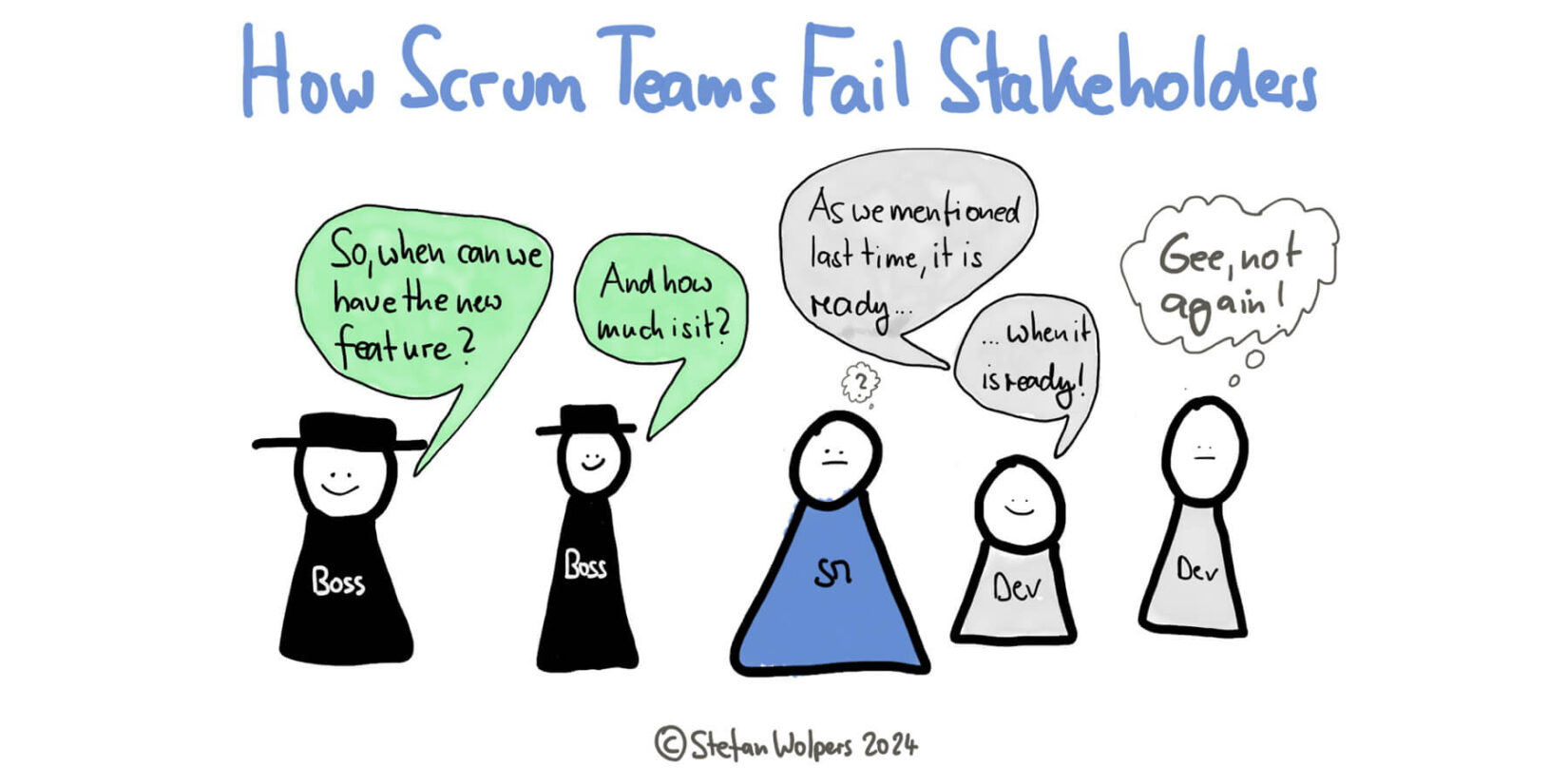
Lastly, Andy Walker critiques traditional productivity metrics, advocating for a focus on team dynamics and best practices to enhance development. Willem-Jan Ageling explores the benefits and strategies of dynamic reteaming in product development, and Corinna Baldauf shares insights on using Open Space sessions for effective company-wide retrospectives. Also, we explore how Scrum teams can lose stakeholder support. Finally, David Luan discusses leading Adept in developing practical AGI, reflecting on missed opportunities with GPT-3 at Google.

Food for Agile Thought #436: State of Agile 2024, Amazon Product Model, Innovation and Disaster, Dynamic Reteaming — Age-of-Product.com
Continue reading Food for Agile Thought #436: State of Agile 2024, Amazon Product Model, Innovation and Disaster, Dynamic Reteaming

How Scrum Teams Fail Stakeholders and What You Can Do About It

TL; DR: How Scrum Teams Fail Stakeholders

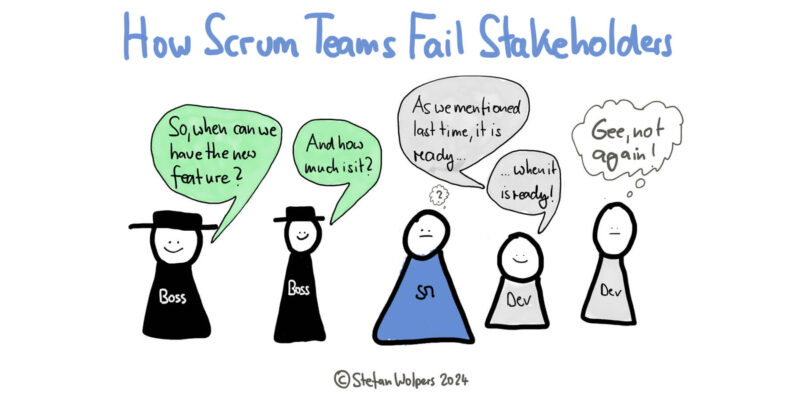
In this article, we uncover typical ways in which Scrum teams fail stakeholders, from overpromising results to poor risk communication to neglecting feedback. Moreover, we will also explore actionable strategies to overcome these anti-patterns by building trust, aligning priorities, and enhancing collaboration for successful product development.

How Scrum Teams Fail Stakeholders and What You Can Do About It — Age-of-Product.com
Continue reading How Scrum Teams Fail Stakeholders and What You Can Do About It