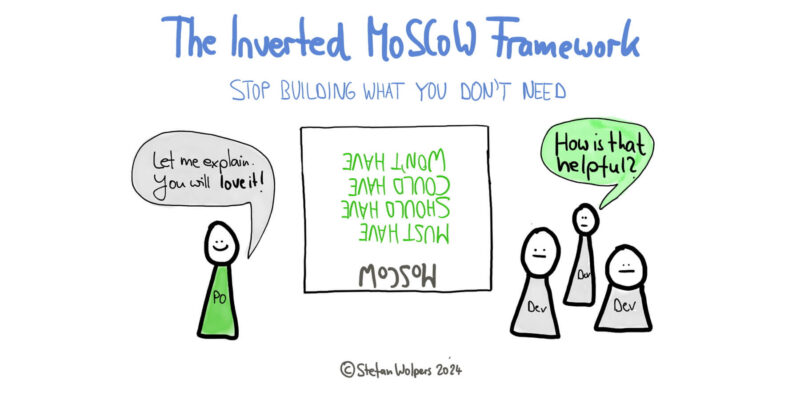
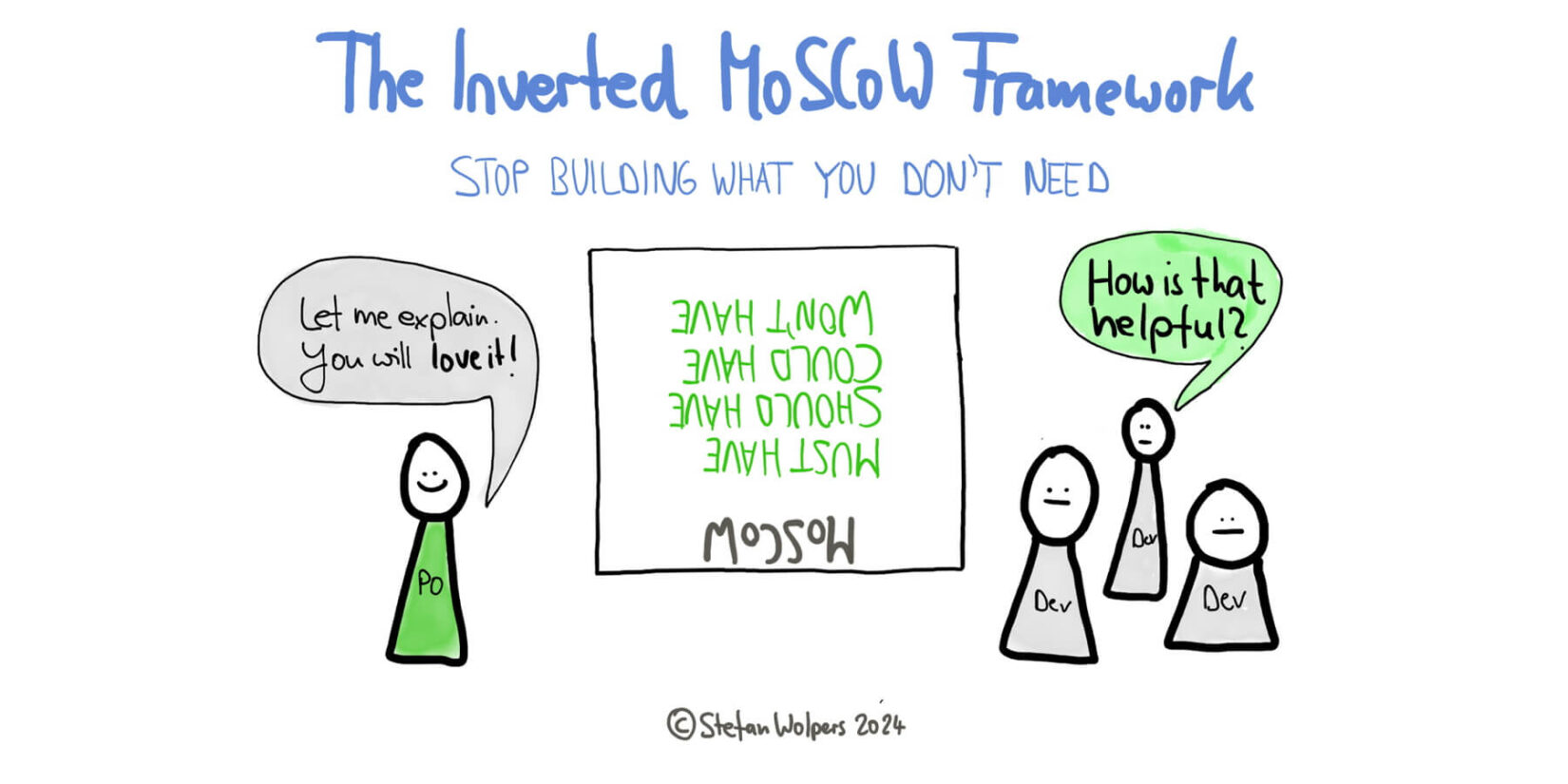
The inverted MoSCoW framework reverses traditional prioritization, focusing on what a product team won’t build rather than what it will. Deliberately excluding features helps teams streamline development, avoid scope creep, and maximize focus on what truly matters.
While it aligns with Agile principles of simplicity and efficiency, it also requires careful implementation to avoid rigidity, misalignment, or stifling innovation. Used thoughtfully, it’s a powerful tool for managing product scope and driving strategic clarity.
Read on and learn how to make the inverted MoSCoW framework work for your team.
TL; DR: A Short Overview of PM Tools — Food for Agile Thought #470
Welcome to the 470th edition of the Food for Agile Thought newsletter, shared with 42,941 peers. This week, John Cutler shares tips for adaptable PM tools, Pim de Morree spotlights Bayer’s shift to self-managing teams, and Sean Goedecke emphasizes leadership alignment for shipping projects. Murray Robinson and Shane Gibson explore true agility with Johanna Rothman, while Mike Fisher debunks the “brilliant jerk” myth, highlighting collaboration and psychological safety as team essentials.
Next, Aakash Gupta and Paweł Huryn discuss risk-focused product discovery and storytelling, Paul McAvinchey emphasizes the power of clear product visions, and Martin Eriksson highlights strategy clarity. Meanwhile, Petra Wille showcases Novo Nordisk’s use of the PMwheel framework to drive role clarity and team empowerment during digital transformation.
Lastly, Gustavo Razzetti shares strategies for fostering a fearless culture, Maik Seyfert explores balancing user needs with business goals, and Jeff Gothelf introduces updated Lean canvases for strategic alignment. Mark Levison emphasizes clarity through Example Mapping, and Teresa Torres curates a global list of 2025 product conferences to inspire and connect professionals.
TL; DR: Why Leaders Support the Product Operating Model Despite Agile’s Failure
Why might leaders turn to the Product Operating Model (POM) after a previous Agile transformation, for example, based on SAFe, failed?
This article uncovers the psychological, organizational, and strategic reasons behind this seeming contradiction, exploring what motivates leaders to believe that a new approach will succeed where others have not.
TL; DR: Disagree And Commit — Food for Agile Thought #469
Welcome to the 469th edition of the Food for Agile Thought newsletter, shared with 42,993 peers. This week, Benji Portwin shares a leadership framework for balancing risks and outcomes to support ‘Disagree And Commit,’ and Mike Cottmeyer tackles Scrum’s limitations with proactive orchestration, while Maarten Dalmijn critiques Scrum’s decline. Also, Greg Satell highlights fostering change through shared values, and we explore “Product Washing,” where superficial Product Operating Model adoptions hinder real transformation.
Next, Roman Pichler examines using the product lifecycle model to sustain value, and John Rossman shares insights on bold leadership and AI innovation. Moreover, Melissa Perri unpacks Product Owner and manager roles while critiquing SAFe, and Maja Voje offers frameworks for scalable go-to-market strategies focusing on positioning and systematic approaches.
Lastly, John Cutler focuses on actionable behaviors over abstract concepts. Chris Matts critiques misused value streams and SAFe, and Christina Wodtke discusses OKRs and collaboration. Finally, Ian Vanagas shares PostHog’s agile tech strategies, and Dean Peters humorously tackles product management ‘nightmares’ with sharp insights and actionable control tips.
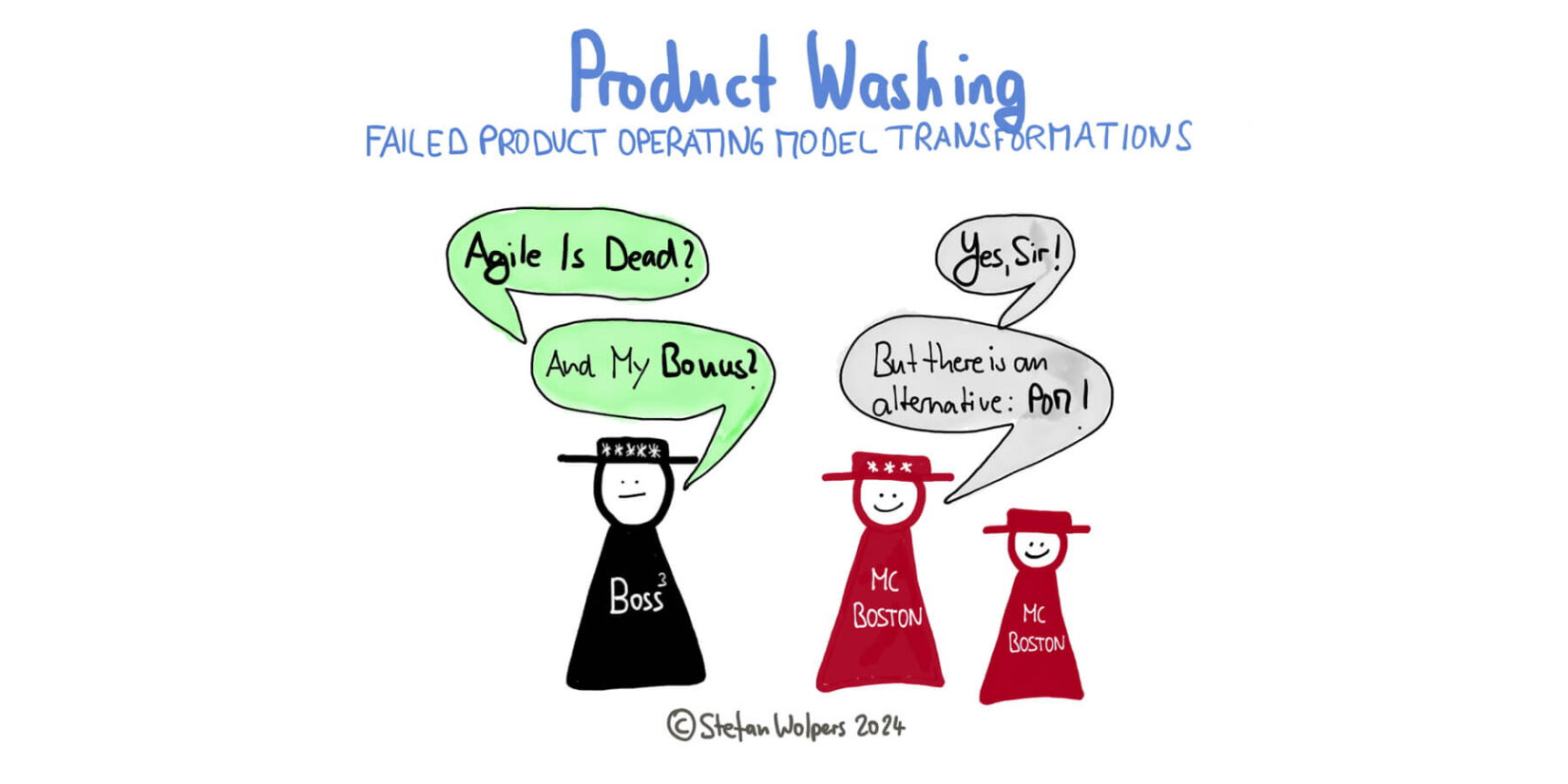
By all means, the “Product Operating Model” (POM) has surged in popularity, especially among traditional organizations keen to prove their adaptability. (And, of course, among the McBostonians who, now that ”Agile” is dead, need a substitute to bill their junior consultants.) Which brings us to the problem of Product Washing.
On the surface, the product operating model promises a more customer-focused, outcome-driven approach. Empowered teams create value iteratively rather than following rigid, output-focused roadmaps. Best of all, they do so autonomously, well-aligned with the organization’s overall strategy and the possibly myriad other teams working on different initiatives. Think of SAFe done right.
Yet, for all its promise, the product operating model risks becoming another buzzword rather than an actual driver of transformation. Organizations that tout a “product-led” philosophy often do so without making the profound changes needed to live by it. This hollow adoption of product practices, or what we might call “Product Washing,” leaves companies stuck in the same old dynamics but with a new vocabulary: transformation by reprinting business cards. (Does this sound familiar?)
TL; DR: Product Velocity — Food for Agile Thought #468
Welcome to the 468th edition of the Food for Agile Thought newsletter, shared with 42,965 peers. This week, Ned O’Leary advocates streamlined, minimalist product processes to improve product velocity, while John Cutler addresses organizational inertia through adaptive structures. Also, Max Levchin shares Affirm’s integrity-driven productivity approach, Maarten Dalmijn analyzes Waternet’s failed SAFe transformation, and Shubham Sharma advocates lean, continuous feedback over traditional Retrospectives.
Next, Jeff Gothelf and Josh Seiden reveal updated Lean Product and Strategy Canvases for holistic product alignment, Aakash Gupta interviews Maria Cuasay on accelerating growth through focused culture and processes, and Paweł Huryn identifies ten productivity drains in product management. Moreover, Alex Debecker highlights scope bloat’s pitfalls.
Lastly, Adam Ard contrasts collaboration styles, stressing individual ownership vs. team-driven consistency to boost productivity. Kyle Crawford advocates for embracing ambiguity in overcoming barriers to social impact, and Manu Kapur emphasizes “productive failure” as a structured growth tool. Finally, Sheril Mathews reinforces that blending psychological safety with high standards creates an optimal “Learning Zone” for high performance.