Food for Agile Thought #482: No Place to Hide from AI, Cagan’s Vision For Product Teams, Distrust Breeds Distrust, Market Research Agent

TL; DR: No Place to Hide from AI — Food for Agile Thought #482

Welcome to the 482nd edition of the Food for Agile Thought newsletter, shared with 42,693 peers. This week, with no place to hide from AI, Ethan Mollick explores the rapid rise of Claude 3.7 and Grok 3, urging leaders to rethink AI’s role beyond simple automation, while Dan Shipper and Alex Duffy assess GPT-4.5’s improved emotional intelligence but persistent hallucinations. Maarten Dalmijn warns against distrust’s bureaucratic cycle, advocating for trust-driven leadership, while Swizec Teller critiques failed rewrites, emphasizing iterative refactoring over disruptive rebuilds. Moreover, Eduardo Baptista, Julie Zhu, and Fanny Potkin highlight DeepSeek’s AI ambitions, raising regulatory concerns, and Ben Thompson examines AI’s evolution, semiconductor risks, and U.S. policy shifts.

Next, Marty Cagan envisions AI-driven product teams shrinking to three key roles—PM, designer, and engineer—as automation reshapes discovery and delivery. Leah Tharin and Tal Raviv discuss AI’s evolving role in product management, urging PMs to experiment with contextual AI tools. Des Traynor outlines essential product review questions, emphasizing AI reliability, impact assessment, and iteration. Jenny Wenger shares lessons from building the Product Culture Blueprint Drafter, highlighting AI automation, prompt engineering, and product operations’ evolving role.

Lastly, Zvi Mowshowitz analyzes Grok 3’s strengths, including speed and Twitter integration, while addressing its hallucinations, biases, and xAI’s struggle to patch its vulnerabilities. Paweł Huryn introduces Deep Market Researcher, an AI agent streamlining product managers’ market research and strategic planning, while Avantika Gomes advocates adaptability in product roadmaps, highlighting Figma’s iterative approach. Finally, Ash Maurya challenges the obsession with experimentation, arguing that strong explanations and thought experiments are essential for validating business models before costly testing.
Food for Agile Thought #482: No Place to Hide from AI, Cagan’s Vision For Product Teams, Distrust Breeds Distrust — Age-of-Product.com
Continue reading Food for Agile Thought #482: No Place to Hide from AI, Cagan’s Vision For Product Teams, Distrust Breeds Distrust, Market Research Agent

Food for Agile Thought #481: Reimagining Agile, AI Brain Fog, How to Become an AI PM, Successful Product Orgs

TL; DR: Reimagining Agile, AI Brain Fog — Food for Agile Thought #481

Welcome to the 481st edition of the Food for Agile Thought newsletter, shared with 42,718 peers. This week, Jim Highsmith, Jon Kern, Heidi Musser, and Sanjiv Augustine reflect on Reimagining Agile, advocating for a return to core values while pushing agility forward. David Pereira interviews Mike Cohn, emphasizing adaptability over rigid frameworks and AI’s growing role in product development. Meanwhile, Ravi Gupta warns that AI-native companies will disrupt industries, urging leaders to embrace AI-first thinking. M.G. Siegler analyzes the AI arms race, predicting a shift toward consumer-driven consolidation, with ChatGPT currently leading. Maarten Dalmijn critiques Institutionalized Competing Interests (ICI), where departmental silos obstruct collaboration, while John Cutler explores the hidden ego toll that prevents obvious improvements from taking root.

Next, Aakash Gupta interviews Marily Nika about excelling in AI product management, emphasizing key roles and essential skills, and avoiding hype-driven AI. Petra Wille underscores that successful product organizations thrive on disciplined habits rather than flashy frameworks, while Willem-Jan Ageling examines the evolving Product Owner role, warning against proxy POs and fragmented ownership. Meanwhile, Lewis C. Lin explores AI Brain Fog, where over-reliance on AI weakens critical thinking, offering the CLEAR framework to restore independent decision-making.

Lastly, Chandra Gnanasambandam, Martin Harrysson, and Rikki Singh explore AI’s transformative impact on the software product development life cycle, from accelerating innovation to redefining roles. Zeno Rocha shares how Friction Logs at Resend help new hires rapidly spot and fix UX issues, reinforcing a culture of continuous improvement. Also, Simone Cicero critiques traditional design tools for failing to capture B2B ecosystem complexity, introducing new mapping techniques to align customer needs with strategic decision-making. Finally, Sebastian Raschka breaks down four key approaches to improving LLM reasoning models, offering insights from DeepSeek R1’s development and AI’s evolving landscape.

Reimagining Agile, AI Brain Fog, How to Become an AI PM, Successful Product Orgs — Food for Agile Thought #481, Age-of-Product.com.
Continue reading Food for Agile Thought #481: Reimagining Agile, AI Brain Fog, How to Become an AI PM, Successful Product Orgs

Hands-on Agile 2025: Embracing the Shift to Context-Based Agility — The Slides

TL; DR: The Slides of Hands-on Agile 2025

If you weren’t at the virtual Hands-on Agile 2025 conference earlier this month, you missed an incredible opportunity to explore the shift from concept-based to context-based agility with nearly 800 fellow agilists. But don’t worry – I’m here to share some of the key takeaways and insights!

Check out the slides from the Live Stream speakers below; I will keep you posted on the availability of the recordings.

Hands-on Agile 2025: Embracing the Shift to Context-Based Agility — The Slides — Age-of-Product.com
Continue reading Hands-on Agile 2025: Embracing the Shift to Context-Based Agility — The Slides

Food for Agile Thought #480: AI and Jobs, Adopting the Product Model, Product Meets Revenue, Future of Agility

TL; DR: AI and Jobs — Food for Agile Thought #480

Welcome to the 480th edition of the Food for Agile Thought newsletter, shared with 42,711 peers. This week, we feature Anthropic’s Economic Index, which tracks AI and jobs, showing a preference for augmentation over automation. Richard Hanania argues AI job fears are overblown, pointing to historical resilience. Ben Thompson examines OpenAI’s Deep Research, an AI-powered assistant that synthesizes vast information but raises concerns about knowledge gaps and secrecy. In agility, Simon Powers dissects why Agile transformations stall—citing lack of authority, iterative adoption struggles, and hidden budgets. Adrian Howard debunks common Scrum misconceptions, showing that most criticisms stem from misuse rather than the framework itself. Also, Ken Schwaber reflects on Scrum.org’s founding, tackling assessment challenges, certification culture, and the deeper purpose of Scrum education.

Next, we dive into AI’s evolving role in product management, strategic alignment, and organizational transformation. Peter Yang shares a week in AI-powered product leadership, revealing 17 impactful use cases that enhance strategy, design, and decision-making. Teresa Torres & Hope Gurion challenge organizations on their readiness for the Product Operating Model, and Arne Kittler explores the intersection of product direction and commercial strategy, using Martin Eriksson’s Decision Stack to highlight how product teams and go-to-market strategies can collaborate for growth and faster decision-making.

Lastly, Viktor Cessan introduces a tool to quantify team dependency costs, helping teams optimize workflows and align structures with product goals. Marcelo Calbucci shares insights from The PRFAQ Framework, revealing how Amazon’s Working Backward process sharpens innovation through structured debate, and the Duolingo Team distills 14 years of growth into The Duolingo Handbook, outlining five principles that define their experiment-driven culture. Tim O’Reilly argues that AI won’t replace programmers but will reshape their roles, favoring those who adapt. Finally, Francesco Bonacci examines AI agents for computer use, detailing how autonomous systems execute tasks through reasoning, planning, and APIs.

Food for Agile Thought #480: AI and Jobs, Adopting the Product Model, Product Meets Revenue, Future of Agility — Age-of-Product.com.
Continue reading Food for Agile Thought #480: AI and Jobs, Adopting the Product Model, Product Meets Revenue, Future of Agility

Psychological Safety: Misunderstood, Yet Mission-Critical

TL; DR: Psychological Safety as a Competitive Edge

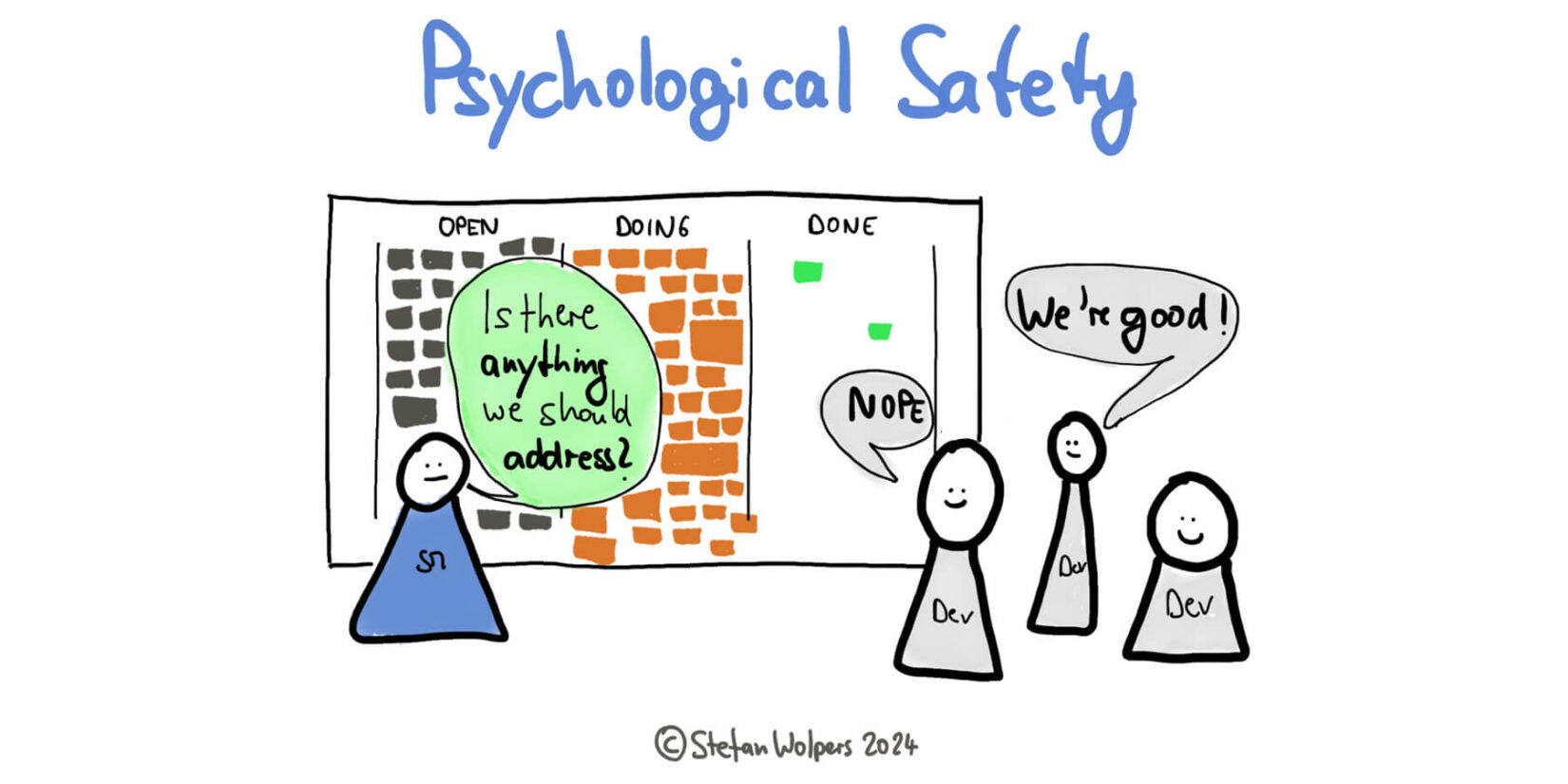
Psychological safety isn’t about fluffy “niceness”—it is the foundation of agile teams that innovate, adapt, and deliver.

When teams fearlessly debate ideas, admit mistakes, challenge norms, and find ways to make progress, they can outperform most competitors. Yet, many organizations knowingly or unknowingly sabotage psychological safety—a short-sighted and dangerous attitude in a time when knowledge is no longer the moat it used to be. Read on to learn how to keep your competitive edge.

Psychological Safety: The foundation of agile teams that innovate, adapt, and deliver, creating value — Age-of-Product.com.
Continue reading Psychological Safety: Misunderstood, Yet Mission-Critical

Download the AI4Agile Practitioners Report 2026

Welcome to the Download Page of the “AI4Agile Practitioners Report 2026”

83% of Agile practitioners use AI, but most spend 10% or less of their time with it because they do not know where it fits. Our survey of 289 Agile practitioners identifies the real adoption barriers and shows where AI creates value you can act on. Learn more by downloading the free AI4Agile Practitioners Report 2026.

AI4Agile Practitioners Report 2026 — Learn how You Compare to Your Peers’ Application of AI — Age-of-Product.com

Download your copy of the AI4Agile Practitioners Report 2026 now:


Cannot see the subscription form?
Please click here

Please note that you will not be able to download the PDF without having JavaScript enabled.

AI4Agile Practitioners Report 2026 — Related Posts

Ralph Wiggum Ships Code While You Sleep. Agile Asks: Should It?

Assist, Automate, Avoid: How Agile Practitioners Stay Irreplaceable with the A3 Framework

Agile Is Dead, Long Live Agility

The Reformation That Became the Church

The Immunity Response: How Organizations Neutralize Change

AI Transformation Déjà Vu: Why Today’s Failures Look Uncannily Like Yesterday’s “Agile Transformations”