
Food for Agile Thought #488: Product vs Engineering, Reflexive AI Usage, Psychological Safety and Lean, Guide to Stakeholders

TL; DR: Reflexive AI Usage — Food for Agile Thought #488

Welcome to the 488th edition of the Food for Agile Thought newsletter, shared with 42,671 peers. This week, Tobi Lütke calls for reflexive AI usage as a baseline at Shopify, positioning it as a creative and productivity multiplier. Jeremy Brown offers human-centered principles for product–engineering ownership that avoid RACI wars. Aakash Gupta shows how OpenAI and Notion treat experimentation as strategic infrastructure, and Roman Pichler explores AI’s role in product strategy, emphasizing its benefits while reinforcing the irreplaceable role of human judgment. Meanwhile, the 2025 AI Index Report reveals explosive AI progress and investment and flags persistent global gaps in regulation, education, and reasoning performance.

Next, John Cutler unpacks how flawed models and stale dashboards hinder creating shared understanding at scale. Mark Graban explains why psychological safety is key to Lean success, not a nice-to-have. Mike Cottmeyer and Eric Flecher connect AI readiness to the same structural shifts required for real agility. Also, Pim de Morree makes a strong case for replacing hierarchy with well-supported self-management.

Lastly, Wes Kao shares actionable tactics with Lenny Rachitsky for clearer, more persuasive communication—especially when managing up or handling objections. Abby Covert reminds us that stakeholder misalignment, not poor structure, derails excellent information architecture. Hyunsun Park and Subra Tangirala reveal why ambiguity silences employees; they call for cultures where sensing risk isn’t just leadership’s job.
Food for Agile Thought #488: Product vs Engineering, Reflexive AI Usage, Psychological Safety and Lean, Guide to Stakeholders — Age-of-Product.com
Continue reading Food for Agile Thought #488: Product vs Engineering, Reflexive AI Usage, Psychological Safety and Lean, Guide to Stakeholders

Change Questions, The Agile Way, Humans Robots Agents — Hands-on Agile 2025

TL; DR: Dr. Lynn Kelley, Peter Merel, and Jurgen Appelo speaking at Hands-on Agile 2025

The first videos of Hands-On Agile 2025 sessions are in, and you don’t want to miss them: Dr. Lynn Kelley reveals her “Change Questions” framework with its remarkable 90% success rate for sustainable organizational transformation, while Peter Merel challenges conventional agile thinking with “The Agile Way,” connecting ancient wisdom to modern AI-agile alignment through six essential themes. Also, Jurgen Appelo explores how AI is revolutionizing leadership in “Humans Robots Agents,” offering practical strategies for thriving amid technological disruption.

These industry veterans bring decades of enterprise transformation experience, providing actionable insights you can implement immediately. Watch the session recordings to transform how you approach agility.

Change Questions, The Agile Way, Humans Robots Agents: Dr. Lynn Kelley, Peter Merel, and Jurgen Appelo speaking at Hands-on Agile 2025 — Age-of-Product.com
Continue reading Change Questions, The Agile Way, Humans Robots Agents — Hands-on Agile 2025

Food for Agile Thought #487: Navigating Politics, Gemini Now State-of-the-Art, Product Strategy Playbook, Embracing ‘I Don’t Know’

TL; DR: Navigating Politics — Food for Agile Thought #487

Welcome to the 487th edition of the Food for Agile Thought newsletter, shared with 42,663 peers. This week, Murray Robinson speaks with Charles Lambdin about why real organizational change hinges on navigating politics, not just process. Mike Goitein, channeling Roger L. Martin, cautions against data obsession that stifles innovation. Janna Bastow shares a curated list of must-read PM books for 2025. Meanwhile, Zvi Mowshowitz reviews Gemini 2.5 Pro’s impressive reasoning capabilities but critiques Google’s opacity. Lastly, Anthropic’s Alignment Science team exposes troubling gaps in how AIs like Claude 3.7 “think,” revealing alignment risks masked by polished reasoning chains.

Next, Aakash Gupta urges PMs to embrace adaptive, AI-informed strategies over rigid plans. Leah Tharin champions product-led growth through fast discovery and outcome focus, and Colleen McClain reveals a public-expert divide on AI optimism and regulation. Also, Ryan Singer tells Lenny Rachitsky how Shape Up restores clarity to scaling teams. And Ken Norton reframes “I don’t know” as leadership strength, not weakness.

Lastly, Barry O’Reilly calls on leaders to personally engage with AI, not outsource it, fostering curiosity and experimentation. Adam Ard critiques how “DevOps” became a silo, betraying its intent, and Jason Cohen offers a framework for simplifying tough decisions through upside-first thinking. Finally, Kim Scott reaffirms that Radical Candor means clarity with care, not cruelty, and trust at its core.

Food for Agile Thought #487: Navigating Politics, Gemini Now State-of-the-Art, Product Strategy Playbook,, ‘I Don’t Know’ — Age-of-Product.com
Continue reading Food for Agile Thought #487: Navigating Politics, Gemini Now State-of-the-Art, Product Strategy Playbook, Embracing ‘I Don’t Know’

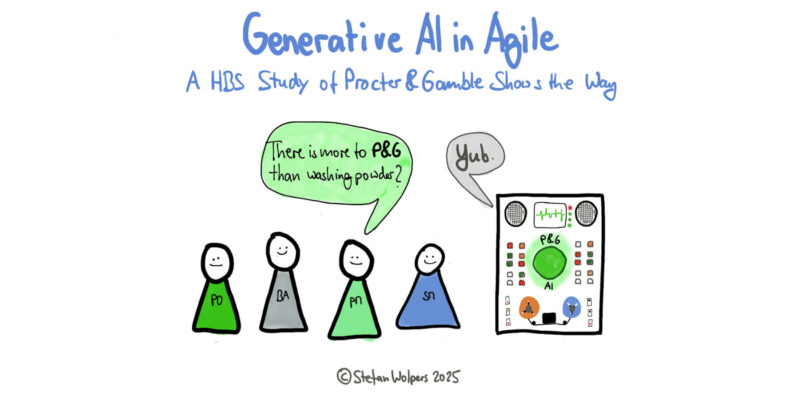
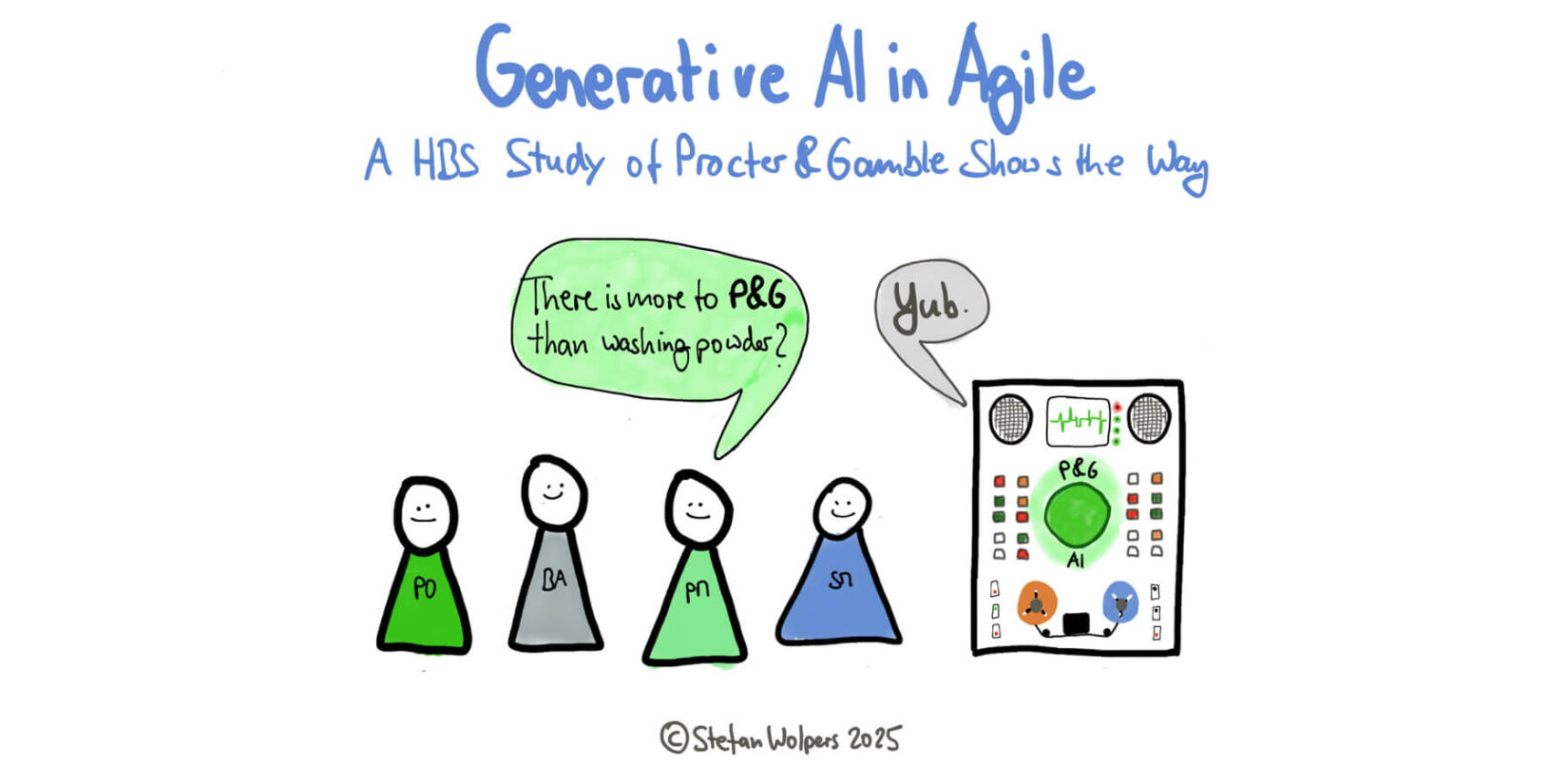
Generative AI in Agile: A Strategic Career Decision

TL;DR: A Harvard Study of Procter & Gamble Shows the Way

Recent research shows AI isn’t just another tool—it’s a “cybernetic teammate” that enhances agile work. A Harvard Business School study of 776 professionals found individuals using AI matched the performance of human teams, broke down expertise silos, and experienced more positive emotions during work. For agile practitioners, the choice isn’t between humans or AI but between being AI-augmented or falling behind those who are. The cost of experimentation is low; the potential career advantage, on the other hand, is substantial. A reason to embrace generative AI in Agile?

Generative AI in Agile: A Strategic Career Decision — A Harvard Study of Procter & Gamble Shows the Way — Age-of-Product.com
Continue reading Generative AI in Agile: A Strategic Career Decision

Food for Agile Thought #486: Reshaping Teamwork, Product’s Code-first Future, Unintentional Micromanagement, OKR’s Hidden Costs

TL; DR: Reshaping Teamwork — Food for Agile Thought #486

Welcome to the 486th edition of the Food for Agile Thought newsletter, shared with 42,656 peers. This week, Fabrizio Dell’Acqua et al. reveal how AI can match team performance and boost collaboration in a Procter & Gamble field study. Julie Zhuo dismantles the traditional product development playbook, while Karri Saarinen champions craft and quality over speed. Itamar Gilad calls for transformational AI visions, not just incremental ones. And Paul Roetzer warns AGI may be closer than we think—raising the stakes for how we lead, build, and stay human.

Next, Zvi Mowshowitz critiques Sam Altman’s casual AGI stance, contrasting it with disruption-heavy models like Epoch’s GATE. Aakash Gupta and Tal Raviv demonstrate building an AI-powered product management copilot in under an hour. McKinsey explores how large organizations are restructuring to unlock gen AI value. Plus, Tobias Mayer and Jade Garratt explore Scrum, safety, and leadership at work.

Lastly, Matheus Lima argues that actual psychological safety thrives on respectful conflict, not artificial harmony. Ian Vanagas identifies communication pitfalls engineers face, while Jeff Gothelf exposes the hidden costs of misused OKRs. Finally, Petra Wille shares why AI notetakers don’t belong in coaching—some moments are too human for machines to capture without consequence.

Food for Agile Thought #486: Reshaping Teamwork, Product’s Code-first Future, Unintentional Micromanagement, OKR’s Hidden Costs - Age-of-Product.com
Continue reading Food for Agile Thought #486: Reshaping Teamwork, Product’s Code-first Future, Unintentional Micromanagement, OKR’s Hidden Costs

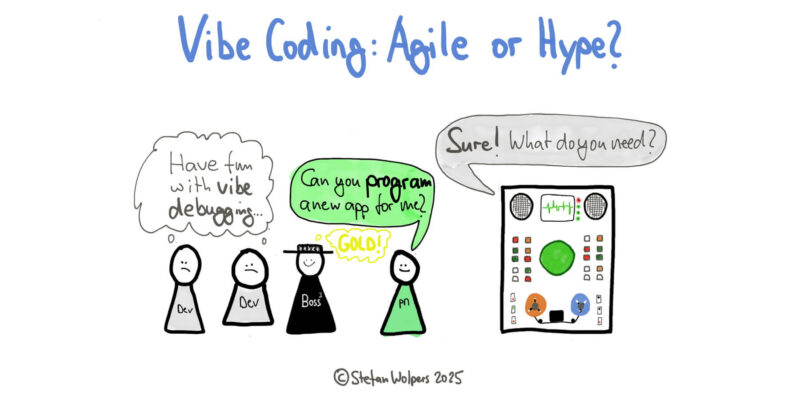
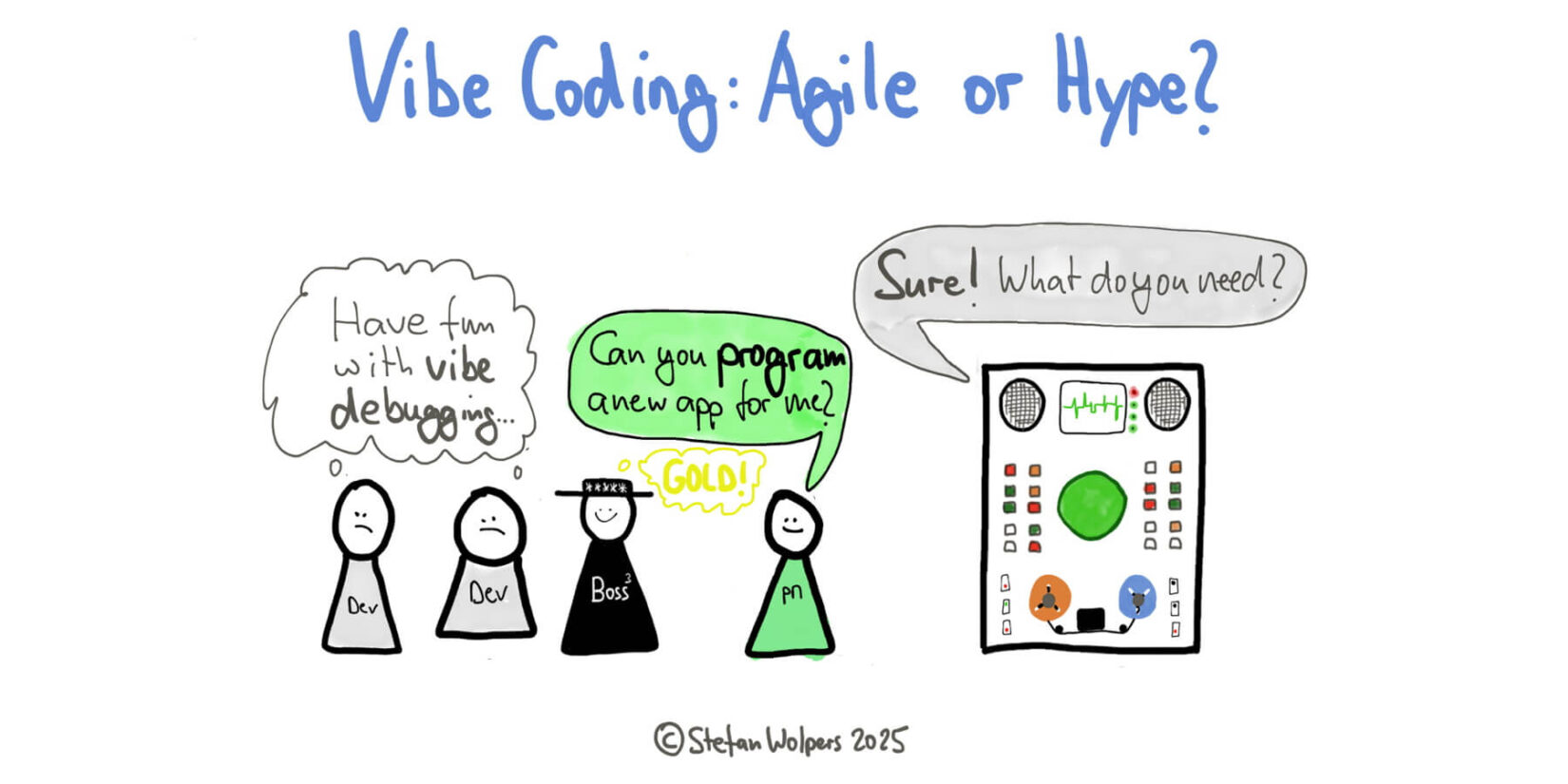
Is Vibe Coding Agile or Merely a Hype?

TL; DR: Vibe Coding

Vibe coding — using natural language to generate code through AI — represents a significant evolution in software development. It accelerates feedback cycles and democratizes programming but raises concerns about maintainability, security, and technical debt.

Learn why success likely requires a balanced approach: using vibe coding for rapid prototyping while maintaining rigorous standards for production code, with developers evolving from writers to architects and reviewers or auditors.

Vibe Coding: Learn how it can enhance agile practices and empower non-technical entrepreneurs but beware of its issues — Age-of-Product.com
Continue reading Is Vibe Coding Agile or Merely a Hype?