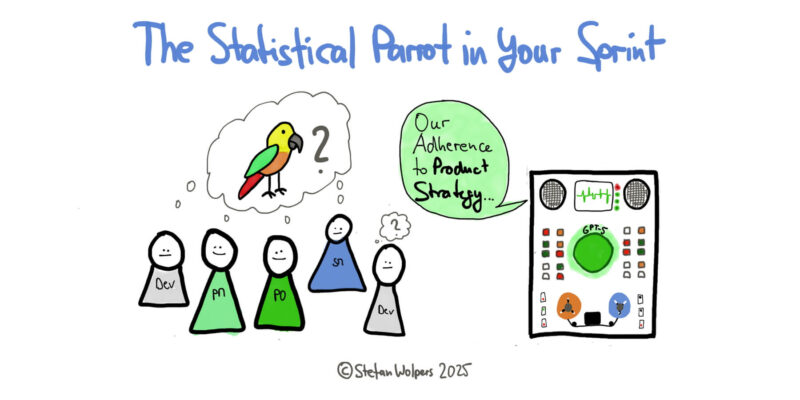
The Statistical AI Parrot in Your Sprint: Why AI Won’t Replace Your Agile Team (and Why Ignoring It Is a Mistake)

TL; DR: The AI Parrot in the Room

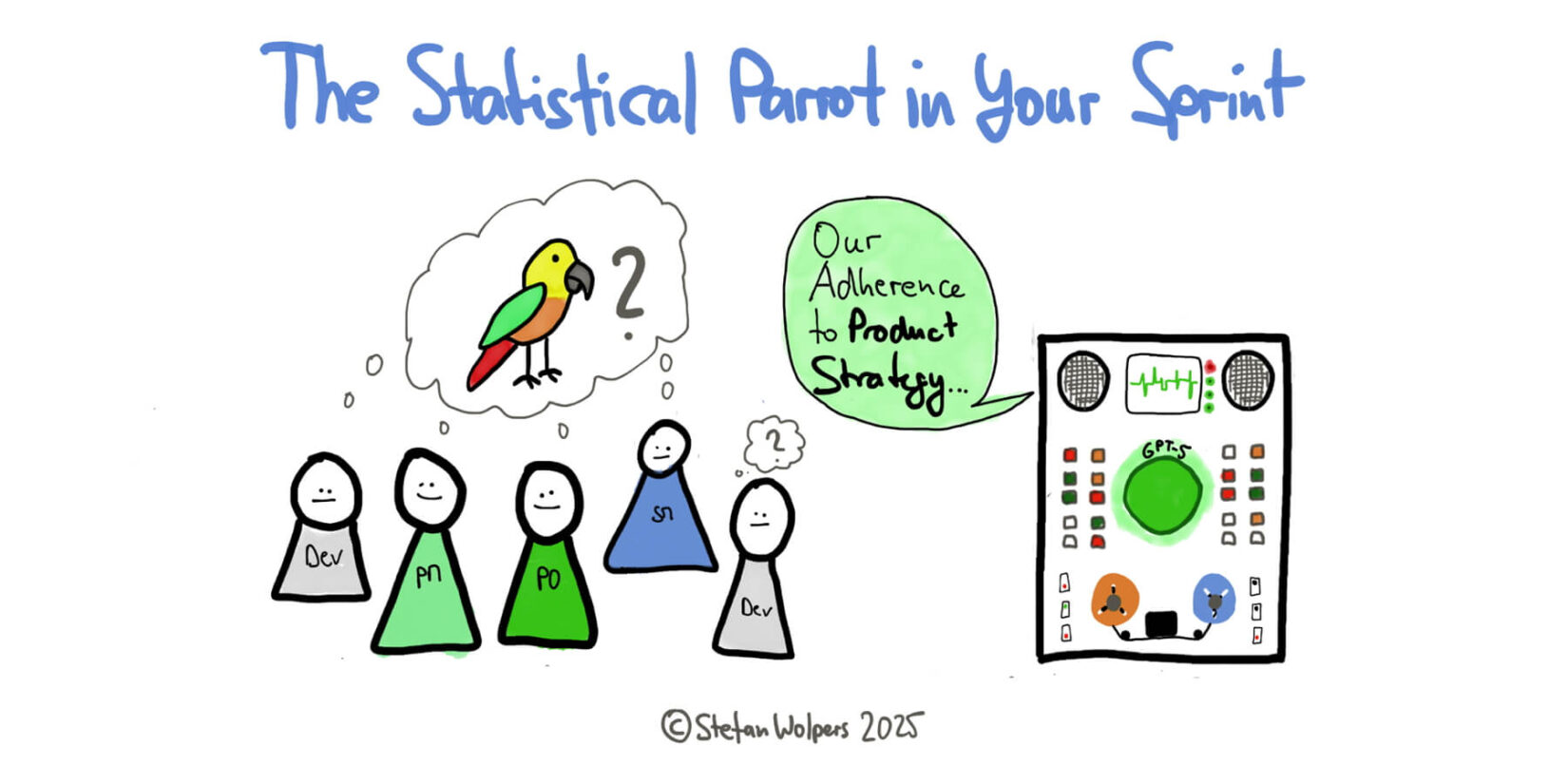
Your LLM tool doesn’t think. It’s a statistical AI parrot: sophisticated and trained on millions of conversations—but still a parrot. Teams that fail with AI either don’t understand this or act as if it doesn’t matter. Both mistakes are costly.

The uncomfortable truth in Agile product development isn’t that AI will replace your team (it won’t) or that it’s useless hype (it isn’t). Most teams use these tools on problems that need contextual judgment, then accept outputs without the critical thinking Agile demands.

The Statistical AI Parrot in Your Sprint: Why AI Won't Replace Your Agile Team. And Why Ignoring It Is a Mistake — Age-of-Product.com
Continue reading The Statistical AI Parrot in Your Sprint: Why AI Won’t Replace Your Agile Team (and Why Ignoring It Is a Mistake)

Food for Agile Thought #506: Personal AI Productivity, Strategy Problem Diagnosis, Fooled by A/B Tests, Narcissistic Leaders

TL; DR: Personal AI Productivity — Food for Agile Thought #506

Welcome to the 506th edition of the Food for Agile Thought newsletter, shared with 40,541 peers. This week, Jenny Wanger explores how cognitive biases like loss aversion and the planning fallacy can derail personal AI productivity, while John Cutler dissects poor strategy execution into structural problems of insight, clarity, and commitment. David Pereira critiques outdated stakeholder management, calling for a collaborative partnership instead. Justin Massa outlines a four-step method to evaluate AI models beyond the hype, and Mike Fisher dismantles the heroic leader myth, advocating for humility and systems that foster shared leadership.

Next, Aakash Gupta interviews Teresa Torres on how Continuous Discovery Habits apply to AI products, stressing thoughtful validation over speed. Phoebe Sajor reflects on building with AI tools as a non-coder, exposing risks beneath the empowerment, while Jing Hu reveals how persuasion tactics can manipulate AI safety mechanisms. Zvi Mowshowitz reviews GPT-5’s subtle but functional upgrades, and Mark Graban urges leaders to fix systemic blockers that daily Kaizen efforts alone cannot resolve.

Lastly, Bessemer’s 2025 State of AI highlights two startup archetypes and urges focus on memory, action, and private evaluations. Kevin Kelly examines AI as an insatiable resource feeding itself in endless loops, and Gergely Orosz warns of unsustainable workweeks in AGI-focused startups. Additionally, Torsten Walbaum and Kyle Poyar show how Deep Research can drive serious GTM gains. Finally, Louise North critiques misleading A/B tests and calls for deeper user insight and strategic boldness.

Food for Agile Thought #506: Personal AI Productivity, Strategy Diagnosis, Fooled by A/B Tests, Narcissistic Leaders – Age-of-Product.com
Continue reading Food for Agile Thought #506: Personal AI Productivity, Strategy Problem Diagnosis, Fooled by A/B Tests, Narcissistic Leaders

The Benefits of AI Micromanagement

TL; DR: AI Micromanagement Has Its Merits

The Benefits of AI Micromanagement show up when you feed ChatGPT 5 progressively more context about your actual situation. I tested five prompts for a Retrospective design: from zero context to full team background with extended reasoning time. Case 1 produced generic “Scrum Oscars” nonsense. Case 5 delivered sophisticated root-cause analysis targeting chronic top-down thrash, dependency gridlock, and psychological safety erosion.

The difference? Strategic context curation. More context created better solutions, but only when that context was relevant and structured.

Benefits of AI Micromanagement: Why the Goldilock Approach to Context works with generative AI — Age-of-Product.com
Continue reading The Benefits of AI Micromanagement

Food for Agile Thought #505: GPT-5, Building Product Sense, The ‘Just Ship It’ Issue, Future of Scrum Teams

TL; DR: GPT-5 — Food for Agile Thought #505

Welcome to the 505th edition of the Food for Agile Thought newsletter, shared with 40,569 peers. This week, Grant Harvey highlights how OpenAI’s GPT-5 merges prior models into a unified system with smarter routing, improved reasoning, reduced hallucinations, and new personal assistant capabilities. Christina Wodtke reframes product sense as learnable pattern recognition, sharpened through structured practice, while Leah Tharin warns that while AI accelerates simple work, over-shipping without impact wastes resources. Ethan Mollick explores GPT-5’s proactive, multi-model intelligence, and Dan Shipper’s team praises its speed, usability, and versatility despite some coding limitations.

Next, Janna Bastow details how painted door tests validate demand before building, saving resources and guiding priorities when used responsibly. Kyle Poyar shares 12 ChatGPT workflows boosting GTM efficiency across marketing, sales, and growth, and OpenAI highlights GPT-5’s coding, reasoning, and customization strengths with new API controls. Dave West contends AI makes Scrum fundamentals more vital. Also, Charity Majors notes that durable code remains crucial even as AI accelerates disposable software creation.

Lastly, Alexis Gauba and Ben Hylak note GPT-5’s strength in engineering and parallel tasks, though writing quality has dipped. Microsoft presents 1,000+ AI adoption cases driving efficiency and innovation. Kevin Kelley reflects on AI’s role in personal, private creation, and StaySassy urges trimming metrics to a few actionable ones. Finally, Pawel Brodzinski stresses communication quality over coding speed as the real driver of estimation accuracy, even with AI-assisted development.

Food for Agile Thought #505: GPT-5, Building Product Sense, The ‘Just Ship It’ Issue, Future of Scrum Teams - Age-of-Product.com
Continue reading Food for Agile Thought #505: GPT-5, Building Product Sense, The ‘Just Ship It’ Issue, Future of Scrum Teams

Agile AI Agents

TL; DR: Thinking About Use Cases

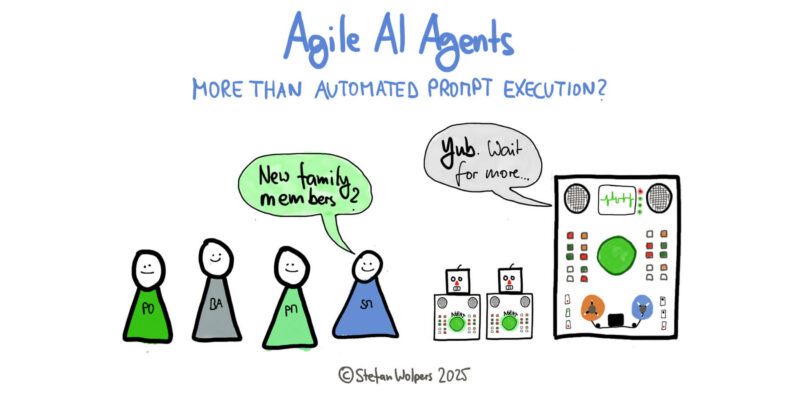
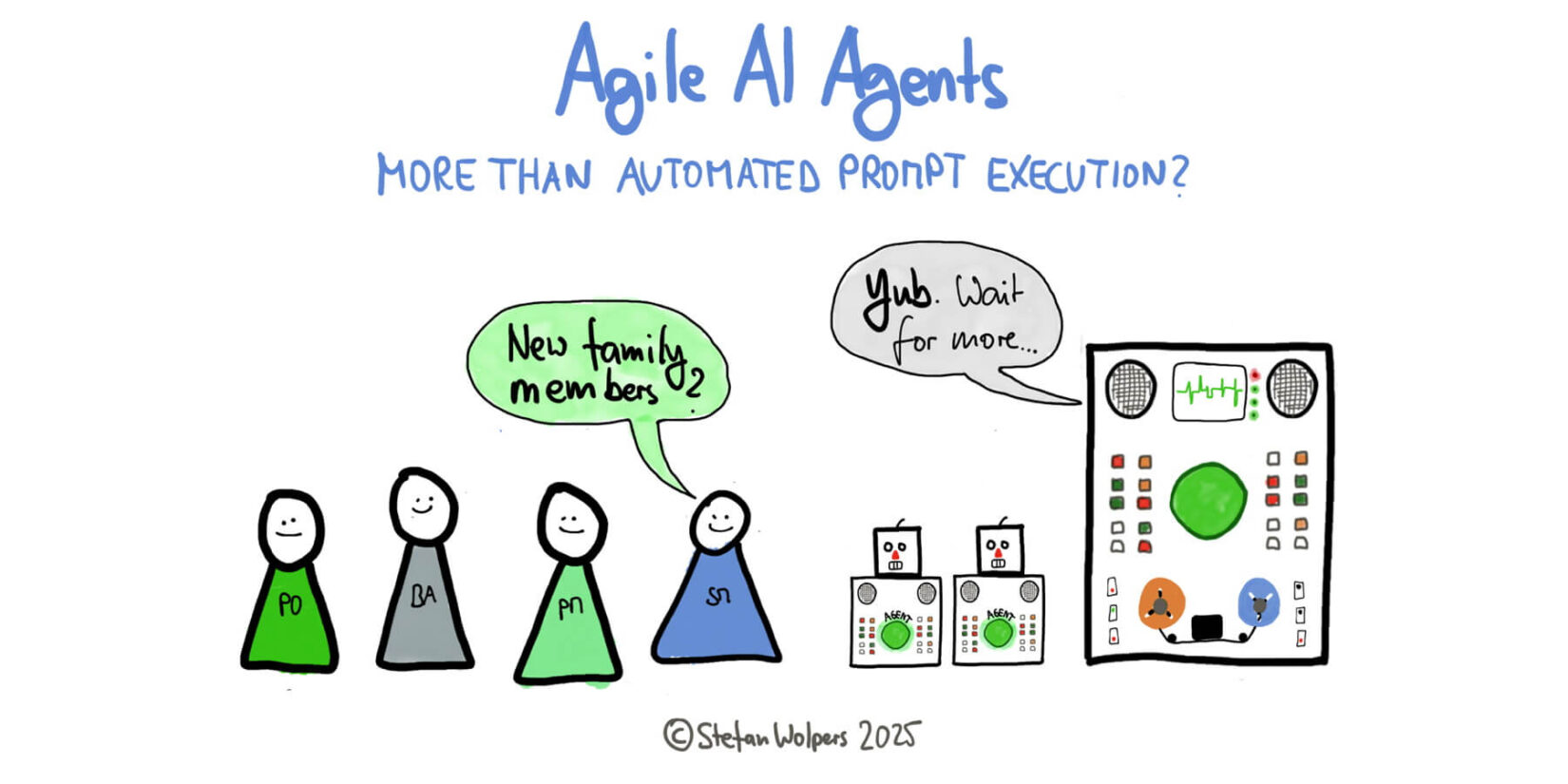
I tried ChatGPT’s new Agent Mode: Is it really a new Agile AI Agent that autonomously identifies noteworthy signals in the daily communication and data noise? Or is it a glorified automated prompt execution device?

Let’s find out. (Note: I only have a Plus account, which limits the experience.)

What are Agile AI Agent Use Cases? I tried ChatGPT’s new Agent Mode, and here is what I found — Age-of-Product.com.
Continue reading Agile AI Agents

Food for Agile Thought #504: AI Bubble Guide, Product Manager Career in 2025, Consulting w/o Managers, Don’t Follow Frameworks

TL; DR: AI Bubble Guide — Food for Agile Thought #504

Welcome to the 504th edition of the Food for Agile Thought newsletter, shared with 40,578 peers. This week, Brian Balfour explores how AI is transforming product management by expanding both problem and solution spaces, accelerating decision-making, and introducing new strategic tensions. David Pereira outlines three actionable ways to deliver more value from ideas without becoming a backlog gatekeeper. Dean Peters advocates moving from documents to interactive demos, leveraging AI to let stakeholders feel value early, and Edward Zitron critiques the generative AI bubble as overhyped and underdelivering. Also, Pim de Morree highlights metafinanz’s bold shift to self-managed teams rooted in autonomy and trust.

Next, Aakash Gupta and Ankit Shukla break down what it takes to thrive as an AI Product Manager in 2025, from core skills to architectural fluency. Lenny Rachitsky and Madhavan Ramanujam tackle the common pricing traps that sink AI startups, and Harrison Chase explains why Claude Code-like agents handle complex tasks so well. Then, Kimberly Tan, Joe Schmidt, Marc Andrusko, and Olivia Moore unpack what separates durable AI products from demos, while Steve Denning critiques misguided approaches to psychological safety, resulting in managers not solving important problems.

Lastly, Zvi Mowshowitz reviews the U.S. AI Action Plan as pragmatic yet incomplete on key risks. Joe Foley shares how Penta Technologies embraced Scrum to replace micromanagement with team-led delivery, while Ant Murphy urges teams to remix frameworks like mental models. Christina Wodtke highlights why sketching trumps prompting in early design, and Jason Yip outlines six safe release patterns. Finally, Gergely Orosz and Laura Tacho explore the nuanced reality of AI’s impact on software engineering.

Food for Agile Thought #504: AI Bubble Guide, Product Manager Career in 2025, Consulting w/o Managers, Don’t Follow Frameworks - Age-of-Product.com
Continue reading Food for Agile Thought #504: AI Bubble Guide, Product Manager Career in 2025, Consulting w/o Managers, Don’t Follow Frameworks