Food for Agile Thought #512: DORA 2025, Roadmap Illusion, Context Rot, Does Anyone Care About Product?

TL; DR: DORA 2025 State of AI-Assisted Software Development — Food for Agile Thought #512

Welcome to the 512th edition of the Food for Agile Thought newsletter, shared with 40,467 peers. This week, Google Cloud’s DORA team debuts its DORA 2025 State of AI-Assisted Software Development, featuring seven capabilities, seven team profiles, and a case for value stream management. Rich Mironov urges product leaders to tell money stories, protect infrastructure, and translate bets for executives, and Stephanie Leue exposes roadmap fragility and argues for balanced allocations. Jing Hu critiques consumer-skewed AI usage and vanity adoption metrics, while John Cutler reframes the trade-offs between vertical and horizontal coupling.

Next, Teresa Torres and Petra Wille demystify AI evals from golden datasets to guardrails, Jenny Wanger argues strategy filters beat scoring frameworks, and Zvi Mowshowitz unpacks Nvidia’s rumored OpenAI stake, 10GW buildout, and Stargate implications. Kelly Hong, in conversation with Hamel Husain, explains the concept of context rot and urges the practice of disciplined context engineering. Also, Shane Hastie interviews Shannon Mason on why 100 percent utilization harms teams, advocating intentional slack, fewer context switches, and capacity planning aligned with strategy.

Lastly, James Reggio and Camilla Matias demonstrate how Brex’s AI platform automates step-by-step workflows, improving onboarding and communication, while IDEO defines people-first leadership through six learnable skills. Andy Cleff ties the Yes Habit to five thieves of time and advocates visible WIP and saying no. Moreover, Michael Bellato, Mårten Schultzberg, and Sebastian Ankargren share Spotify’s Experiments with Learning metric. Finally, Kevin Kelly proposes a periodic table of cognition, forecasting the emergence of many distinct AI minds.
Food for Agile Thought #512: DORA 2025, Roadmap Illusion, Context Rot, Does Anyone Care About Product? — Age-of-Product.com
Continue reading Food for Agile Thought #512: DORA 2025, Roadmap Illusion, Context Rot, Does Anyone Care About Product?

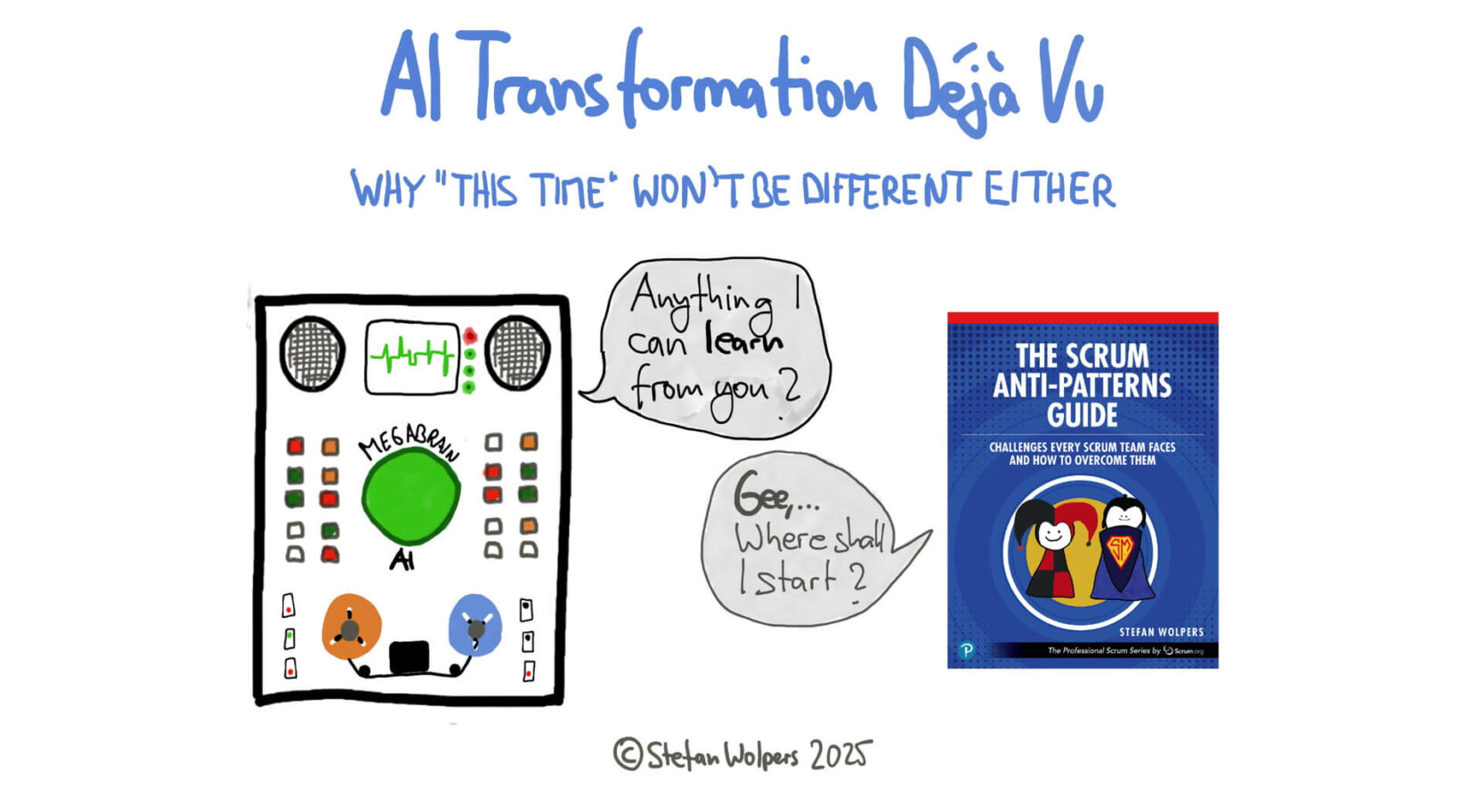
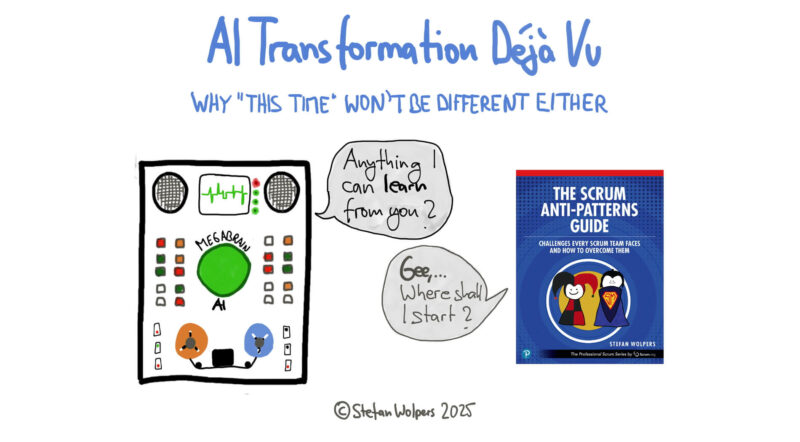
AI Transformation Déjà Vu: Why Today’s Failures Look Uncannily Like Yesterday’s “Agile Transformations”

TL;DR: AI Transformation Failures

Organizations seem to fail their AI transformation using the same patterns that killed their Agile transformations: Performing demos instead of solving problems, buying tools before identifying needs, celebrating pilots that can’t scale, and measuring activity instead of outcomes.

These aren’t technology failures; they are organizational patterns of performing change instead of actually changing. Your advantage isn’t AI expertise; it’s pattern recognition from surviving Agile. Use it to spot theater, demand real problems before tools, insist on integration from day one, and measure actual value delivered.

AI Transformation Failure Déjà Vu: Why Today’s Failures Look Uncannily Like Yesterday’s “Agile Transformations” —  Age-of-Product.com
Continue reading AI Transformation Déjà Vu: Why Today’s Failures Look Uncannily Like Yesterday’s “Agile Transformations”

Food for Agile Thought #511: AI Bubble, Perfect Product Roadmap, Inversion as Mental Model, Scaling Culture?

TL; DR: AI Bubble — Food for Agile Thought #511

Welcome to the 511th edition of the Food for Agile Thought newsletter, shared with 40,483 peers. This week, Cedric Chin outlines the Vaughn Tan Rule: keep human judgment central while using AI for synthesis, retrieval, transformation, and speed across grading, feedback, research, coding, scheduling, and discovery. Janna Bastow reframes roadmaps as living prototypes tied to strategy and impact. Itamar Gilad urges AI-enabled, evidence-guided discovery over artifact output. Azeem Azhar, with Nathan Warren, proposes five gauges for assessing the AI bubble risk, while Alex Heath interviews Bret Taylor on agentic apps, voice, and outcome-based models.

Next, Teresa Torres and Petra Wille show how real AI products emerge from prompt decomposition, orchestration, observability, and rigorous evals with cross-functional tradeoffs. Jing Hu highlights MIT’s AI Risk Repository and urges post-deployment focus and concrete failure modes. Mike Fisher explains scaling culture through codified values and rituals, and Kent Beck frames programming deflation and the scarcity of judgment. Also, Gergely Orosz and Laura Tacho share how 18 firms measure AI’s engineering impact.

Lastly, Maarten Dalmijn urges context over dogma by adapting or breaking Scrum rules when outcomes suffer. Paul Boag promotes functional, task-driven personas via lightweight AI workflows, and Emma Webster argues AI accelerates speed but not craft, calling for curiosity, intuition, taste, and intention. Also, Shane Hastie interviews Thanos Diacakis on attacking one bottleneck, limiting WIP, and investing 20 to 30 percent in improvement. Finally, Aaron Chatterji and coauthors chart ChatGPT’s global, rising nonwork adoption and decision-support value.

Food for Agile Thought #511: AI Bubble, Perfect Product Roadmap, Inversion as Mental Model, Scaling Culture? Age-of-Product.com
Continue reading Food for Agile Thought #511: AI Bubble, Perfect Product Roadmap, Inversion as Mental Model, Scaling Culture?

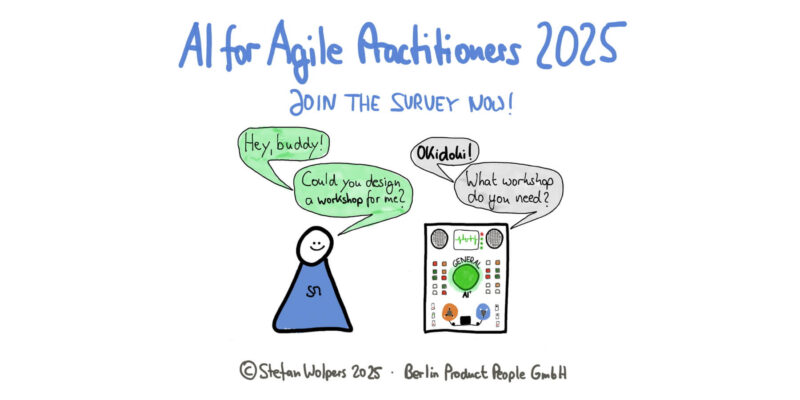
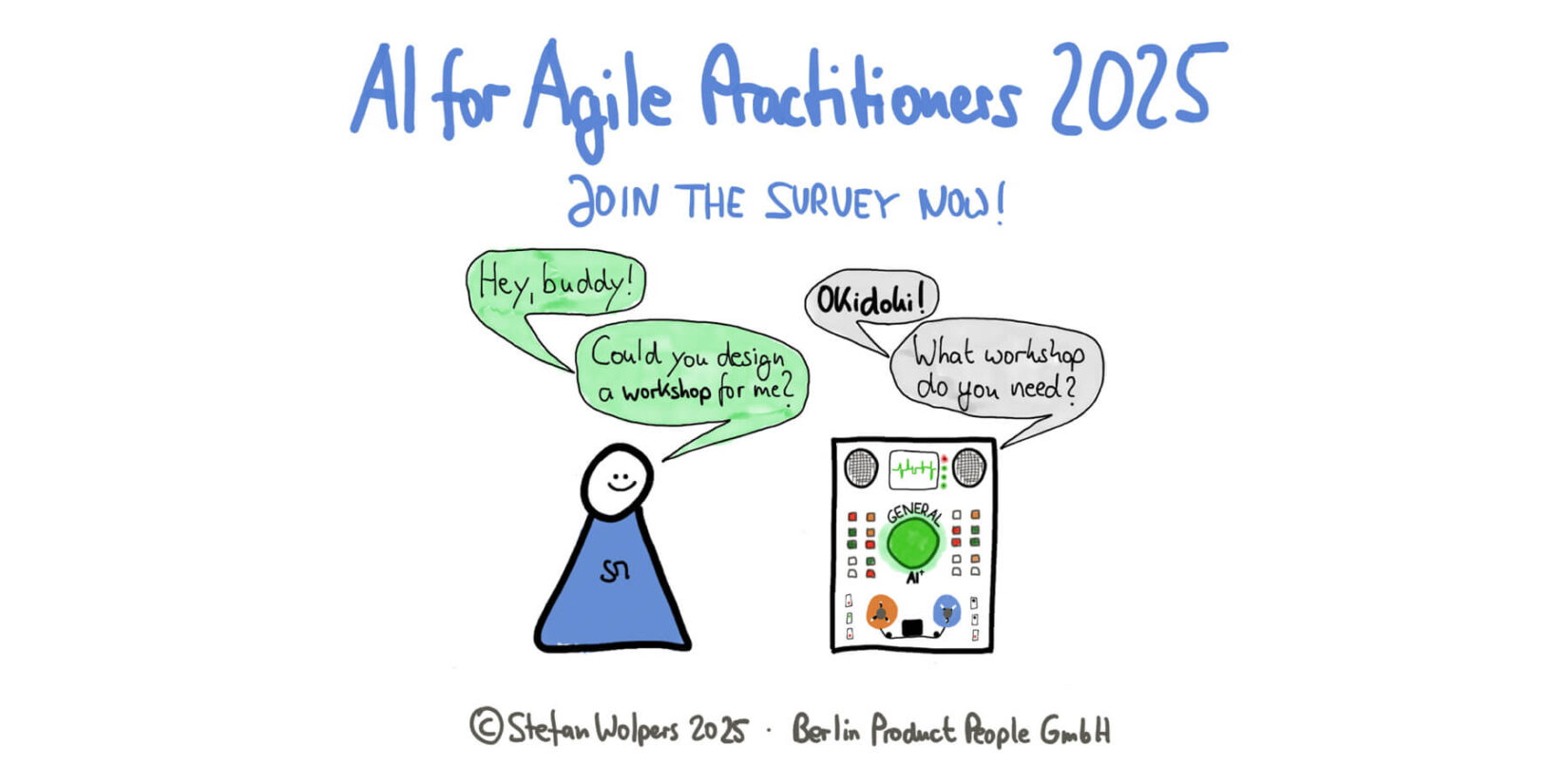
Join the AI for Agile Practitioners Survey — Why We Need Your Insights

TL; DR: The Agile Community Needs Your Reality Check on AI

After analyzing dozens of “AI will transform agile” articles, I’ve found a troubling pattern: They’re written by AI enthusiasts who’ve never run a Sprint, not by practitioners dealing with the messy reality of AI integration.

The result? A dangerous gap between AI hype and Agile’s reality on the ground, leading to misguided implementations across our industry.

As someone who has documented Agile anti-patterns for years, I recognize this pattern. When we let others define our practices without practitioner input, we get cargo cult implementations that miss the essence of what makes Agile work.

👉 The AI for Agile Practitioners Survey is our opportunity to establish the definitive, practitioner-driven understanding of AI’s actual impact on our field—before the consultants and tool vendors do it for us.

AI for Agile Practitioners Survey: Join the poll and illuminate how artificial intelligence augments Agile - Age-of-Product.com
Continue reading Join the AI for Agile Practitioners Survey — Why We Need Your Insights

Food for Agile Thought #510: AI Riches, The Shipping Illusion, Middle-Aged PMs, Enterprise Change Pattern

TL; DR: AI Riches — Food for Agile Thought #510

Welcome to the 510th edition of the Food for Agile Thought newsletter, shared with 40,508 peers. This week, Jerry Neumann analyzes AI Riches, contrasting generative AI with containerization, predicting it will create widespread value but little new wealth for startups or investors. Martin Eriksson shows how product leaders can turn vague growth targets into actionable strategies by mapping opportunities and validating assumptions, and Stephanie Leue challenges the “Shipping Illusion,” advocating for outcome-driven teams that prioritize impact over busyness. Zvi Mowshowitz highlights how rapid AI progress is underestimated and urges preparation for imminent AGI, while Horace He unpacks why LLM reproducibility issues arise and how batch-invariant kernels offer a fix.

Next, Andrew Chen highlights why strong early retention, category fit, timing, and differentiation are crucial for new tech products, as poor retention is nearly impossible to fix later. Steve Newman raises concerns about looming AI agent security risks reminiscent of the early Windows era, and Andi Roberts reframes influence as a daily, relational practice, advocating varied approaches. Simon Powers proposes experiment-driven, people-led change over rigid frameworks, and Roman Pichler clarifies the interplay between strategy, OKRs, and KPIs.

Lastly, Jeff Gothelf urges mid-career product managers to prioritize humility and continuous learning as AI transforms their roles, emphasizing the importance of hands-on AI skills. Ash Maurya explains why billions in AI startup funding vanished, blaming tech without paying customers, ChatGPT competition, and needless complexity, while Joost Minnaar outlines the human skills essential for self-management in flat organizations. Finally, Maarten Dalmijn highlights the hidden costs of high work in progress versus the discomfort of true focus.

Food for Agile Thought #510: AI Riches, The Shipping Illusion, Middle-Aged PMs, Enterprise Change Pattern — Age-of-Product.com
Continue reading Food for Agile Thought #510: AI Riches, The Shipping Illusion, Middle-Aged PMs, Enterprise Change Pattern

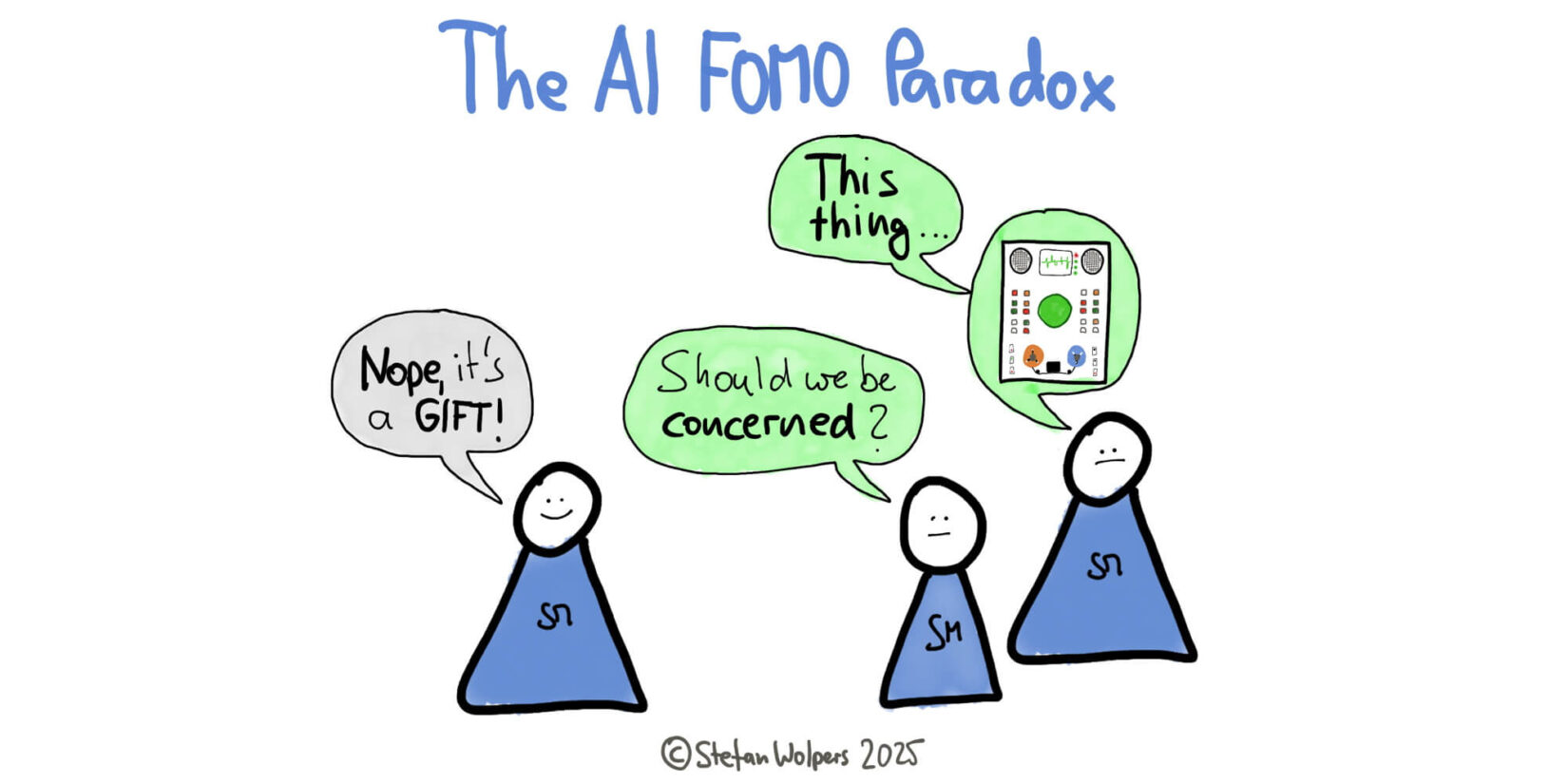
The AI FOMO Paradox: Why Agile Practitioners Are Perfectly Positioned for the AI Era

TL; DR: AI FOMO — A Paradox

AI FOMO comes from seeing everyone’s polished AI achievements while you see all your own experiments, failures, and confusion.

The constant drumbeat of AI breakthroughs triggers legitimate anxiety for Scrum Masters, Product Owners, Business Analysts, and Product Managers: “Am I falling behind? Will my role be diminished?”

But here’s the truth: You are not late. Most teams are still in their early stages and uneven. There are no “AI experts” in agile yet—only pioneers and experimenters treating AI as a drafting partner that accelerates exploration while they keep judgment, ethics, and accountability.

Disclaimer: I used a Deep Research report by Gemini 2.5 Pro to research sources for this article.

The AI FOMO Paradox: Why Knowledgeable Agile Practitioners Are Perfectly Positioned for the AI Era — Age-of-Product.com
Continue reading The AI FOMO Paradox: Why Agile Practitioners Are Perfectly Positioned for the AI Era