Food for Agile Thought’s issue #197—shared with 22,468 peers—delves into agile decision making when there is no apparent right answer; we are inspired by a saboteur’s manual to check our projects for similar indications and we go back to a classic on agility from 1972. (Yes, there is life before the Manifesto.)
We also learn about the opportunities that a recent pre-packaged management fad bears for UX folks; we check a flowchart on product prioritization, and we get a better understanding on what companies believe product managers do all day.
Lastly, we applaud Marty Cagan on yet another encouraging video on the challenges product menschen face every.
Food for Agile Thought’s issue #196—shared with 22,452 peers—discovers seven agile coach types; we learn about the difference between ‘Agile Transformation’ and ‘agile transformation’ by following Avanza’s success story. Moreover, we warm up to the idea that there might be an alternative to stable teams in the age of self-selection.
We also learn about the confluence of lean, agile, and Design Thinking; we get our hands on a checklist for the state of agility of the product roadmap, and we are tempted to follow the idea that nobody owns anything in a product made by a team. Or not?
Lastly, we applaud Mary Meeker for releasing another edition of her epic Internet Trends report. For free.
TL;DR: Scrum Master Problem Dealing — The Survey Results
Scrum Master Problem Dealing: We all know it; changing the way we work is extremely difficult. It requires us to find novel solutions to wicked challenges, to deal with cultural baggage (‘the way we do things here’) and to bring along the people needed to make a change successful. And yet, this difficult challenge is a core responsibility of Scrum Masters: How can your organization work effectively with Scrum if it is not considering the entire system?
But how do Scrum Masters and Agile Coaches go about this? What strategies do they use to change the system? Who are their most important allies? And what else can we learn from them?
We teamed up with The Liberators to identify what works in the field. We gathered both quantitative as well as qualitative data from a survey completed by over 200 participants.
Food for Agile Thought’s issue #195—shared with 22,363 peers—discovers Amazon Agility, we delve into the DevOps phenomenon as a strategic advantage, and embrace successful models for self-managing organizations.
We also learn how to hold each other accountable as teammates, we understand the necessity of safe-to-fail places to stimulate innovation, and we ask: Shall product roadmaps have dates?
Lastly, we enjoy 45 minutes with Mr. Product Management Marty Cagan on ordinary people creating extraordinary things.
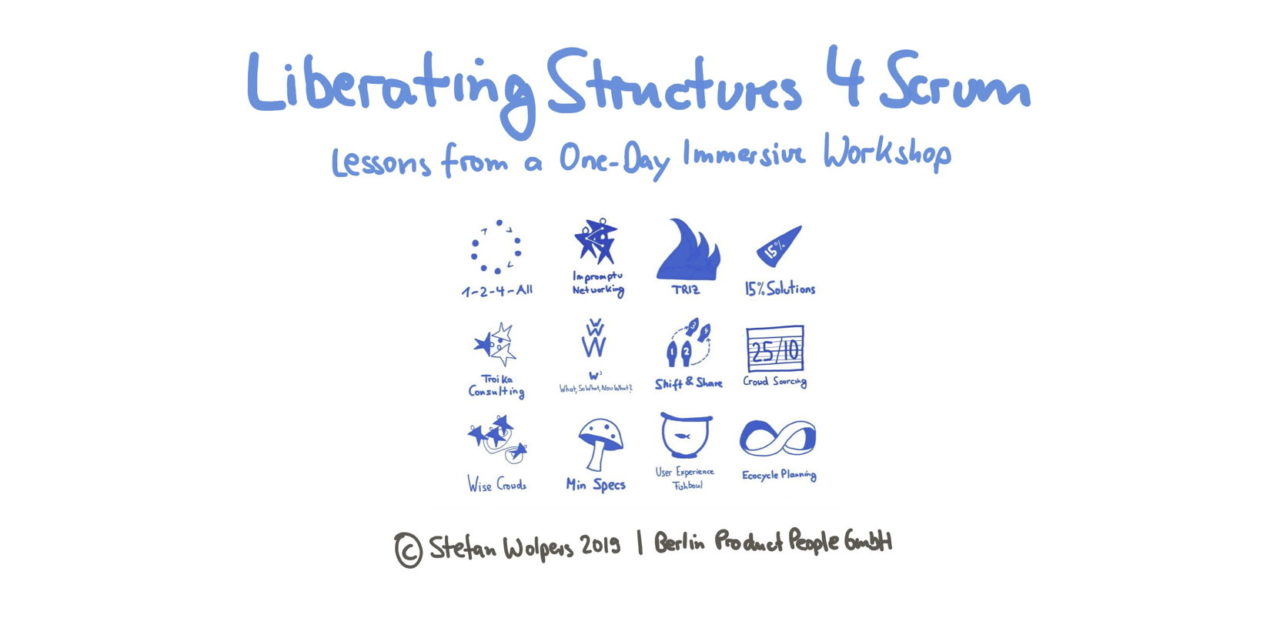
TL; DR: Liberating Structures for Scrum: The Sprint Planning
The third Liberating Structures Scrum meetup addressed the Sprint Planning, more precisely the reasons why Sprint Plannings fail—despite all the efforts put into them in advance, from the Product Backlog refinement to the Sprint Review.
Food for Agile Thought’s issue #194—shared with 22,272 peers—takes a look at # NoFrameworks; we apply couple counseling techniques to conflicts in Scrum Teams, and acknowledge that our Sprint board is not a Kanban system.
We also learn from Ocado’s portfolio wall how to improve product development; we analyze why the standard user story template has proven so popular, and we brush up our understanding of servant leadership in product management.
Lastly, we enjoy Phil Plait’s video on how science works—replace ‘science’ with ‘product,’ and you get a handy introduction into contemporary product development approaches for the skeptics in your organization.