TL; DR: PM-PO Delta, Lead-Squad Protocol — Food for Agile Thought #264
Welcome to the 264th edition of the Food for Agile Thought newsletter, shared with 27,603 peers. This week, we delve into the PM-PO delta, the difference between product managers and Product Owners. We also revisit the Agile Manifesto’s notion that working software is the primary measure of progress, and we learn how to avoid becoming a lonesome servant leader.
We then come back to critical issues of the practical use of user stories; we create an evidence-based Product Backlog, and we consider quitting saying ’no‘ but asking a question instead when it comes to prioritizing the Product Backlog.
Lastly, we applaud Crisp for sharing the Lead-Squad Protocol, a lightweight attempt to align several teams collaborating on joint projects, products, or initiatives.
Agile turns into micromanagement as a result of the middle management’s resistance to change. Despite better knowledge, changing an organization into a learning one that embraces experimentation and failure is not in everybody’s best interest. Self-organizing, empowered teams often conflict with the middle management’s drive to execute personal agendas, self-preservation being one of them.
You guessed right: it is time for a rant and short “checklist” to get the discussion going in your organization.
TL; DR: Upcoming AI 4 Agile Workshops, Scrum Training Classes, and Events
Age-of-Product.com’s parent company — Berlin Product People GmbH — offers Scrum training classes authorized by Scrum.org, Liberating Structures workshops, and hybrid training of Professional Scrum and Liberating Structures. The training classes are offered both in English and German.
Check out the upcoming timetable of training classes, workshops, meetups, and other events below and join your peers.
TL; DR: Engineering Sanity, Skill Mapping — Food for Agile Thought #263
Welcome to the 263rd edition of the Food for Agile Thought newsletter, shared with 27,516 peers. This week, we delve into how UX can support engineering sanity; we study a recent survey among CIOs on technical debt, and we learn about options of remote engineers if they want to be noticed.
We then enjoy an audio guide to product discovery; we take it beyond the usual ‘output vs. outcome’ discussion, and we learn how to ask better questions when we need to decide what to measure on our quest to create value for customers.
Lastly, we are grateful for a downloadable template that supports skill mapping to identify educational needs.
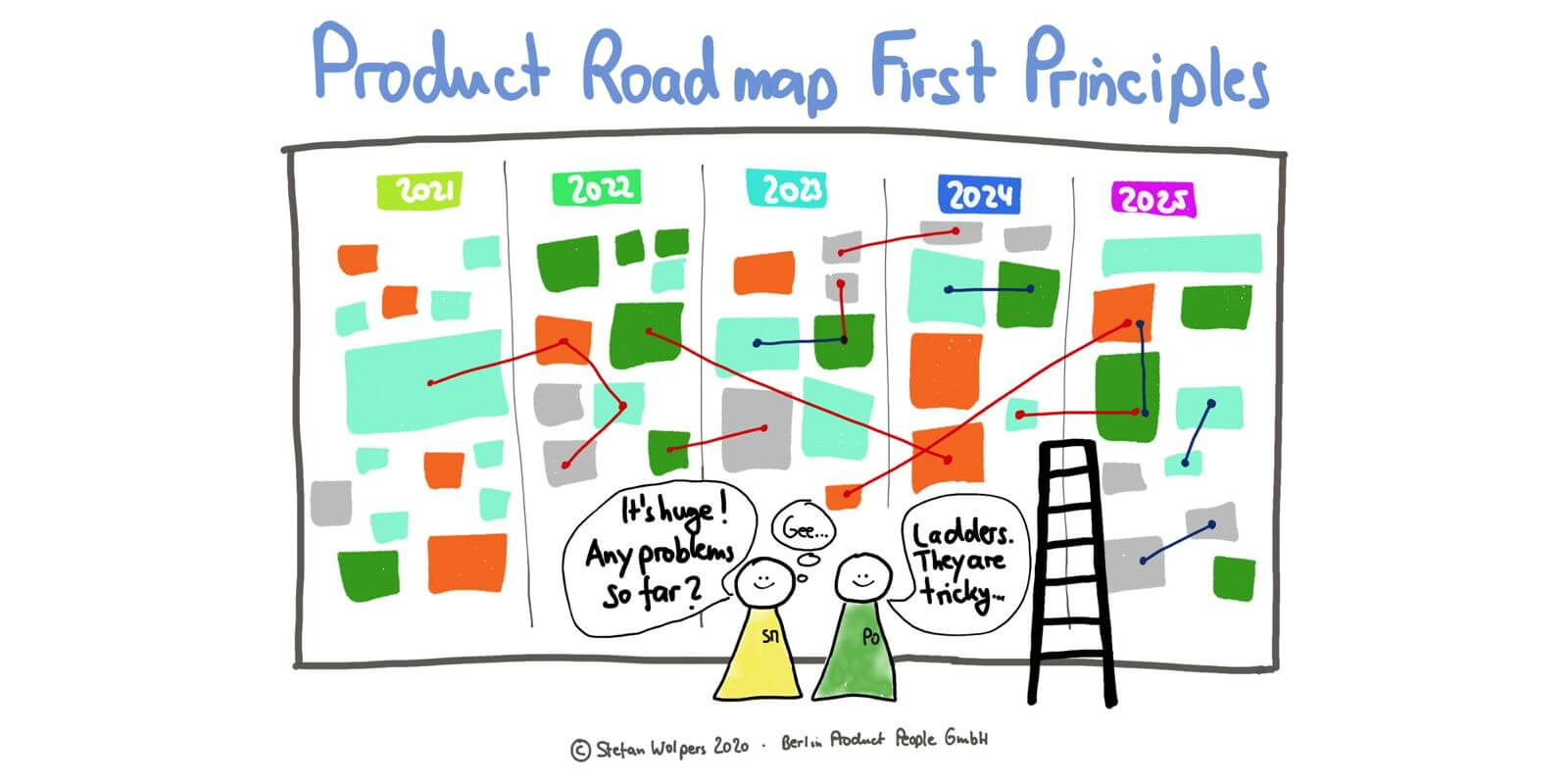
The end of 2020 is nearing, and it’s product roadmap building time again—at least for those companies that are still dedicated to the old command-and-control model. In the next few weeks, executives and (key) stakeholders will come together and define new functionality that they believe will meet business demands in 2021.
While investing in product roadmaps can yield a reasonable return by creating a shared understanding between the “the business” and product teams, I also believe that product roadmaps need to be living artifacts requiring continuous attention by everyone involved. To make that process as worthwhile as possible, adhering to the following seven product roadmap first principles has proven beneficial in my experience.
TL; DR: Product Management Dysfunctions, Play SHIP IT — Food for Agile Thought #262
Welcome to the 262nd edition of the Food for Agile Thought newsletter, shared with 27,421 peers. This week, we delve into product management dysfunctions; we revisit our video, light, and audio gear to improve our remote presence, and we turn to change agency from the sustainability perspective.
We then embrace a free product management game as well as empathy to build better products, and we analyze a nerdy topic: why do we waste most efforts in the product analytics field?
Lastly, we are grateful to add another twelve icebreakers to our toolbox.