The purpose of this anonymous poll is to create a clear, data-backed benchmark that allows everyone in the agile community to get an understanding whether her or his compensation is adequate.
The report will cover Scrum Master as well as Agile Coaches, both employed and freelancing.
To generate an acceptable first report, we will need at least 500 answers. A larger sample would allow providing more detailed insights, though.
Do you remember the good old days when the organization started with its first Scrum team? And the new engineering kid on the block was “merely” supposed to deliver a potentially shippable product increment at the end of a sprint? When no one thought about how to align scrum teams?
The first team was to sound the bell for the upcoming change towards a learning organization. Little did we know back then about the challenges along that route. When teams 2, 3 and 4 joined, shipping a product increment at the end of a sprint became first complicated, and then complex.
It turns out that becoming agile does not only required to create (Scrum) teams. Reaping the full benefits of becoming agile, of becoming a learning organization built around software also requires changing engineering practices. Nowadays, it is all about continuous value delivery.
TL;DR: How to Get Hired as Scrum Master or Agile Coach
A few days ago, LinkedIn published the LinkedIn Data Reveals the Most Promising Jobs of 2017 report. The report lists the Scrum Master position among the “most promising jobs in America based on the potential for career advancement, job growth, and salary.”
The number of downloads of the “38 Scrum Master Interview Questions” book which already have exceeded 7,000 copies also reflect this positive trend. Hence, I thought it a good idea to write a new guide from a candidate’s perspective: “How to get hired as Scrum Master or Agile Coach.”
From the identification of a suitable agile organization via the interview process to preparing for trial day—everything will be created with the candidate’s goal in mind. However, to do so, I need feedback from you.
by Stefan Wolpers|Agile and ScrumAgile TransitionBooksNews
TL; DR: Age of Product’s Roadmap 2017
Happy New Year! 2016 was a very rewarding year of blogging in general and curating the ‘Food for Agile Thought’ newsletter in particular. Therefore, it is an easy decision to spend more time in 2017 on helping you to excel as an agile practitioner.
Age of Product’s roadmap 2017 is all about creating more ebooks, webinars and an online course to help you identify the right position as a Scrum Master or Product Owner. Additionally, I will also continue the ‘Agile Transition’ series on how to get started with an agile transition.
TL; DR: Agile Workspace Means Choice Among a Diversity of Spaces
If you want your organization to become agile, adding more whiteboards to the workspace will not suffice. You have to abandon the idea that the workspace is an assembly line for white-collar workers. You need to let go Taylorism. We are now in the age of the creative worker.
To become agile – and reap its benefits such as becoming more innovative –, you need a diversity of workspaces to support all forms of creative work: focus, collaborate, learn, and socialize. Also, you have to let your creative workers choose which space is best suited for a task.
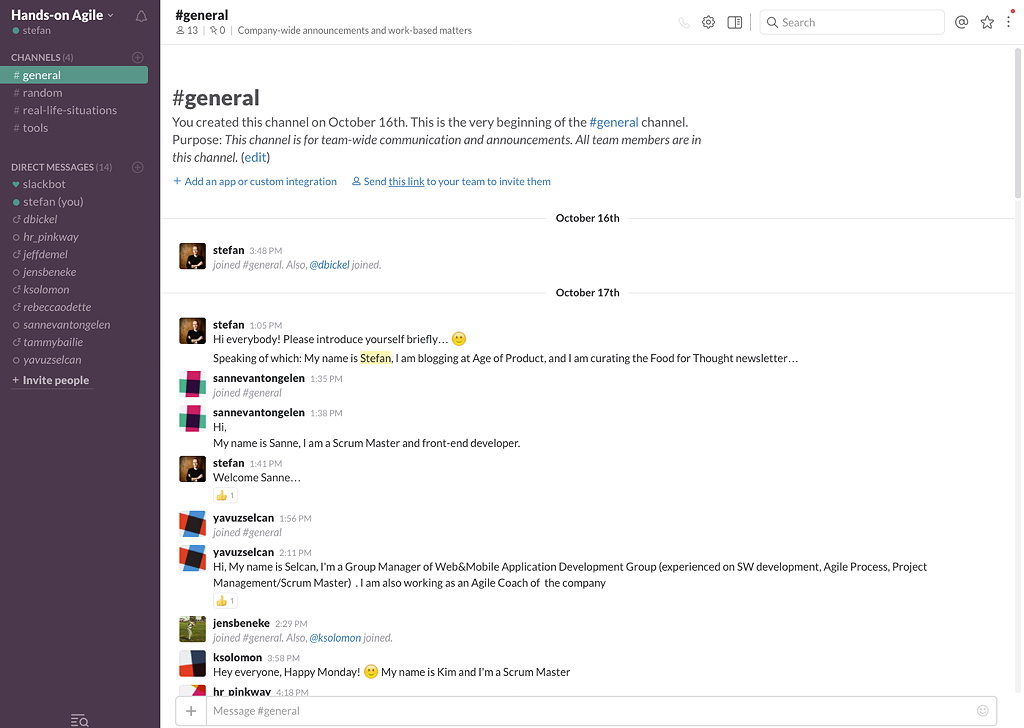
I would like to invite you to join for free Age of Product’s new “Hands-on Agile” Slack team and enjoy the benefits of a fast-growing, 800+ strong community of agile peers from all corners of the world.