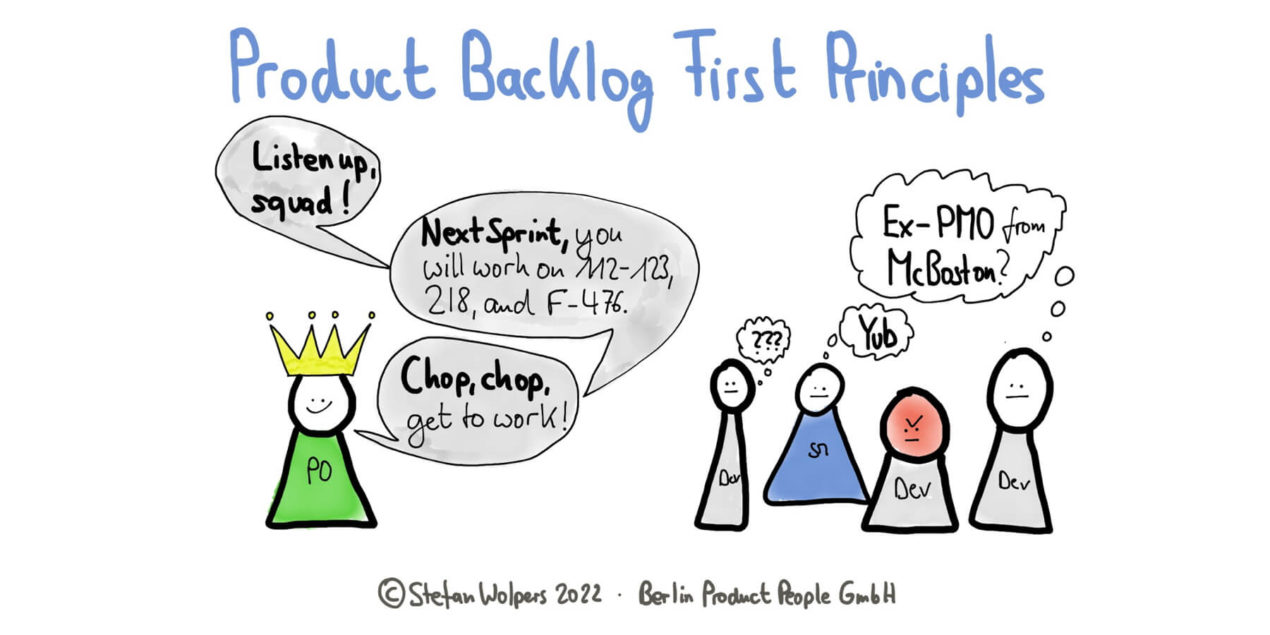
Contrary to popular belief, the Product Owner does not have dictatorial powers regarding the composition and order of the Product Backlog. Instead, Scrum as a framework is based on a delicate system of checks and balances, collaboration, and joint decision-making to mitigate risk; for example, the Product Owner falling in love with their solution over the problem of the customers. Learn more about critical Product Backlog principles, from the size and growth of the Product Backlog to whether a Product Backlog is necessary in the first place. (Some lean practitioners dispute its existence is justified.)
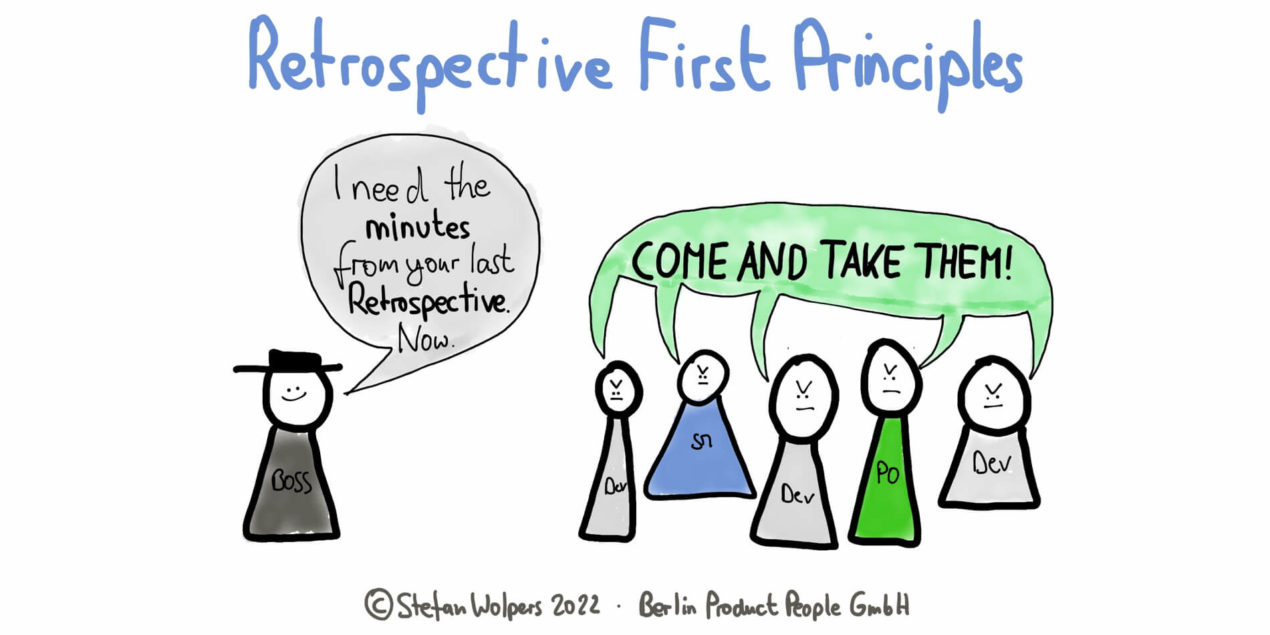
What is your take on the Retrospective: A routine exercise at the end of a Sprint, supported by standard operating procedures? Or a critical part of a Scrum team’s journey of continuous improvement? As you may assume, I advocate for the latter. In my experience, Scrum teams start utilizing Retrospectives to their full potential when they embrace a short set of Retrospective first principles, outlining the essence of the Why, the What, and the How.
TL; DR: Product Backlog Refinement First Principles
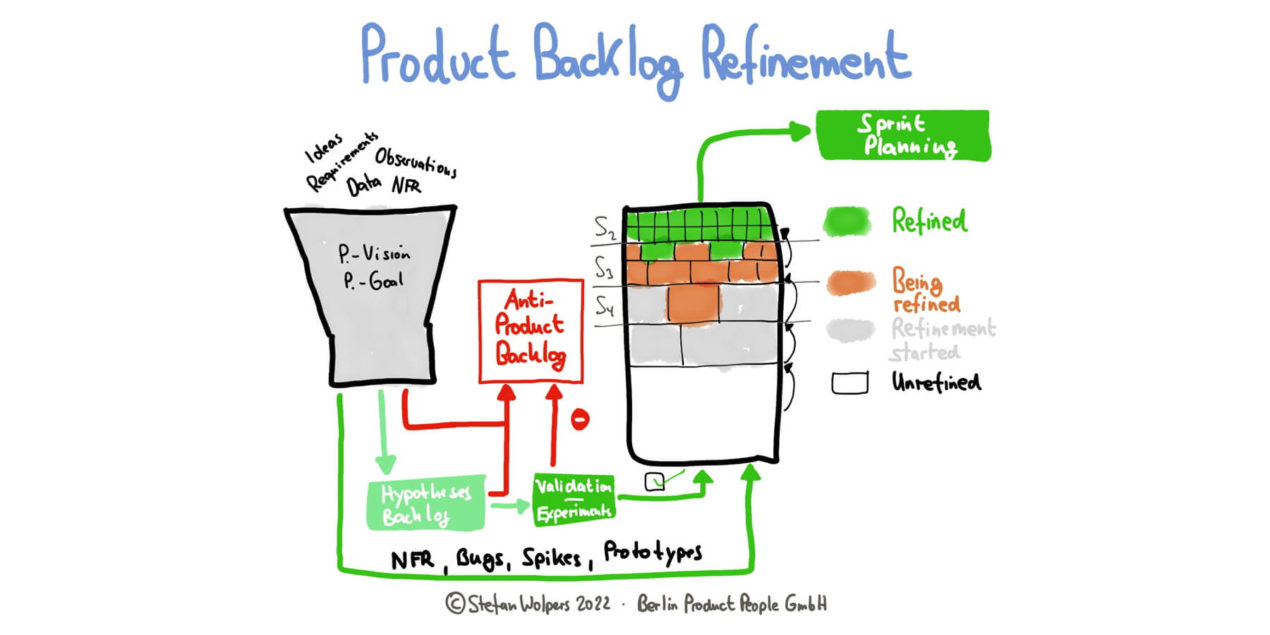
The Product Backlog refinement is a continuous process to create actionable Product Backlogs, enabling a Scrum Team to run Sprint Plannings at a moment’s notice. Consequently, refinement is about creating alignment among all team members about the Why, the What, the How, and probably even the Who regarding the upcoming work for the Scrum team’s Product Goal. As a result, Product Backlog refinement is a critical success factor as it drastically increases the team’s capability to deliver valuable Increments regularly.
The following 14 first principles describe in broad strokes the foundation of a successful approach to refinement.
TL; DR: The Professional Scrum Facilitation Skills Training (PSFS)
It does not happen often, but Scrum.org announced a class: Professional Scrum Facilitation Skills (PSFS)!
The Professional Scrum Facilitation Skills (PSFS) training is a one-day Scrum.org class for advanced Scrum practitioners and agile coaches, including the industry-acknowledged PSFS certification. I will offer PSFS training classes both in English and German.
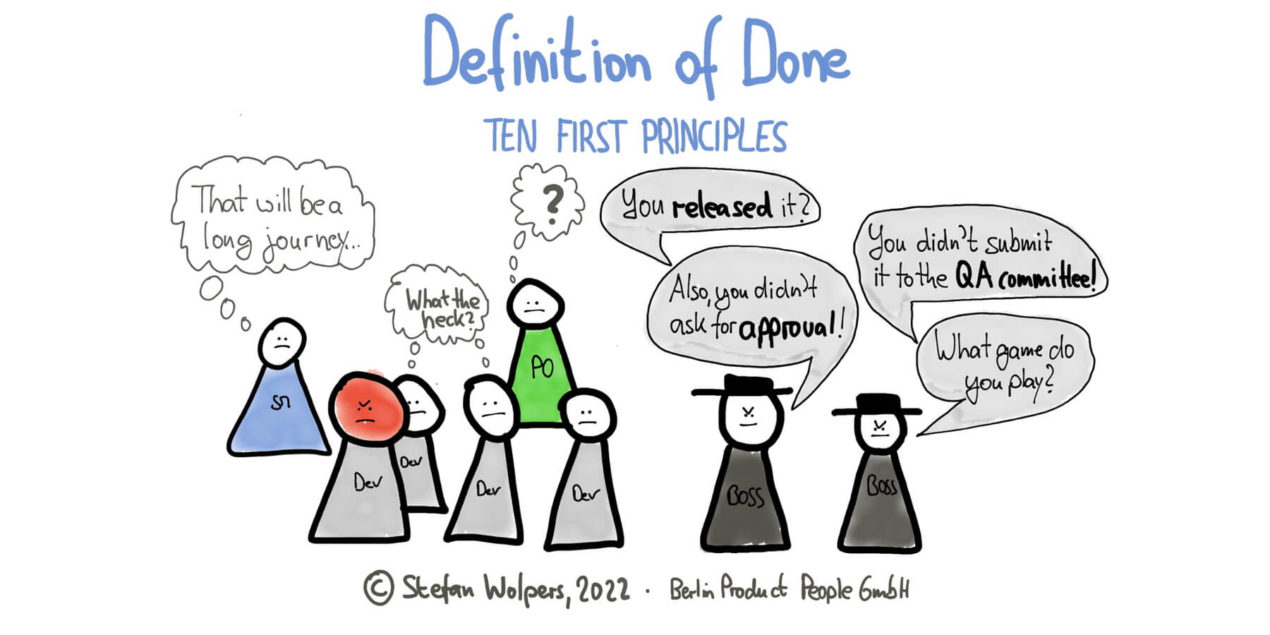
Given the importance of a viable Definition of Done for a Scrum team’s success, it has always puzzled me how complacent or ignorant many Scrum teams are regarding their Definition of Done. So, let me share with you the ten first principles of this critical Scrum success factor to improve your team’s effectiveness, team spirit, and reputation.
TL; DR: HoA #43: Outcome-Based Product Planning w/ Jeff Gothelf
In this energizing 43rd Hands-on Agile session on outcome-based product planning, Jeff Gothelf clarified one thing: “Roadmapping is a flawed concept in the age of Agile. Maps, by their definition, are linear, and we don’t build linear products and services anymore. We build continuous systems.” Learn more about what he considers product roadmap flaws and what you can do about them.