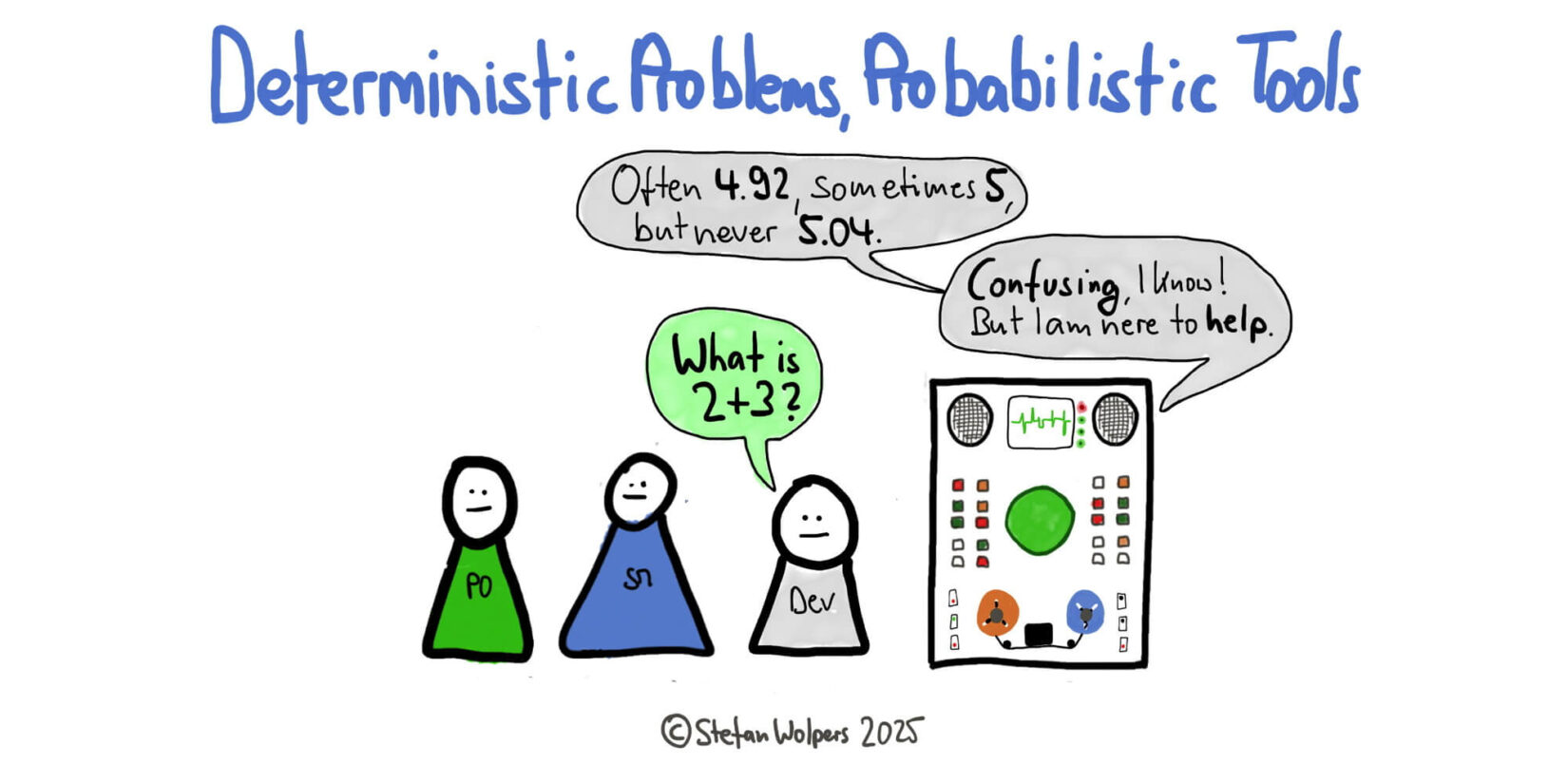
Here’s another one for your collection: The Generative AI Precision Anti-Pattern, where organizations wield LLMs like precision instruments when they’re probabilistic tools by design. Sound familiar? It’s the same pattern we see when teams cargo-cult agile practices without understanding their purpose.
LLMs excel at text summarization and pattern recognition in large datasets, which helps analyze user feedback or generate documentation drafts, but can they be used for deterministic tasks like calculations? If you are not careful with matching your problem to the right tool, you end up building issues of all kinds into the foundation of your product.
What can you do about it? Spoiler alert: The fix isn’t better prompting, but architectural discipline and tool-job alignment.
TL; DR: Choose to Become an AI Leader with the AI 4 Agile Online Course
Your stakeholders already expect AI-enhanced value delivery. While you’re experimenting with prompts, competitors are 10x-ing their customer insights, pattern recognition, product decisions, and delivery speed. AI isn’t another skill to learn; it is THE survival skill for knowledge workers. The following 18 months separate agile leaders from followers—and the AI 4 Agile Online Course bridges that gap.
We’ve all been there: You’re preparing for the next Retrospective, and you turn to ChatGPT for help. “Give me some Retrospective ideas,” you type. What do you get back? Generic templates you’ve seen a hundred times before: Set the Stage, Gather Data, Generate Insights, Decide What to Do, and Close the Retrospective. (Kudos to Esther Derby and Diana Larsen for the format!) The problem isn’t the AI. It’s how we’re asking: We are ignoring the benefits of Meta Prompting or having a conversation with the AI before jumping to task completion.
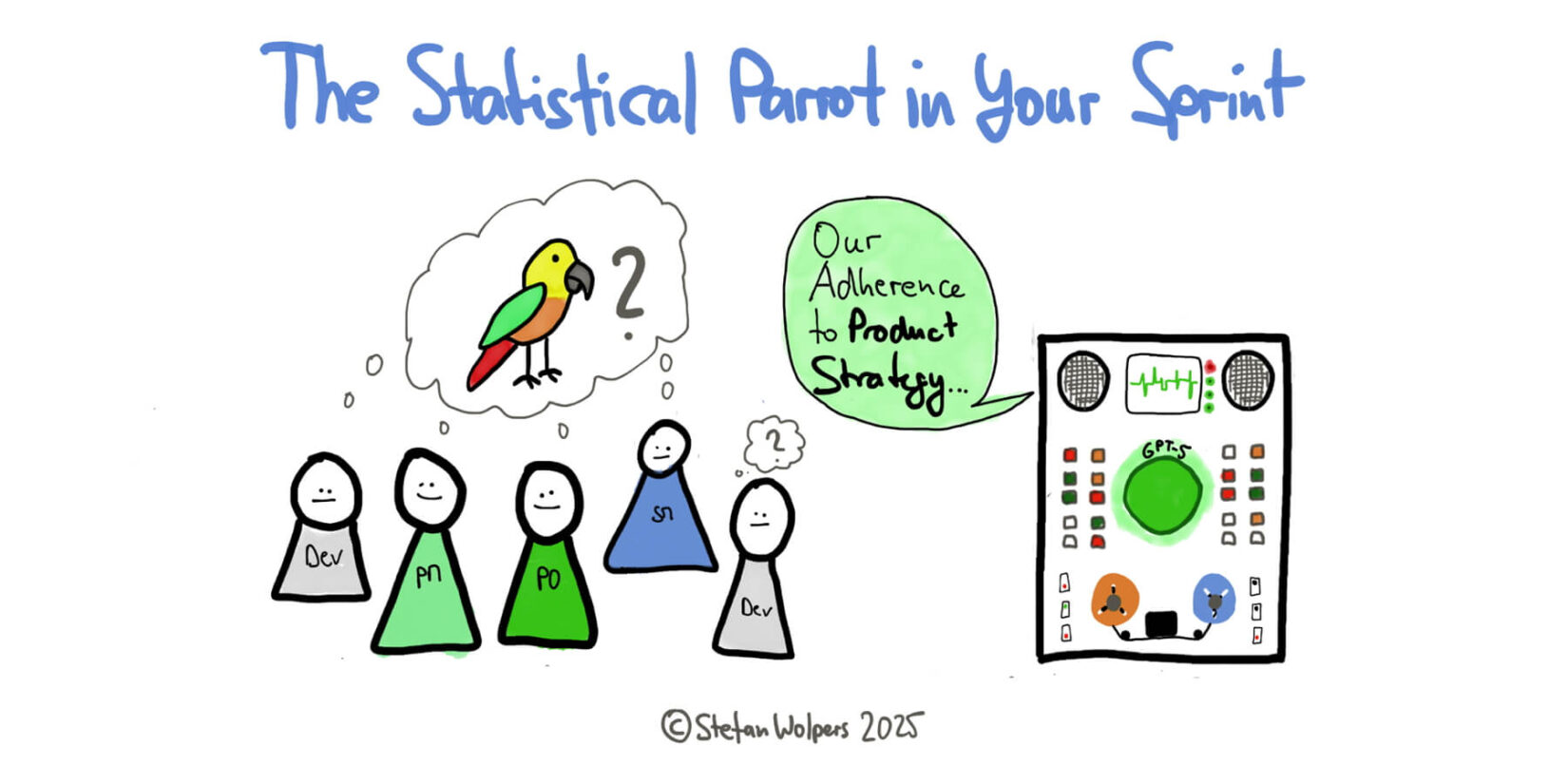
Your LLM tool doesn’t think. It’s a statistical AI parrot: sophisticated and trained on millions of conversations—but still a parrot. Teams that fail with AI either don’t understand this or act as if it doesn’t matter. Both mistakes are costly.
The uncomfortable truth in Agile product development isn’t that AI will replace your team (it won’t) or that it’s useless hype (it isn’t). Most teams use these tools on problems that need contextual judgment, then accept outputs without the critical thinking Agile demands.
The Benefits of AI Micromanagement show up when you feed ChatGPT 5 progressively more context about your actual situation. I tested five prompts for a Retrospective design: from zero context to full team background with extended reasoning time. Case 1 produced generic “Scrum Oscars” nonsense. Case 5 delivered sophisticated root-cause analysis targeting chronic top-down thrash, dependency gridlock, and psychological safety erosion.
The difference? Strategic context curation. More context created better solutions, but only when that context was relevant and structured.
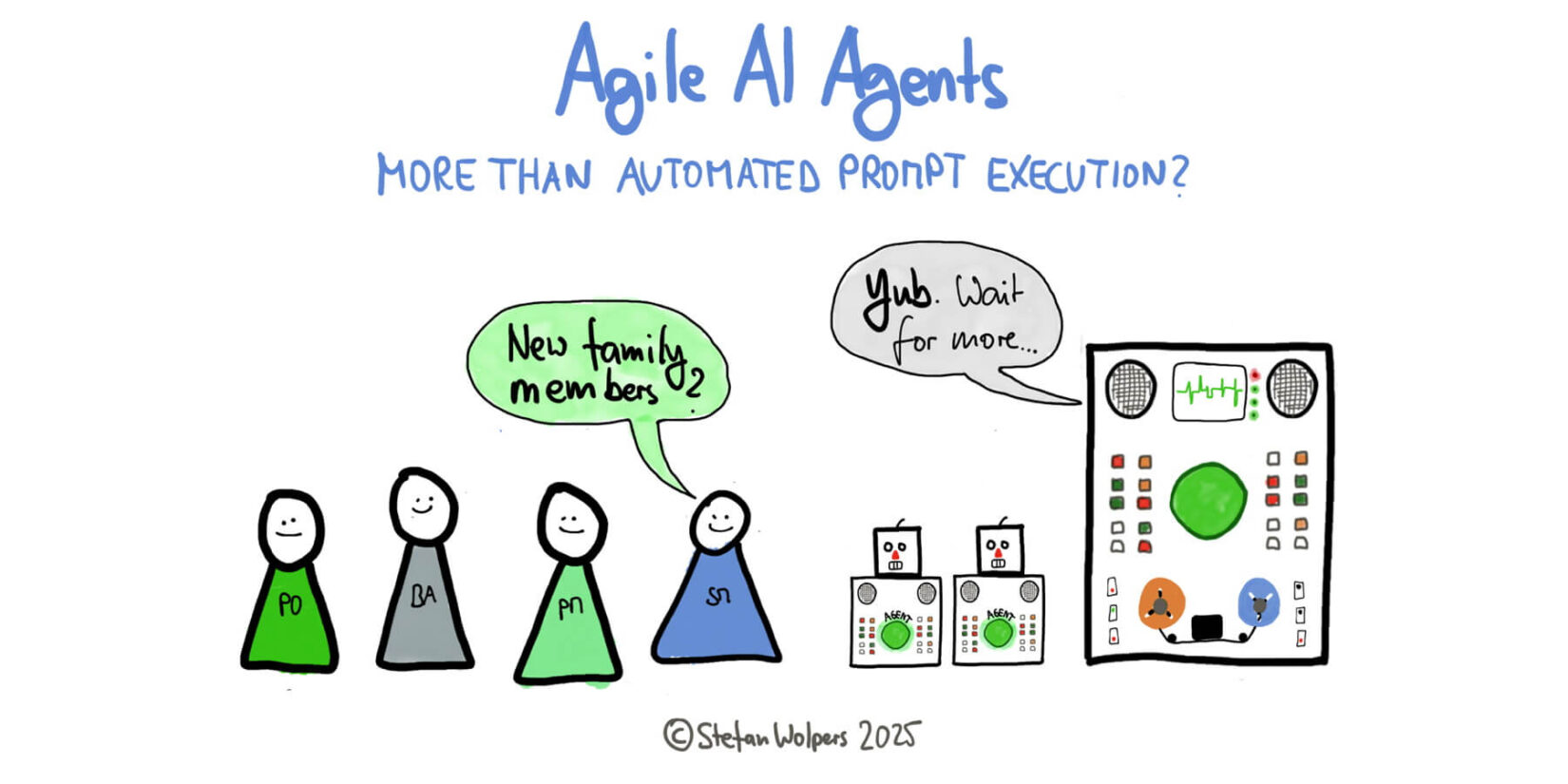
I tried ChatGPT’s new Agent Mode: Is it really a new Agile AI Agent that autonomously identifies noteworthy signals in the daily communication and data noise? Or is it a glorified automated prompt execution device?
Let’s find out. (Note: I only have a Plus account, which limits the experience.)